Episode Details
Back to Episodes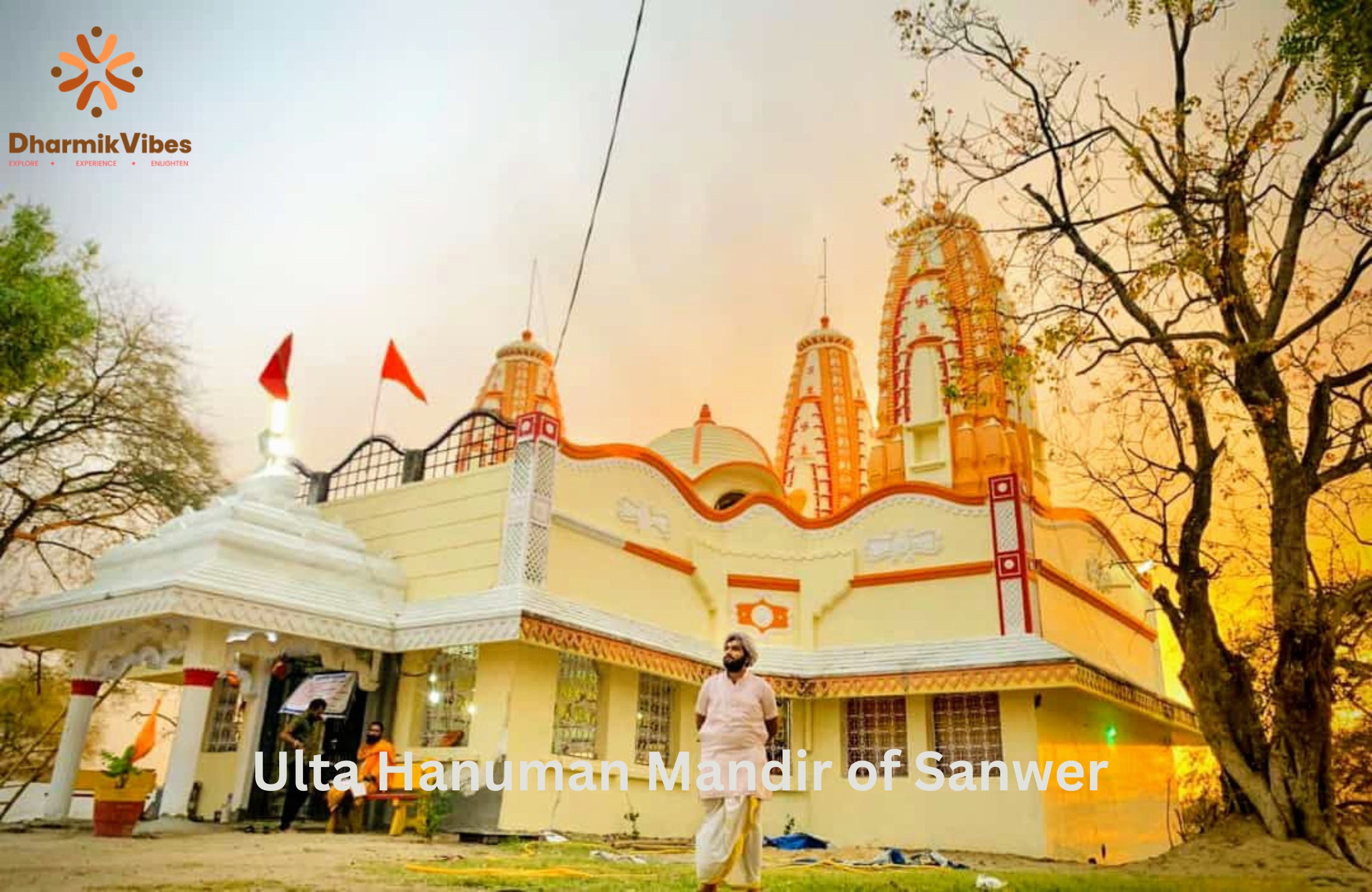
Ulta Hanuman Mandir, Sanwer – The Inverted Divine Guardian of Indore
Description
Nestled in the spiritual heartland of Madhya Pradesh, just 30 kilometers from Indore city, lies an extraordinary and sacred site known as the Ulta Hanuman Mandir in Sanwer. This unique temple, dedicated to Lord Hanuman, draws thousands of devotees and pilgrims annually for one striking feature — the idol of Hanuman is inverted, standing on His head. Revered for its miraculous aura and powerful mythology, this temple is not only an architectural marvel but a spiritual powerhouse that blends legend, devotion, and mysticism.
1. Origin & Founding: The Mythological Dive into Patal Lok
The origin of the Ulta Hanuman Mandir is intricately tied to one of the most heroic tales from the Ramayana. As the legend goes, during the fierce battle between Lord Rama and Ravana, a powerful demon named Ahiravana kidnapped Lord Rama and Lakshmana and took them to Patal Lok (the netherworld). Upon learning of their abduction, Hanuman fearlessly plunged headfirst into Patal Lok, defeating Ahiravana and rescuing the divine brothers.
To honor this legendary act of inverted descent and divine valor, this temple enshrines Hanuman in an upside-down posture, symbolizing not only His daring rescue but also His boundless devotion to Rama.
2. Historical Timeline: An Ancient Beacon of Faith
Though precise records of the temple’s founding are scarce, oral traditions and local lore suggest that it has existed for several centuries. Over time, it has attracted attention from local rulers and religious patrons, undergoing periodic renovations and expansions.
This temple has stood the test of time — quietly serving as a spiritual sanctuary for generations. It is one of the few temples in India with such a rare and powerful visual representation of Hanuman.
3. Architecture & Design: A Temple Turned Upside Down
The architectural style of Ulta Hanuman Mandir reflects traditional Indian temple design with influences from local Nagara traditions. The temple's most distinctive feature is undoubtedly the idol of Hanuman standing on His head, a rare and symbolic depiction that captures the spirit of His mission to Patal Lok.
Apart from the main deity, the complex houses beautiful idols of Lord Rama, Sita, Lakshmana, and Shiva-Parvati. The sanctum is adorned with intricate carvings and motifs, and the space exudes serenity, devotion, and ancient energy.
4. Spiritual Significance: A Temple of Miracles and Devotion
The temple is widely believed to possess miraculous powers. Devotees swear by the tradition of visiting the temple on three or five consecutive Tuesdays, believing that such a practice can alleviate their sorrows, fulfill wishes, and bring peace to their lives.
The inverted Hanuman is more than an idol—it is a metaphor for humility, courage, and unwavering bhakti. His form reminds worshippers of divine surrender and the cosmic balance between the seen and the unseen.
5. Puja & Rituals: Devotion in Every Gesture
Daily rituals include traditional aartis, offerings, and prayers led by temple priests. On Tuesdays—considered especially sacred for Hanuman—special 'chola' offerings (a vermillion and oil paste ritual) are made by devotees as a sign of reverence.
The rituals are inclusive, often allowing families and individual devotees to participate, creating a sense of community and shared devotion.
6. Festivals Celebrated: Faith in Festivity
* Hanuman Jayanti is the grandest