Episode Details
Back to Episodes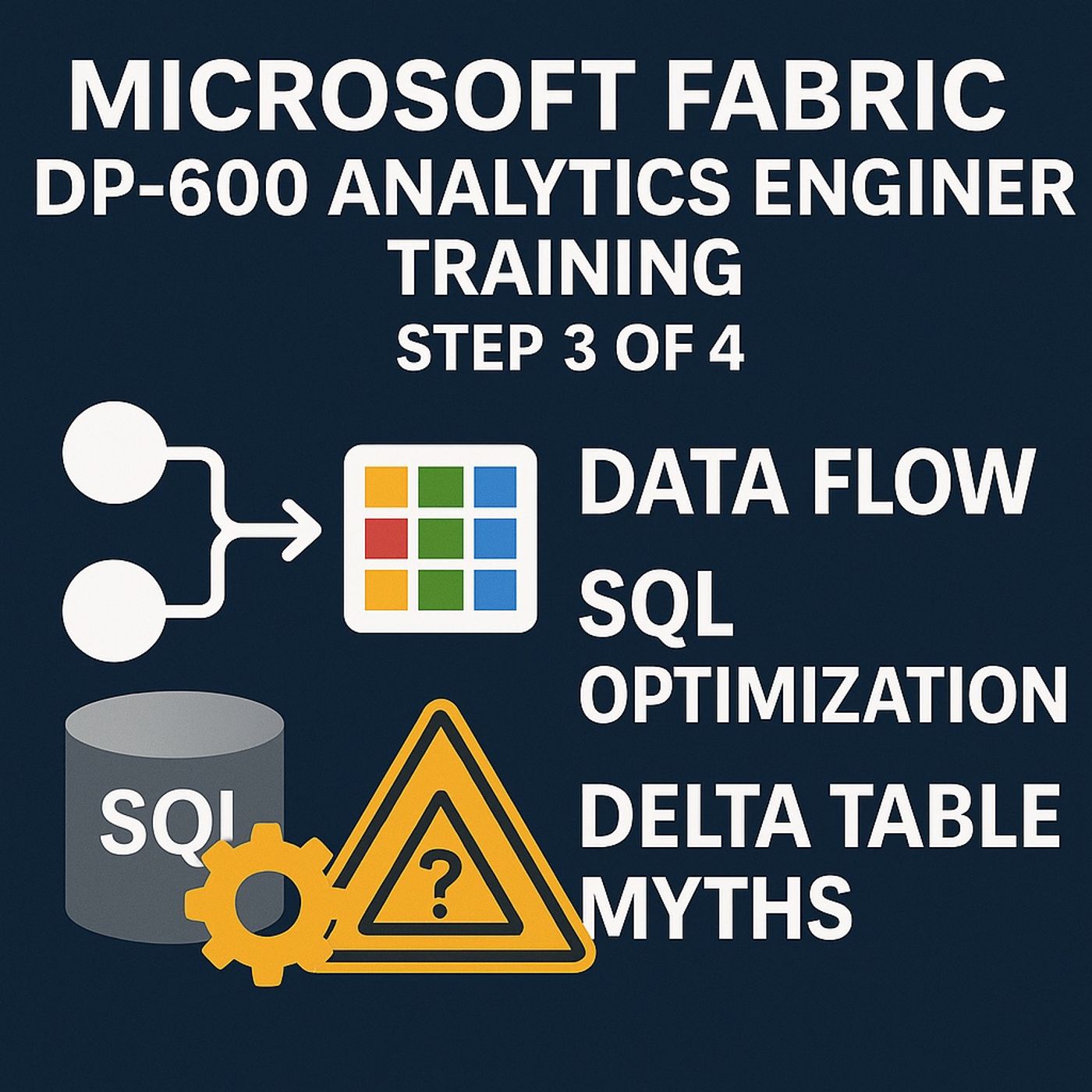
Microsoft Fabric DP-600: Mastering Data Flow Optimization and SQL Performance
Season 1
Published 1 year, 3 months ago
Description
(00:00:00) Diagnosing performance issues
(00:09:26) Optimizing SQL queries
(00:23:13) Effective data partitioning
(00:34:08) Delta table optimization techniques
(00:44:08) Maintaining delta table efficiency
(00:53:13) Balancing data models
(01:06:17) Sustaining performance gains
(01:15:47) Integrating monitoring practices
Microsoft Fabric promises seamless data analytics, but the path to mastering it is filled with myths, misconceptions, and performance traps. In this third step of the DP-600 Analytics Engineer Training series, you'll discover the truth about data flow optimization, SQL performance, and why Delta tables aren't the magic solution everyone claims they are.
🔍 SHORT SUMMARY
This episode focuses on critical performance concepts for Microsoft Fabric Analytics Engineers preparing for the DP-600 certification. Learn how to optimize data flows, understand the Monitoring Hub's key metrics, master SQL optimization techniques, debunk common Delta table myths, and build efficient data pipelines that actually perform at scale.
🧠 CORE IDEA
Most Fabric implementations fail not because of the platform—but because of misunderstood fundamentals:
• Data flows that look simple but perform poorly
• SQL queries that work in development but fail in production
• Delta tables used incorrectly, creating more problems than they solve
• Monitoring metrics that everyone tracks but nobody understands
Mastering Fabric requires understanding what actually drives performance—not what the documentation suggests.
⚠️ THE REAL PROBLEM
The Microsoft Fabric learning curve is steep because:
• Official docs focus on features, not performance
• Best practices are scattered across multiple sources
• Common patterns from other platforms don't translate directly
• The Monitoring Hub shows metrics without explaining their importance
• SQL optimization in Fabric behaves differently than traditional databases
This creates a knowledge gap between passing the DP-600 exam and building production-ready solutions.
📊 THE MONITORING HUB: YOUR COMMAND CENTER
The Monitoring Hub is not just a collection of metrics—it's your centralized dashboard for understanding data ecosystem health.
Key metrics to focus on:
• Capacity Unit Spend: Shows resource allocation and usage patterns
• Metrics on Refresh Failures: Identifies bottlenecks in data updates
• Throttling Thresholds: Indicates when you're reaching capacity limits
Without proper monitoring interpretation, you're managing data blind.
⚡ SQL OPTIMIZATION IN FABRIC
SQL in Microsoft Fabric is not standard SQL. Understanding the differences is critical:
Partition Pruning:
Proper partitioning reduces data scanned and improves query speed dramatically
redicate Pushdown:
Filters applied early in the query execution reduce data movement
Columnar Storage:
Delta tables use columnar format—query only the columns you need
Caching Strategies:
Understand when Fabric caches results and how to leverage it
Optimization is not about writing perfect SQL—it's about writing SQL that Fabric can execute efficiently.
🛠️ DELTA TABLE MYTHS DEBUNKED
Delta tables are powerful, but they're surrounded by misconceptions:
Myth 1: Delta tables automatically optimize everything
Reality: You still need proper partitioning, Z-ordering, and maintenance
Myth 2: More partitions = better performance
Reality: Over-partitioning creates small file problems and degrades performance
Myth 3: Delta tables handle all data quality issues
Reality: ACID compliance doesn't replace data validation
Myth 4: You should always use Delta format
Reality: Some scenarios (streaming, append-only logs) may perform better with alte
(00:09:26) Optimizing SQL queries
(00:23:13) Effective data partitioning
(00:34:08) Delta table optimization techniques
(00:44:08) Maintaining delta table efficiency
(00:53:13) Balancing data models
(01:06:17) Sustaining performance gains
(01:15:47) Integrating monitoring practices
Microsoft Fabric promises seamless data analytics, but the path to mastering it is filled with myths, misconceptions, and performance traps. In this third step of the DP-600 Analytics Engineer Training series, you'll discover the truth about data flow optimization, SQL performance, and why Delta tables aren't the magic solution everyone claims they are.
🔍 SHORT SUMMARY
This episode focuses on critical performance concepts for Microsoft Fabric Analytics Engineers preparing for the DP-600 certification. Learn how to optimize data flows, understand the Monitoring Hub's key metrics, master SQL optimization techniques, debunk common Delta table myths, and build efficient data pipelines that actually perform at scale.
🧠 CORE IDEA
Most Fabric implementations fail not because of the platform—but because of misunderstood fundamentals:
• Data flows that look simple but perform poorly
• SQL queries that work in development but fail in production
• Delta tables used incorrectly, creating more problems than they solve
• Monitoring metrics that everyone tracks but nobody understands
Mastering Fabric requires understanding what actually drives performance—not what the documentation suggests.
⚠️ THE REAL PROBLEM
The Microsoft Fabric learning curve is steep because:
• Official docs focus on features, not performance
• Best practices are scattered across multiple sources
• Common patterns from other platforms don't translate directly
• The Monitoring Hub shows metrics without explaining their importance
• SQL optimization in Fabric behaves differently than traditional databases
This creates a knowledge gap between passing the DP-600 exam and building production-ready solutions.
📊 THE MONITORING HUB: YOUR COMMAND CENTER
The Monitoring Hub is not just a collection of metrics—it's your centralized dashboard for understanding data ecosystem health.
Key metrics to focus on:
• Capacity Unit Spend: Shows resource allocation and usage patterns
• Metrics on Refresh Failures: Identifies bottlenecks in data updates
• Throttling Thresholds: Indicates when you're reaching capacity limits
Without proper monitoring interpretation, you're managing data blind.
⚡ SQL OPTIMIZATION IN FABRIC
SQL in Microsoft Fabric is not standard SQL. Understanding the differences is critical:
Partition Pruning:
Proper partitioning reduces data scanned and improves query speed dramatically
redicate Pushdown:
Filters applied early in the query execution reduce data movement
Columnar Storage:
Delta tables use columnar format—query only the columns you need
Caching Strategies:
Understand when Fabric caches results and how to leverage it
Optimization is not about writing perfect SQL—it's about writing SQL that Fabric can execute efficiently.
🛠️ DELTA TABLE MYTHS DEBUNKED
Delta tables are powerful, but they're surrounded by misconceptions:
Myth 1: Delta tables automatically optimize everything
Reality: You still need proper partitioning, Z-ordering, and maintenance
Myth 2: More partitions = better performance
Reality: Over-partitioning creates small file problems and degrades performance
Myth 3: Delta tables handle all data quality issues
Reality: ACID compliance doesn't replace data validation
Myth 4: You should always use Delta format
Reality: Some scenarios (streaming, append-only logs) may perform better with alte