Episode Details
Back to Episodes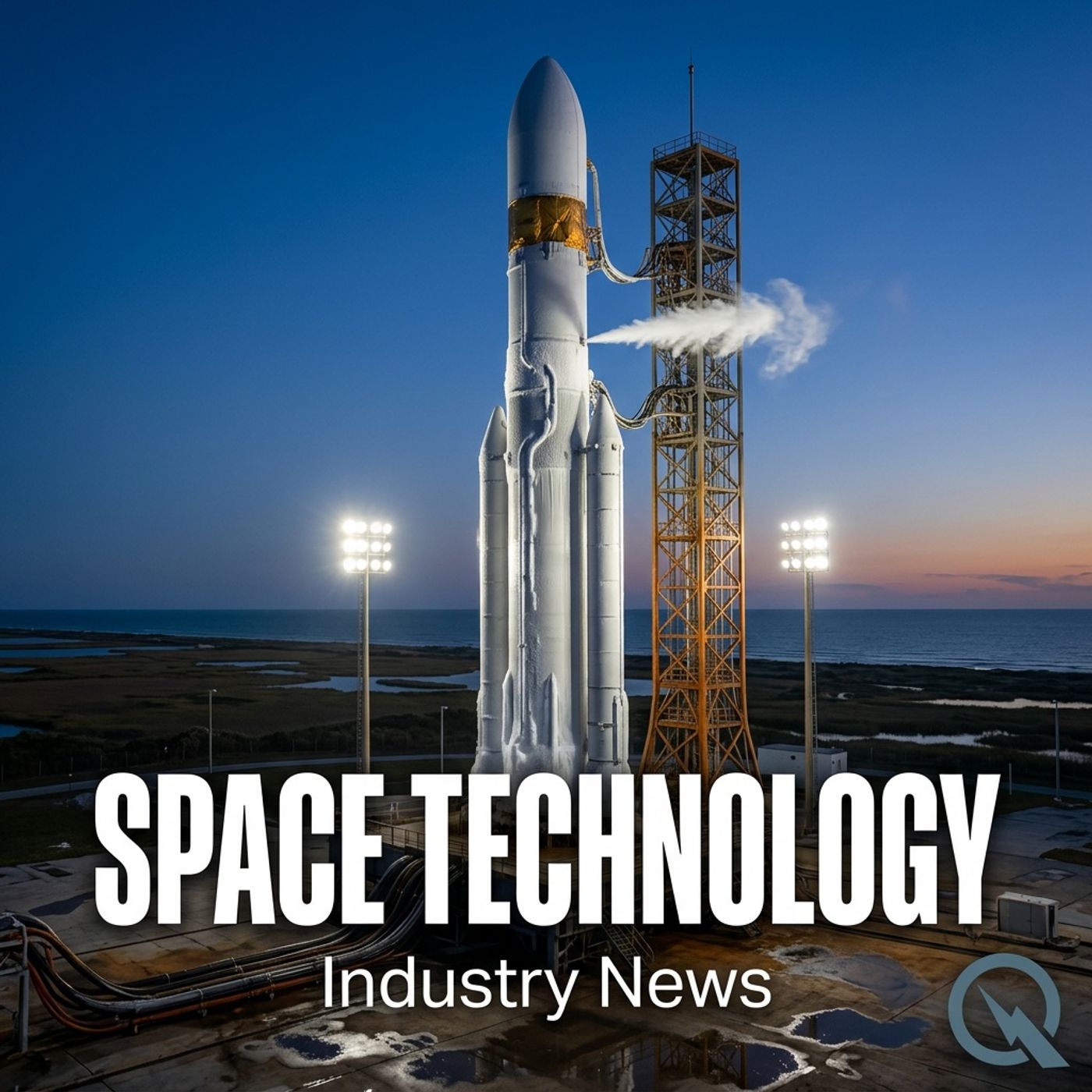
Space Tech Trends 2025: Starship, AI and Satellite Constellations Shaping Industry's Future
Published 11 months, 4 weeks ago
Description
Space Technology Industry: Current State Analysis (April 29 - May 1, 2025)
The space technology sector has shown robust investment activity in early 2025, with Q1 funding demonstrating solid growth according to recent financial reports[3]. This positive trend continues as we enter May, with several key developments shaping the industry landscape.
SpaceX remains at the forefront of industry disruption, with a Falcon 9 rocket scheduled to launch a new batch of Starlink satellites into low-Earth orbit tonight at 9:51 p.m. EDT from Cape Canaveral[1]. More significantly, the Federal Aviation Administration is reportedly close to approving SpaceX's Starship vehicle for up to 25 launches in the coming year, following four successful flight tests in 2024[2]. Industry experts from the World Economic Forum note that Starship will be a major disruptor in terms of payload capacity for both up and down mass, potentially transforming launch economics[2].
The UK space sector has shown particular activity, with March 2025 hosting two dedicated trade shows and a third scheduled later this year, indicating growing international interest[4].
Lockheed Martin recently identified ten key technology trends shaping the space industry for 2025, including artificial intelligence, advanced communications, proliferated satellite constellations, and space-based quantum communication[5]. The company is advancing its 5G.MIL Unified Network Solutions and preparing to launch TacSat, a small intelligence spacecraft that will demonstrate on-orbit data processing capabilities[5].
Industry analysts predict 2025 will be a pivotal year for space capabilities, regulatory developments, and global engagement[2]. The increasing commercialization of space activities continues to attract investor attention, with particular focus on satellite communications, remote sensing, and exploration technologies.
As the industry evolves, companies are increasingly focused on interoperability and connectivity across domains, with space-based infrastructure playing a critical role in connecting terrestrial technologies and enabling new applications.
This content was created in partnership and with the help of Artificial Intelligence AI
The space technology sector has shown robust investment activity in early 2025, with Q1 funding demonstrating solid growth according to recent financial reports[3]. This positive trend continues as we enter May, with several key developments shaping the industry landscape.
SpaceX remains at the forefront of industry disruption, with a Falcon 9 rocket scheduled to launch a new batch of Starlink satellites into low-Earth orbit tonight at 9:51 p.m. EDT from Cape Canaveral[1]. More significantly, the Federal Aviation Administration is reportedly close to approving SpaceX's Starship vehicle for up to 25 launches in the coming year, following four successful flight tests in 2024[2]. Industry experts from the World Economic Forum note that Starship will be a major disruptor in terms of payload capacity for both up and down mass, potentially transforming launch economics[2].
The UK space sector has shown particular activity, with March 2025 hosting two dedicated trade shows and a third scheduled later this year, indicating growing international interest[4].
Lockheed Martin recently identified ten key technology trends shaping the space industry for 2025, including artificial intelligence, advanced communications, proliferated satellite constellations, and space-based quantum communication[5]. The company is advancing its 5G.MIL Unified Network Solutions and preparing to launch TacSat, a small intelligence spacecraft that will demonstrate on-orbit data processing capabilities[5].
Industry analysts predict 2025 will be a pivotal year for space capabilities, regulatory developments, and global engagement[2]. The increasing commercialization of space activities continues to attract investor attention, with particular focus on satellite communications, remote sensing, and exploration technologies.
As the industry evolves, companies are increasingly focused on interoperability and connectivity across domains, with space-based infrastructure playing a critical role in connecting terrestrial technologies and enabling new applications.
This content was created in partnership and with the help of Artificial Intelligence AI