Episode Details
Back to Episodes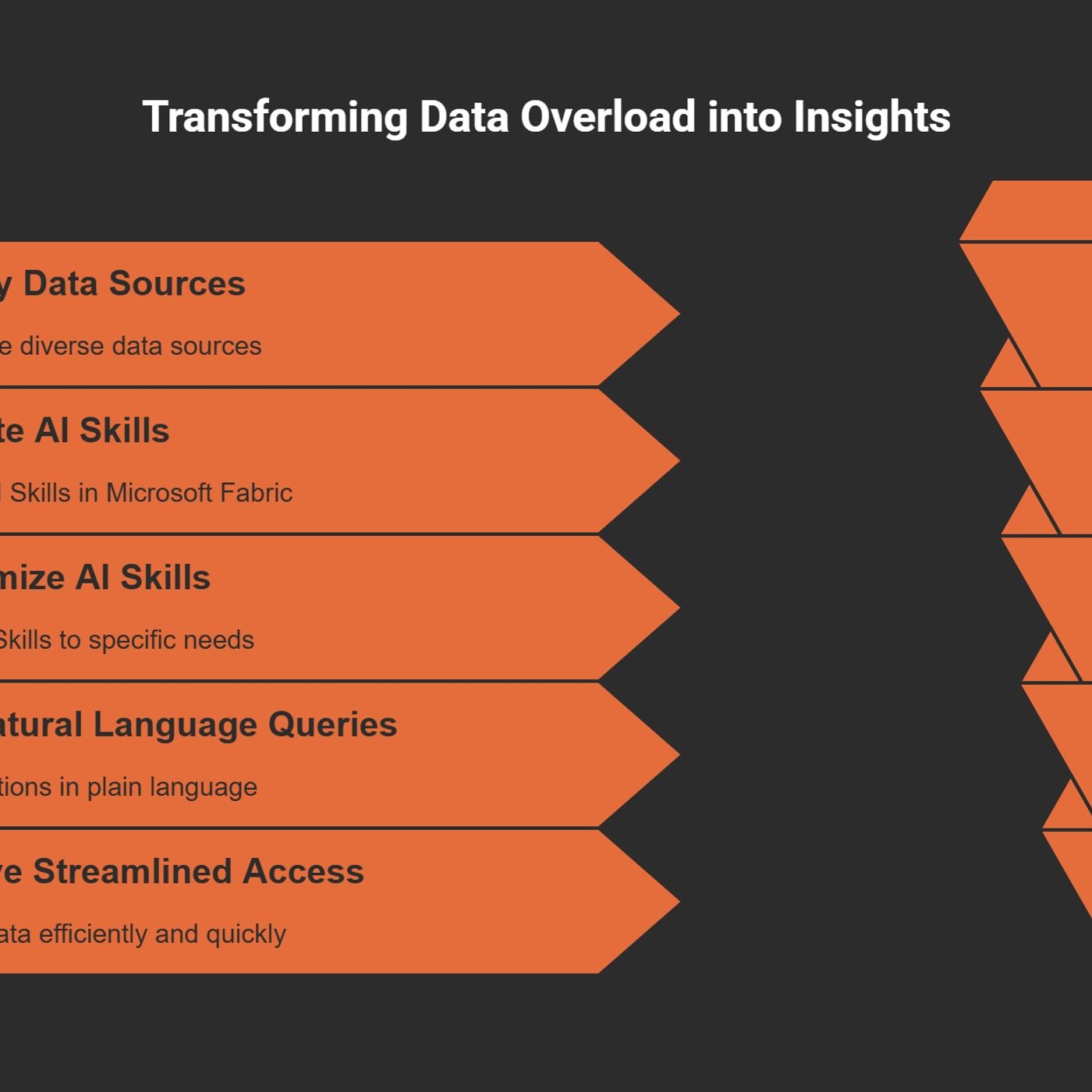
Microsoft Fabric's AI Skills No One’s Talking About
Published 10 months ago
Description
Many of us remember the days of drowning in spreadsheets and overwhelming data requests. I still vividly recall my early career, grappling with scattered information across multiple systems, wasting valuable hours trying to compile insights. It wasn’t until I discovered Microsoft Fabric’s AI Skills that everything changed. In a world where data can drown your decision-making efforts, this tool offers a lifeline. This post will delve into the transformative capabilities of Microsoft Fabric, illustrating both its potential and user-friendly approach.M365 Show is a reader-supported publication. To receive new posts and support my work, consider becoming a free or paid subscriber.The Data Overload Dilemma: A Common ChallengeAs I look around, it’s clear that we’re drowning in data. Organizations across various industries are grappling with data overload. Everyone seems to be collecting data, but how many truly know what to do with it? This isn't just a tech issue; it’s a challenge that impacts business efficiency, strategy, and even innovation.Understanding Data Overwhelm Across IndustriesData overwhelm is a universal challenge. Whether you’re in healthcare, retail, or finance, the struggle is the same. Each day, more data is generated than the last. Have you ever stopped to think about how this affects your organization? The truth is, many businesses collect data from over 400 different sources. Yet, astonishingly, over 90% of the data generated today remains unused.Statistics on Data Generation and UsageConsider this: every minute, we create a staggering amount of data. From social media posts to transaction records, the flow of information is relentless. This constant influx leads to a paradox; while we have access to vast amounts of information, sorting through it can feel like searching for a needle in a haystack. Organizations are left feeling overwhelmed, unsure of how to extract valuable insights from the chaos.Personal Experiences with Data Management IssuesI’ve witnessed the frustration firsthand. In my experience, I’ve seen teams struggle to manage the data they have. Reports take longer to generate, and crucial insights often slip through the cracks. This can lead to missed opportunities and a lack of competitive edge. For instance, I worked with a retail company that took three days to generate data reports. That’s three days of potential decisions lost!Impact on Decision-Making EfficiencyWhen data is scattered and hard to access, decision-making slows down. When we lack timely access to information, we risk making uninformed choices. I often hear,“In today's fast-paced business environment, timely access to data can be the difference between thriving and merely surviving.”This statement rings true. Organizations need to be able to act swiftly and effectively. Without streamlined access to data, we end up with bottlenecks that hinder our ability to respond to market changes.The Necessity for Streamlined Data AccessSo, what can be done? Streamlined data access is crucial. By implementing tools that simplify data retrieval, organizations can empower their teams. Imagine if your marketing team could access real-time data without waiting for IT approval. Wouldn’t that make a difference? It’s all about democratizing information. The easier it is for everyone to access data, the more insights can be generated.Balancing Technical and Non-Technical User NeedsOne of the biggest hurdles is balancing the needs of technical and non-technical users. Not everyone is a data analyst, and that’s okay! The challenge lies in finding tools that cater to both. For instance, AI-driven solutions can bridge this gap. They allow non-technical users to ask questions in simple language and receive immediate, actionable insights. This capability is what keeps organizations competitive and agile. As I like to say,“The ability to seamlessly navigate through abundant data allows organizations to stay competitive and agile.”To sum it up, the data ove