Episode Details
Back to Episodes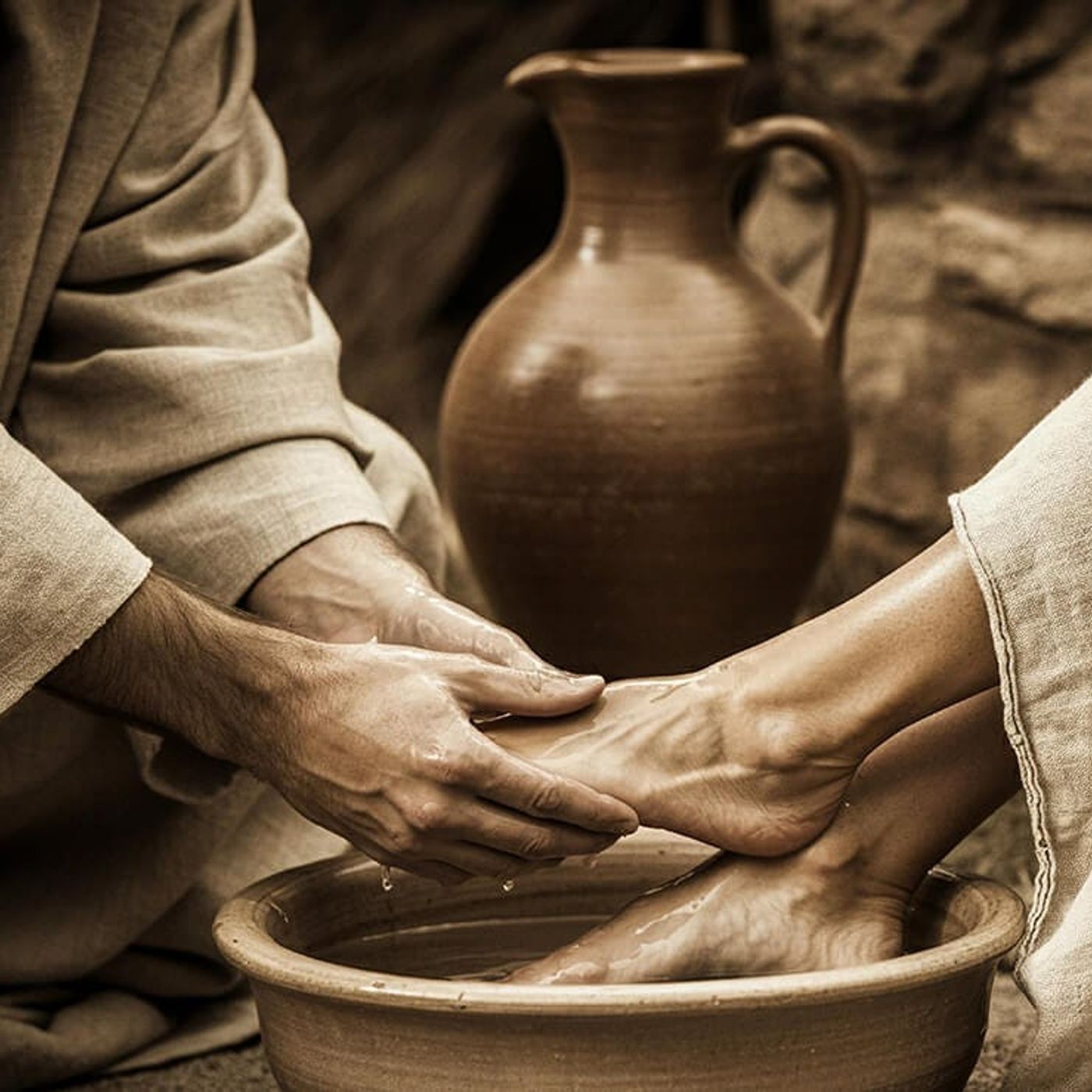
Cleansed by Jesus
Published 1 year, 6 months ago
Description
Maundy Thursday 2025Exodus 12:1-14, 1 Corinthians 11:23-26, John 13:1-17,31(b)-35The Washing of FeetAnd so, after the long preparation of the Lenten season, we find ourselves here in the Upper Room with Jesus and his disciples, witnessing what has come to be called the Last Supper. The reading that we have just heard from the Gospel of John recounts one of the two stunning actions that Jesus carried out in these moments, the washing of his own disciples’ dirty feet.It is interesting to note that the Gospel of John does not recount the other action I refer to: that of the institution of the Holy Eucharist. That is left to Matthew, Mark and Luke. And tonight we hear it also in the words of St Paul from the First Letter to the Corinthians. Rather, John, probably writing in his old age, gives prominence to the other great moment that took place in that room, a moment that, for some reason, eclipsed in John’s mind even the institution of the Sacrament of Holy Communion: “Jesus…rose from supper. He laid aside his outer garments, and taking a towel, tied it around his waist. Then he poured water into a basin and began to wash the disciples’ feet and to wipe them with the towel that was wrapped around him.”Pope Benedict XVI, whose great work on Holy Week I have been considering as I have been preparing these sermons, says of this:Jesus represents the whole of his saving ministry in one symbolic act. He divests himself of his divine splendour; he, as it were, kneels down before us; he washes us and dries our soiled feet, in order to make us fit to sit at table for God’s wedding feast.Pope Benedict XVI, Jesus of Nazareth: Holy WeekFrom time immemorial, man has asked the question: How can I be right before God? How can I move towards the divine light? Must I not do something to make myself worthy? Various solutions have been suggested: the Neo-Platonic and Gnostic solution of ridding ourselves of the impurity of the flesh and the material world and ascending towards the divine in a purely spiritual capacity.The other great solution, which, again, we see throughout all human history with the exception of the modern, secular Western world is the notion of sacrifice, in terms of food, animals, and sometimes even human beings. The idea being that, through these sacrificial offerings, God or the gods might be placated. And, tied to these offerings, systems of cultic purification may render us clean enough to stand before God, in the unblemished divinity of his presence.As I say, we in the modern West have largely lost this sense of the fearful awesomeness of the transcendent realm. We do not consider it particularly relevant to our lives and imagine that, if there is a God, he should accept us for who we are. But do we not sometimes experience something of this need and of this longing to be made right with God when we attempt something like a serious moral effort?When I say a serious moral effort, I do not mean simply doing or not doing something that comes naturally to us. I mean trying to do something – or not do something – that we find difficult. This kind of thing is sometimes called a besetting sin. And all of us have at least one, probably many. I know I do. There are many things that come quite naturally to me. I could focus on these things and feel quite good about myself. But what about the things that I find difficult? My example that I would like to share with you is that of being a parent and having small children. Nothing brings out the impatient, selfish, angry and ungenerous side of me like the demands of small children. I resolve on a daily basis to change my behaviour and my attitude. And, yet, even with these sincere resolutions, any change that might occur is almost imperceptible to me. And I am amazed at my inability to make progress.I cannot escape the confines of the flesh through spiritual or intellectual enlightenment. One misplaced and irritating word or action from one of my children is enough to convince me of thi