Episode Details
Back to Episodes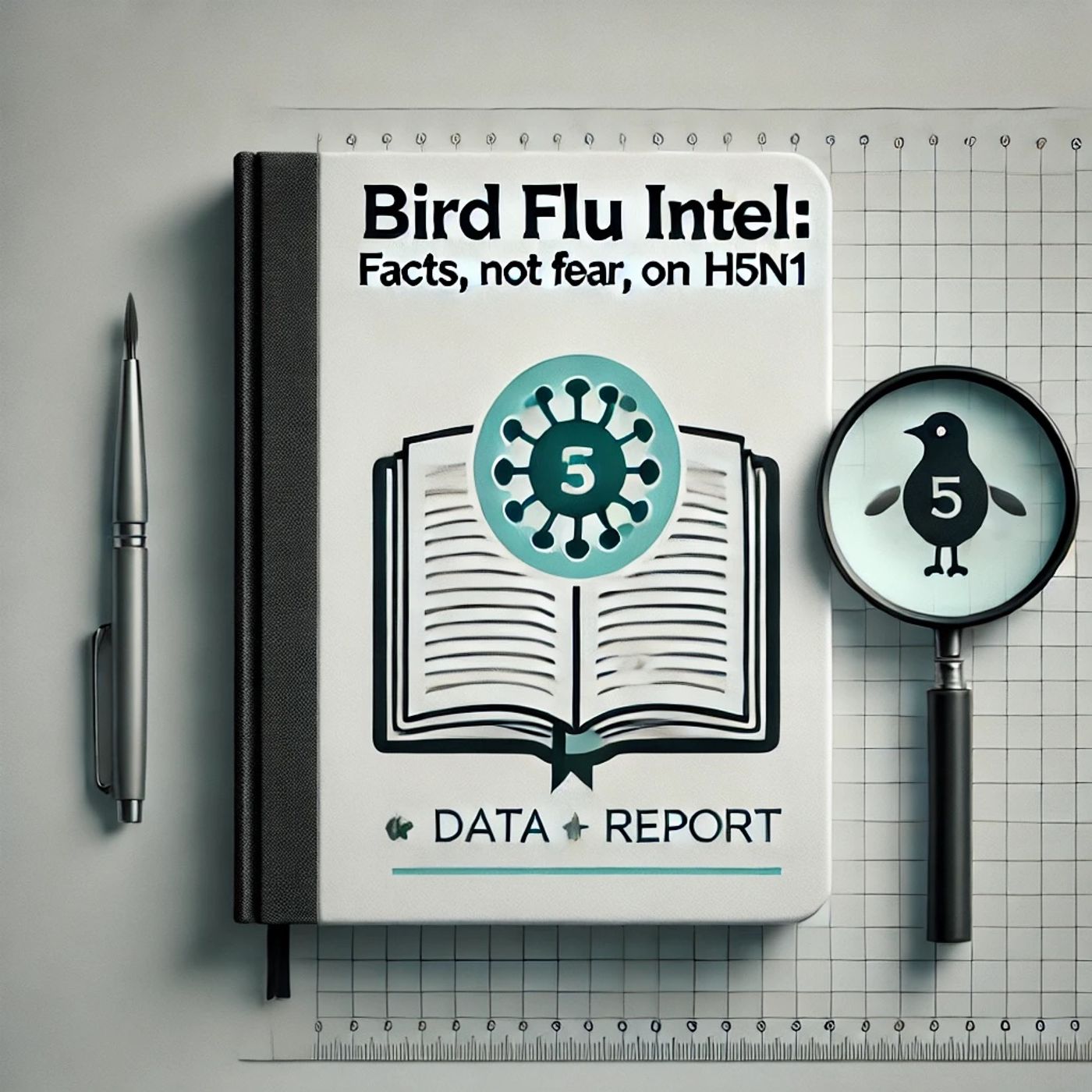
H5N1 Bird Flu Demystified: Expert Insights on Transmission Risk, Myths, and Preventing Misinformation
Published 1 year ago
Description
Welcome to another episode of our podcast, where today we're taking a no-nonsense look at H5N1, commonly known as Bird Flu. In this episode, we're committed to unraveling myths and presenting you with clear, evidence-based facts about this viral issue.
Let's begin by tackling a few misconceptions about H5N1 that have been circulating lately. First, there's the belief that H5N1 can easily be contracted from eating poultry. The fact is, H5N1 is not transmitted through properly cooked poultry; the virus is killed by adequate cooking temperatures. Under normal hygienic cooking practices, the virus poses no risk.
Another common myth is that bird flu is just like the seasonal flu. While both are influenza viruses, H5N1 is significantly different because it is primarily spread in birds, and human cases have typically only occurred with direct contact with infected birds. Human-to-human transmission remains rare.
A third misconception suggests that there’s a global pandemic looming because of H5N1. It's important to note that while H5N1 is serious, transmission to humans remains uncommon. Public health organizations like the World Health Organization continue to monitor the situation closely to prevent any potential outbreaks.
Misinformation, unfortunately, often spreads faster than facts, especially through social media where headlines are designed to provoke rather than inform. This can lead to unnecessary fear and panic, influencing public perception and prompting misguided actions. Understanding the source and seeking corroborated news from trusted health organizations can help mitigate these effects.
Now, let’s address how listeners can develop a toolkit for evaluating information quality regarding infectious diseases like H5N1. First, consider the source. Is it a reputable health organization or a fringe website? Trusted sources include national health departments, the World Health Organization, and Centers for Disease Control and Prevention. Second, check the date to ensure the information is current and relevant. Third, look for scientific consensus; reputable sources often cite studies and data that support their claims.
The current scientific consensus on H5N1 emphasizes vigilance rather than panic. Surveillance of the virus in bird populations helps prevent its spread, and researchers are continuously developing and refining vaccines as a precaution, should the virus evolve to spread more widely among humans. There is scientific uncertainty in how or when H5N1 might mutate, which is why ongoing research and preparedness are essential.
In conclusion, staying informed with factual information from reliable sources is key in preventing the spread of misinformation. Remember to ask questions when things sound dubious and seek out trusted health guides to ensure you're armed with facts, not fear. Thank you for joining us today, and stay tuned for our next myth-busting session. Stay informed and stay healthy.
This content was created in partnership and with the help of Artificial Intelligence AI
Let's begin by tackling a few misconceptions about H5N1 that have been circulating lately. First, there's the belief that H5N1 can easily be contracted from eating poultry. The fact is, H5N1 is not transmitted through properly cooked poultry; the virus is killed by adequate cooking temperatures. Under normal hygienic cooking practices, the virus poses no risk.
Another common myth is that bird flu is just like the seasonal flu. While both are influenza viruses, H5N1 is significantly different because it is primarily spread in birds, and human cases have typically only occurred with direct contact with infected birds. Human-to-human transmission remains rare.
A third misconception suggests that there’s a global pandemic looming because of H5N1. It's important to note that while H5N1 is serious, transmission to humans remains uncommon. Public health organizations like the World Health Organization continue to monitor the situation closely to prevent any potential outbreaks.
Misinformation, unfortunately, often spreads faster than facts, especially through social media where headlines are designed to provoke rather than inform. This can lead to unnecessary fear and panic, influencing public perception and prompting misguided actions. Understanding the source and seeking corroborated news from trusted health organizations can help mitigate these effects.
Now, let’s address how listeners can develop a toolkit for evaluating information quality regarding infectious diseases like H5N1. First, consider the source. Is it a reputable health organization or a fringe website? Trusted sources include national health departments, the World Health Organization, and Centers for Disease Control and Prevention. Second, check the date to ensure the information is current and relevant. Third, look for scientific consensus; reputable sources often cite studies and data that support their claims.
The current scientific consensus on H5N1 emphasizes vigilance rather than panic. Surveillance of the virus in bird populations helps prevent its spread, and researchers are continuously developing and refining vaccines as a precaution, should the virus evolve to spread more widely among humans. There is scientific uncertainty in how or when H5N1 might mutate, which is why ongoing research and preparedness are essential.
In conclusion, staying informed with factual information from reliable sources is key in preventing the spread of misinformation. Remember to ask questions when things sound dubious and seek out trusted health guides to ensure you're armed with facts, not fear. Thank you for joining us today, and stay tuned for our next myth-busting session. Stay informed and stay healthy.
This content was created in partnership and with the help of Artificial Intelligence AI