Episode Details
Back to Episodes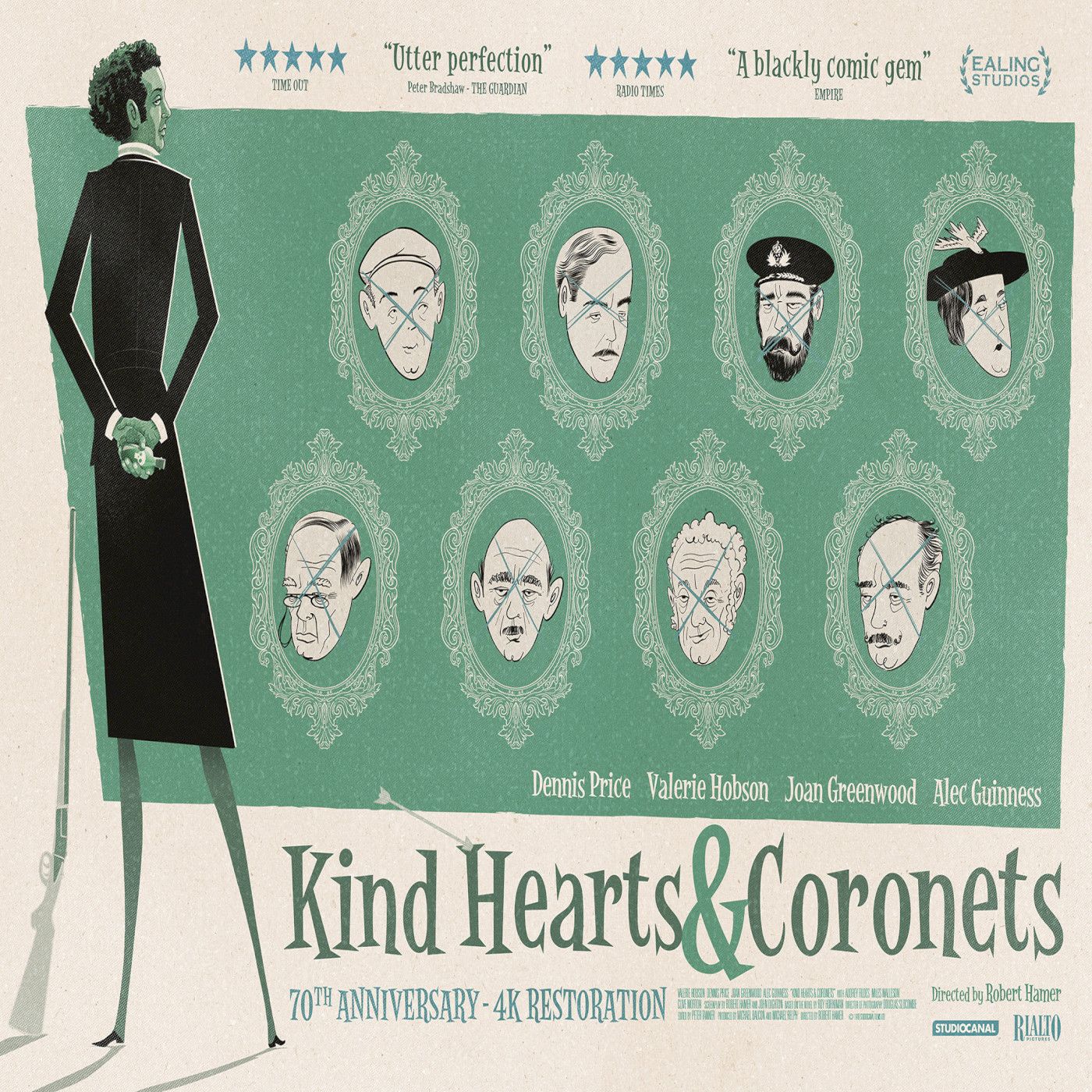
Episode 163 - Kind Hearts and Coronets (1949)
Season 1
Episode 163
Published 1 year, 6 months ago
Description
Welcome to Reel Britannia-a very British podcast about very British movies ...with just a hint of professionalism. Back to 1949 this week and a darkly witty masterpiece of British cinema! An Ealing comedy blending sharp humour, class satire, and Alec Guinness playing eight roles. A timeless classic! Kind Hearts and Coronets (1949) A Delightfully Dark Comedy of Class and Revenge Kind Hearts and Coronets, the crown jewel of British cinema’s dark humour. If you haven’t yet basked in its glory, let me paint the scene for you. Picture this: Edwardian England, an impeccable sense of manners, and a protagonist who’s as calculating as he is charming—all wrapped in a story about climbing the social ladder by…murdering every single person standing in the way. Yes, murder. And somehow, it’s positively delightful.
The plot centers on Louis Mazzini (played by Dennis Price), who is probably cinema’s most likable sociopath. Born into a working-class life, Louis has always resented his mother’s noble family, the D’Ascoynes, who cast her out for marrying “beneath her station.” But when Louis’s mother dies penniless and the snobbish D’Ascoynes refuse her last wish of burial in the family crypt, the gloves come off—Louis vows to avenge his mother’s disgrace and reclaim his rightful place among the aristocracy. There’s just one minor snag: eight D’Ascoynes stand between him and the title of Duke. A daunting task? Perhaps. But for Louis, it’s all in a day’s work.
Now, what makes Kind Hearts and Coronets so uniquely brilliant is its approach to murder. This isn’t your run-of-the-mill bloodbath; it’s murder with panache, style, and an undeniable charm. Each of Louis’s victims is played by the inimitable Alec Guinness, who dons eight different personas—from pompous aristocrats to eccentric eccentrics, each more absurd than the last. Guinness’s performance is a cinematic tour de force, bringing every D’Ascoyne to life with precision and wit, ensuring no two murders feel the same. Louis may be methodical, but he’s never boring—whether he’s engineering an explosion or a “tragic” drowning, each act of homicide is artfully executed with a dose of dark humor.
One of the joys of Kind Hearts and Coronets is its unashamed cleverness. The film wields irony like a rapier, slicing through social norms and class pretensions with a gleeful grin. Louis’s ascent from working-class obscurity to the dizzying heights of the aristocracy is as much a critique of class inequality as it is a comedy of manners. His steely resolve to eliminate his relatives is matched only by his ability to deliver dry, razor-sharp commentary along the way. Dennis Price’s impeccable delivery transforms Louis into a character you can’t help rooting for—despite his penchant for, well, homicide.
Of course, no tale of ambition and revenge is complete without a touch of romance. Louis’s love life is deliciously complicated, involving a love triangle between Sibella (Joan Greenwood), his childhood sweetheart, and Edith (Valerie Hobson), the widow of one of his victims. Sibella is wonderfully wicked—a femme fatale with a voice like melted honey and an unapologetic thirst for social status. Edith, on the other hand, is all grace and dignity, providing a stark contrast to Sibella’s conniving charm. Louis, being the opportunist that he is, juggles both women with alarming ease, adding an extra layer of intrigue to his already twisted pursuits.
The film’s finale is a masterstroke of irony and poetic justice. Just when Louis seems to have achieved everything he set out to accomplish, fate intervenes with one final twist—a testament to the film’s commitment to keeping its audience thoroughly entertained until the last frame. Without spoiling too much, let’s just say that Louis’s razor-sharp intellect proves to be both his greatest strength and his Achilles’ heel.
Visually, Kind Hearts and Coronets is a treat for the eyes. Director Robert Hamer uses cinematography to
The plot centers on Louis Mazzini (played by Dennis Price), who is probably cinema’s most likable sociopath. Born into a working-class life, Louis has always resented his mother’s noble family, the D’Ascoynes, who cast her out for marrying “beneath her station.” But when Louis’s mother dies penniless and the snobbish D’Ascoynes refuse her last wish of burial in the family crypt, the gloves come off—Louis vows to avenge his mother’s disgrace and reclaim his rightful place among the aristocracy. There’s just one minor snag: eight D’Ascoynes stand between him and the title of Duke. A daunting task? Perhaps. But for Louis, it’s all in a day’s work.
Now, what makes Kind Hearts and Coronets so uniquely brilliant is its approach to murder. This isn’t your run-of-the-mill bloodbath; it’s murder with panache, style, and an undeniable charm. Each of Louis’s victims is played by the inimitable Alec Guinness, who dons eight different personas—from pompous aristocrats to eccentric eccentrics, each more absurd than the last. Guinness’s performance is a cinematic tour de force, bringing every D’Ascoyne to life with precision and wit, ensuring no two murders feel the same. Louis may be methodical, but he’s never boring—whether he’s engineering an explosion or a “tragic” drowning, each act of homicide is artfully executed with a dose of dark humor.
One of the joys of Kind Hearts and Coronets is its unashamed cleverness. The film wields irony like a rapier, slicing through social norms and class pretensions with a gleeful grin. Louis’s ascent from working-class obscurity to the dizzying heights of the aristocracy is as much a critique of class inequality as it is a comedy of manners. His steely resolve to eliminate his relatives is matched only by his ability to deliver dry, razor-sharp commentary along the way. Dennis Price’s impeccable delivery transforms Louis into a character you can’t help rooting for—despite his penchant for, well, homicide.
Of course, no tale of ambition and revenge is complete without a touch of romance. Louis’s love life is deliciously complicated, involving a love triangle between Sibella (Joan Greenwood), his childhood sweetheart, and Edith (Valerie Hobson), the widow of one of his victims. Sibella is wonderfully wicked—a femme fatale with a voice like melted honey and an unapologetic thirst for social status. Edith, on the other hand, is all grace and dignity, providing a stark contrast to Sibella’s conniving charm. Louis, being the opportunist that he is, juggles both women with alarming ease, adding an extra layer of intrigue to his already twisted pursuits.
The film’s finale is a masterstroke of irony and poetic justice. Just when Louis seems to have achieved everything he set out to accomplish, fate intervenes with one final twist—a testament to the film’s commitment to keeping its audience thoroughly entertained until the last frame. Without spoiling too much, let’s just say that Louis’s razor-sharp intellect proves to be both his greatest strength and his Achilles’ heel.
Visually, Kind Hearts and Coronets is a treat for the eyes. Director Robert Hamer uses cinematography to