Episode Details
Back to Episodes
*Special Episode* What Does Your Toga Say About You?
Description
Dr Amy Place from the University of Leicester sits down with Dr Rad to discuss the humble Roman toga, fashion and social identity, and everyday life in late imperial Roman North Africa!
On a recent tour to Australia, Place presented a paper for the SPQR Roman History Forum at Macquarie University on the representation of fashions in Late Roman North Africa. The Partial Historians we lucky enough to grab the chance to chat.
Late Roman North Africa is a time period and an area that is understudied, but just as fascinating as Italy. Place is particularly interested in how clothing is represented and how it was used to express social identity.
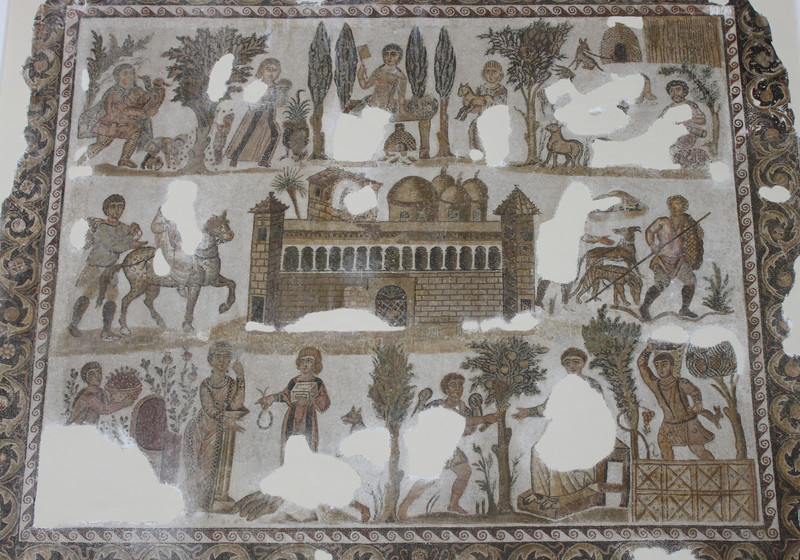
Dominus Julius Mosaic from Carthage, Bardo Museum. Copyright credit: Sean Leatherbury/Manar al-Athar
When are we talking?
Dr Place’s research focuses on 200-550 CE. The late Roman empire is full of intrigue and was a time of great change. While there was some stability under the emperor Septimius Severus, who ruled from 193-211 CE, with his death and the succession of his son Caracalla, a century of turmoil began.
Amidst the political chaos that characterised much of this century, the Christians rose in prominence. By the beginning of the fourth century, Rome would have its first Christian emperor, Constantine I. This emerging system would rapidly became established as the exclusive religion of the empire as Rome entered the fifth century.
Where are we talking?
The focus of Place’s research has been the coastal regions of North Africa, examining an area that spans Namibia to Morocco. Parts of North Africa began to be acquired by Rome in the 2nd century BCE with the end of the Third Punic War. Roman influence continued to expand in this region throughout the late Republic and into the Empire.
What is the source material like for fashion and togas?
Place's research is based in part on literary sources but is supplemented with mosaics. She highlights the difficulties that come with using textual evidence to understand something that was visual. The terms used in the sources are not always easily matched to a surviving representation and it is extremely rare for any actual samples of clothing to survive to the modern day.

Listen Now
Love PodBriefly?
If you like Podbriefly.com, please consider donating to support the ongoing development.
Support Us