Episode Details
Back to Episodes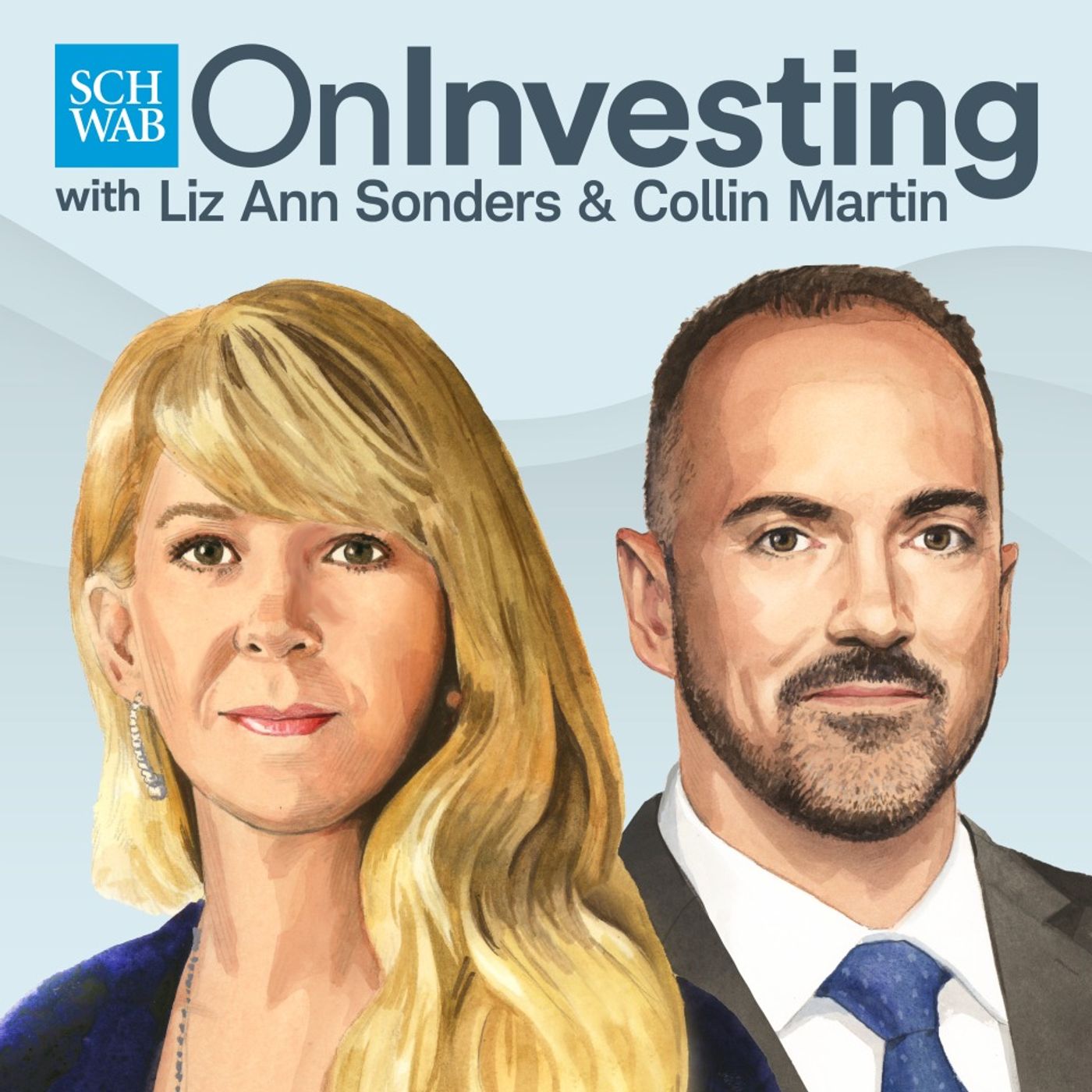
Avoiding Unforced Errors in Investing (With Barry Ritholtz)
Description
In this conversation, Liz Ann Sonders interviews Barry Ritholtz. He's the co-founder, chairman, and chief investment officer of Ritholtz Wealth Management. And he’s the author of a new book titled How Not to Invest.
Barry and Liz Ann discuss the evolution of financial media, the current market cycle, and the psychological aspects of investing. They discuss the pitfalls of market timing, the significance of emotional control in investing, and the need for a disciplined approach to investing, particularly during market volatility.
Barry also explains the complexities of wealth perception, several of the psychological biases in investing, and the importance of understanding the pitfalls of peer pressure in financial decisions.
Finally, Kathy and Liz Ann discuss the data and economic indicators they will be watching in the coming week.
You can learn more about Barry’s book, How Not to Invest, here. Or check out his podcast, Masters in Business, on Bloomberg.com.
On Investing is an original podcast from Charles Schwab. For more on the show, visit schwab.com/OnInvesting.
If you enjoy the show, please leave a rating or review on Apple Podcasts.
Important Disclosures
Investors should consider carefully information contained in the prospectus, or if available, the summary prospectus, including investment objectives, risks, charges, and expenses. You can request a prospectus by calling 800-435-4000. Please read the prospectus carefully before investing.
The information provided here is for general informational purposes only and should not be considered an individualized recommendation or personalized investment advice. The investment strategies mentioned here may not be suitable for everyone. Each investor needs to review an investment strategy for his or her own particular situation before making any investment decision.
All expressions of opinion are subject to change without notice in reaction to shifting market conditions. Data contained herein from third-party providers is obtained from what are considered reliable sources. However, its accuracy, completeness, or reliability cannot be guaranteed.
Examples provided are for illustrative purposes only and not intended to be reflective of results you can expect to achieve.
Investing involves risk, including loss of principal.
Performance may be affected by risks associated with non-diversification, including investments in specific countries or sectors. Additional risks may also include, but are not limited to, investments in foreign securities, especially emerging markets, real estate investment trusts (REITs), fixed income, municipal securities including state specific municipal securities, small capitalization securities and commodities. Each individual investor should consider these risks carefully before investing in a particular security or strategy.
Past performance is no guarantee of future results and the opinions presented cannot be viewed as an indicator of future performance.
Diversification and asset allocation strategies do not ensure a profit and cannot protect against losses in a declining market.
Rebalancing does not protect against losses or guarantee that an investor’s goal will be met. Rebalancing may cause investors to incur transaction costs and, when a non-retirement account is rebalanced, taxable events may be created that may affect your tax liability.
Indexes are unmanaged, do not incur management fees, costs and expenses, and cannot be invested in directly. For more inform