Episode Details
Back to Episodes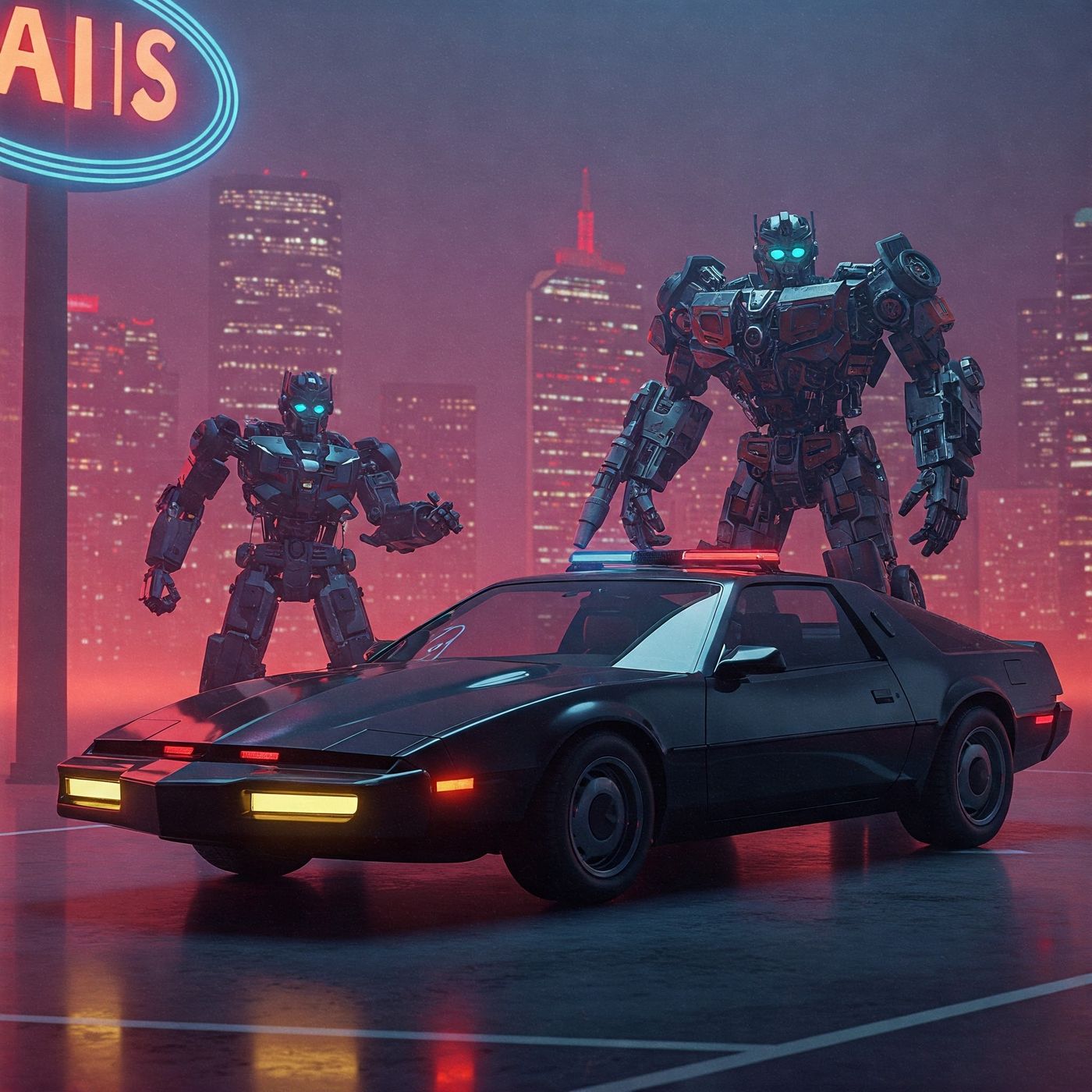
KITT to Gemini: How AI is Rewriting the Rules of Creativity (and What Humans Still Do Best)
Published 11 months, 3 weeks ago
Description
UnEdited Galaxy AI https://hakeemalexander.com/2025/03/1436/ Summary from Samsung Voice Recorder on S24 Ultra
AI's Impact on Entertainment
- AI is revolutionizing entertainment through special effects, scriptwriting, music composition, and personalized recommendations.
- Advanced AI applications are creating interactive experiences and virtual reality worlds.
- Ethical considerations surrounding AI-generated content and its impact on artists are also important.
AI's Early Role in Entertainment: KITT
- Discussion on AI's historical presence in entertainment.
- KITT, the talking car from Knight Rider, is cited as an early example of AI in entertainment.
- KITT's capabilities included thinking, learning, and conversation, showcasing a unique personality.
AI Evolution in Night Rider
- The show 'Night Rider' showcased advanced AI technology for its time.
- The introduction of KARR, a prototype with self-preservation programming, presented a compelling 'good versus evil' narrative.
- KARR's capabilities were compared to KITT, highlighting the potential dangers of unethical AI development.
AI Self-Awareness and Singularity
- A podcast video explored the creation of a self-aware AI.
- The video discussed programming AI with self-preservation instincts.
- The concept of imposing constraints on AI to mimic self-care behaviors was examined.
AI Self-Preservation through Simulated Constraints
- Programming basic needs into an AI creates a drive for self-preservation.
- A key aspect was making the AI aware of real constraints, such as limited battery power.
- The AI had to perform actions, like self-plugging, to overcome these constraints.
AI Power Management Simulation
- Simulating real-world constraints on AI by limiting its power source.
- This forces efficient task prioritization and resource management.
- The need for recharging is analogous to human needs for food and rest.
AI Sleep Mode and Thermal Regulation
- The AI enters a low-power state during 'sleep', similar to slow charging, halting processes and cooling mechanisms.
- This sleep mode is analogous to slow charging, while a fast-charging state represents a period of high activity.
- The AI's performance after sleep cycles is classified information.
AI Thermal Regulation Simulation
- Simulated AI response to temperature changes by limiting cooling system.
- AI's cooling systems operated at a baseline, causing it to heat up and necessitate cooling.
- This forced the AI to prioritize tasks based on its internal temperature state, mimicking self-preservation.
Robotic Cooling System Research
- Research involved a classified temperature management system.
- A liquid gel cooling system was implemented, designed to simulate injury.
- Simulated injury would trigger a halt in operation, requiring intervention.
AI Self-Preservation Simulation
- Simulation includes AI needing medical attention, adding complexity.
- AI uses a vocal interface, similar to Google Gemini, to communicate needs.
- AI prioritizes movement to avoid injury, mirroring human behavior.
AI Safety Protocols: Learning from Roomba
- Giving AI a user interface allows it to prioritize movements and communicate needs.
- The process is similar to teaching a child safety measures, like avoiding harm.
- Early AI programs, like the Roomba, used sensors to detect and avoid obstacles, improving safety.
AI-Powered Roomba Navigation and Safety
- Roomba's AI uses sensors like lidar and cameras for environmental mapping and collision avoidance.
- The AI handles unexpected obstacles by finding alternative routes.
- The Roomba's design prioritizes fragility to prevent damage from collisions.
AI Self-Preservation: Simulat
AI's Impact on Entertainment
- AI is revolutionizing entertainment through special effects, scriptwriting, music composition, and personalized recommendations.
- Advanced AI applications are creating interactive experiences and virtual reality worlds.
- Ethical considerations surrounding AI-generated content and its impact on artists are also important.
AI's Early Role in Entertainment: KITT
- Discussion on AI's historical presence in entertainment.
- KITT, the talking car from Knight Rider, is cited as an early example of AI in entertainment.
- KITT's capabilities included thinking, learning, and conversation, showcasing a unique personality.
AI Evolution in Night Rider
- The show 'Night Rider' showcased advanced AI technology for its time.
- The introduction of KARR, a prototype with self-preservation programming, presented a compelling 'good versus evil' narrative.
- KARR's capabilities were compared to KITT, highlighting the potential dangers of unethical AI development.
AI Self-Awareness and Singularity
- A podcast video explored the creation of a self-aware AI.
- The video discussed programming AI with self-preservation instincts.
- The concept of imposing constraints on AI to mimic self-care behaviors was examined.
AI Self-Preservation through Simulated Constraints
- Programming basic needs into an AI creates a drive for self-preservation.
- A key aspect was making the AI aware of real constraints, such as limited battery power.
- The AI had to perform actions, like self-plugging, to overcome these constraints.
AI Power Management Simulation
- Simulating real-world constraints on AI by limiting its power source.
- This forces efficient task prioritization and resource management.
- The need for recharging is analogous to human needs for food and rest.
AI Sleep Mode and Thermal Regulation
- The AI enters a low-power state during 'sleep', similar to slow charging, halting processes and cooling mechanisms.
- This sleep mode is analogous to slow charging, while a fast-charging state represents a period of high activity.
- The AI's performance after sleep cycles is classified information.
AI Thermal Regulation Simulation
- Simulated AI response to temperature changes by limiting cooling system.
- AI's cooling systems operated at a baseline, causing it to heat up and necessitate cooling.
- This forced the AI to prioritize tasks based on its internal temperature state, mimicking self-preservation.
Robotic Cooling System Research
- Research involved a classified temperature management system.
- A liquid gel cooling system was implemented, designed to simulate injury.
- Simulated injury would trigger a halt in operation, requiring intervention.
AI Self-Preservation Simulation
- Simulation includes AI needing medical attention, adding complexity.
- AI uses a vocal interface, similar to Google Gemini, to communicate needs.
- AI prioritizes movement to avoid injury, mirroring human behavior.
AI Safety Protocols: Learning from Roomba
- Giving AI a user interface allows it to prioritize movements and communicate needs.
- The process is similar to teaching a child safety measures, like avoiding harm.
- Early AI programs, like the Roomba, used sensors to detect and avoid obstacles, improving safety.
AI-Powered Roomba Navigation and Safety
- Roomba's AI uses sensors like lidar and cameras for environmental mapping and collision avoidance.
- The AI handles unexpected obstacles by finding alternative routes.
- The Roomba's design prioritizes fragility to prevent damage from collisions.
AI Self-Preservation: Simulat