Episode Details
Back to Episodes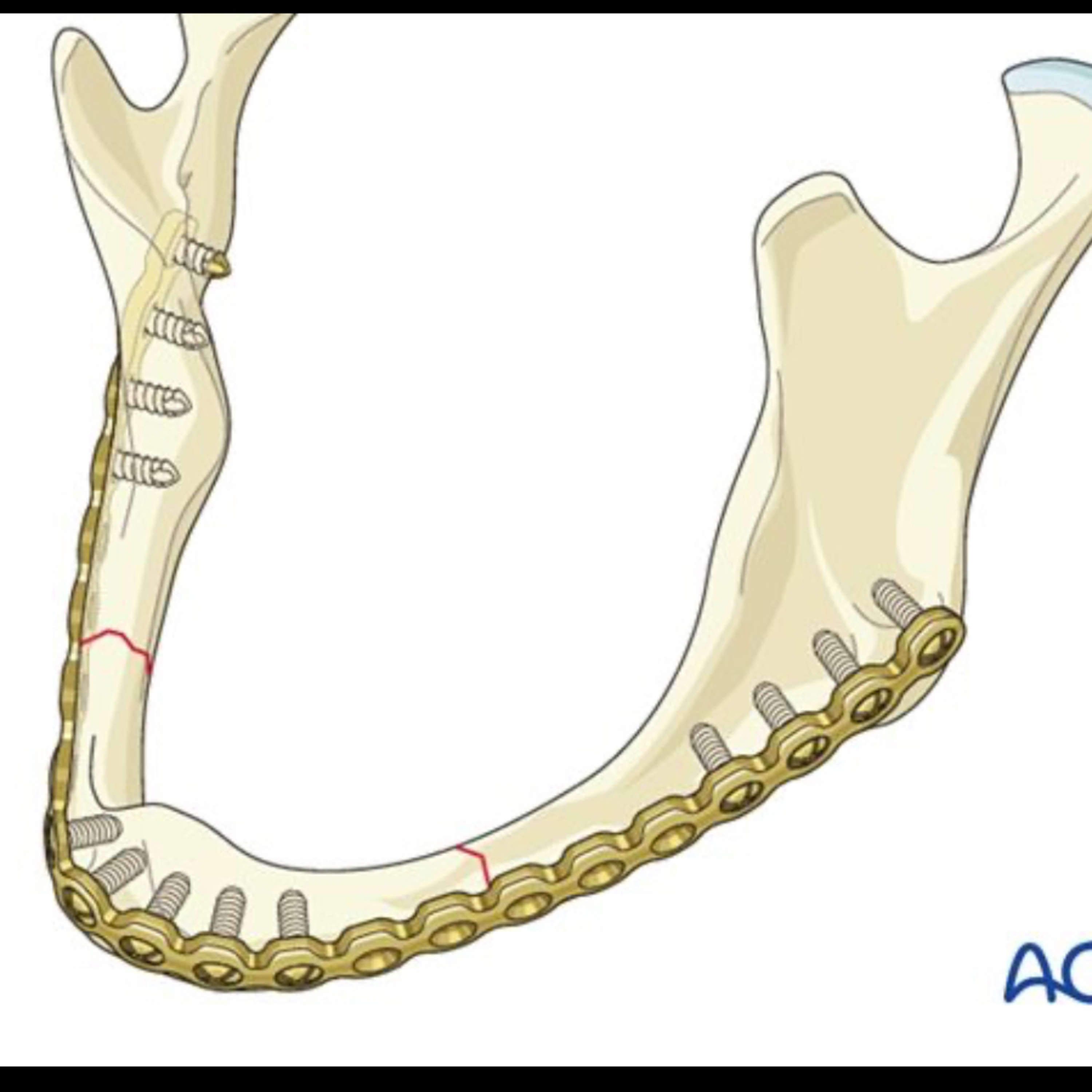
📝 “How Does The “Recon Plate” Differ From Other Fixation Options?”
Description
Quick Review #270 - #surgery #surgeon #doctorgallagher #oralsurgery #oralsurgeon #omfs #dentist #dentistry #dental #mandiblefracture
- 3.11.25
A reconstruction plate (recon plate) is a load-bearing fixation device used primarily for severely comminuted, atrophic, or segmental mandibular fractures where rigid fixation and stabilization of large bone defects are required. It is typically thicker, more rigid, and stronger than standard fixation plates and is designed to span defects and maintain mandibular continuity without relying on bony contact for stability.
Key Conceptual Differences:
1. Load-Bearing vs. Load-Sharing
• Recon plates carry the entire load of the mandible and are independent of bony contact.
• Other methods, like miniplates and lag screws, require bony contact for stabilization and healing.
2. Indications for Severe Defects
• Recon plates are used when bone continuity is disrupted, such as in large comminuted fractures or defects after tumor resection.
• Standard miniplates and rigid fixation rely on the bone itself for load-sharing, making them unsuitable for segmental defects.
3. Biomechanical Considerations
• Recon plates prevent mandibular collapse but can lead to stress shielding, potentially delaying bone healing.
• Miniplates allow for biomechanical micromovement, which promotes natural healing.
4. Need for Soft Tissue Coverage
• Due to their size, recon plates often require muscle or vascularized soft tissue flaps to prevent exposure.
• Miniplates and screws are low-profile, reducing soft tissue irritation.
Conclusion:
A reconstruction plate is reserved for cases where bone continuity is compromised and requires load-bearing stability, whereas other fixation options depend on bone apposition and healing capacity. The choice depends on fracture complexity, bone stock, and need for early function restoration.
References:
1. Ellis, E. III, & Schubert, W. (n.d.). Fractures in the edentulous atrophic mandible. AO Surgery Reference.
2. Seol, G.-J., Jeon, E.-G., Lee, J.-S., Choi, S.-Y., Kim, J.-W., Kwon, T.-G., & Paeng, J.-Y. (2014). Reconstruction plates used in the surgery for mandibular discontinuity defect. Journal of the Korean Association of Oral and Maxillofacial Surgeons, 40(6), 266–270
3. Muñante-Cardenas, J. L., & Passeri, L. A. (2015). Biomechanical comparison of four mandibular angle fracture fixation techniques. Craniomaxillofacial Trauma & Reconstruction, 8(2), 123–128
4. ChatGPT. 2025.
#podcast #dentalpodcast #doctorgallagherpodcast #doctorgallagherspodcast #doctor #dentist #dentistry #oralsurgery #dental #dentalschool #dentalstudent #doctorlife #dentistlife #oralsurgeon #doctorgallagher