Episode Details
Back to Episodes
Special Episode – Pompeii with Professor Ray Laurence
Description
We sit down to talk to the fabulous Professor Ray Laurence from Macquarie University in this special episode about urban space in Pompeii and the place of children within the society. These topics are close to his heart as his work mostly focuses on:
- The Roman City
- Communications and Mobility – especially Roman roads
- Age and Ageing in the Roman World
Special Episode – Pompeii with Professor Ray Laurence
You may also recognise his name because, in addition to his scholarly publications, Ray has worked with TEDEd to produce some amazing short videos on the life of children in Ancient Rome. Join us for this fascinating discussion on life in Pompeii!
The Urban Environment and Street Life
Pompeii is a very famous site, but there are a lot of misconceptions about what this place was actually like before the eruption. Ray Laurence explains why life in Pompeii was tough and how the built environment reflects the fact that this was a very average town. It had been around for centuries before the eruption in 79 CE and shares the influences of various people who lived in the region, including the Etruscans, the Oscans, the Samnites, and finally, the Romans.
The layout of Pompeii evolved over time and areas like the Forum were used in different ways throughout its existence. We can learn more about how people experienced the urban environment by piecing together a variety of evidence including wheel ruts, the width of streets, graffiti patterns, literature, and the building remains. While Pompeii may not have been especially fancy, it was a bustling town and people spent a lot of time in the streets, conducting business, conversing, stopping at shrines, fetching water, or grabbing some takeaway.
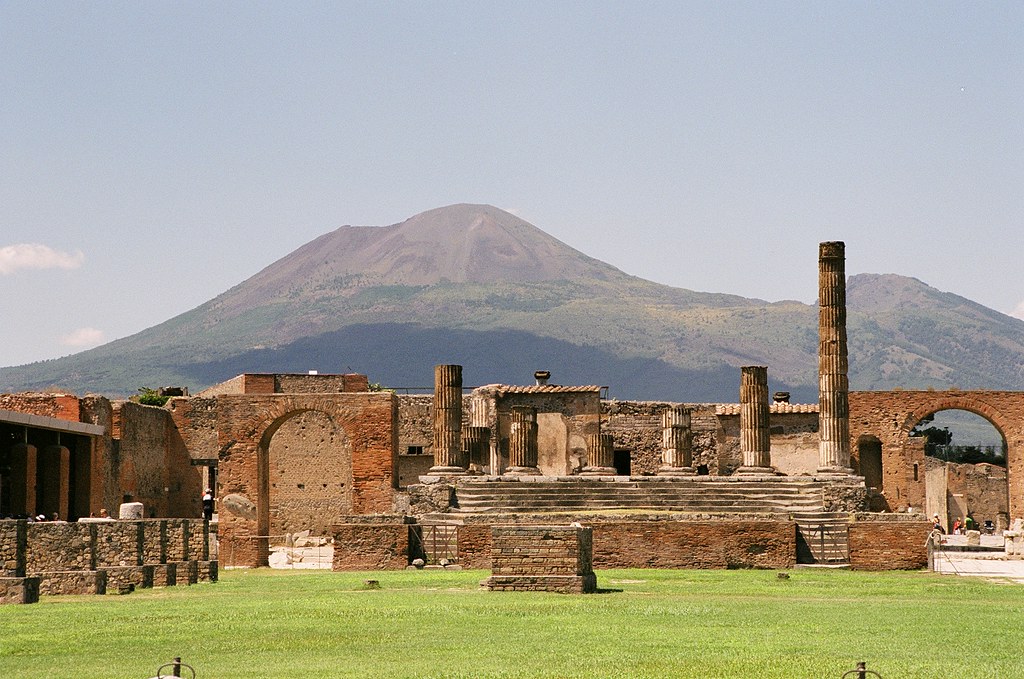
The Forum, Pompeii.
Children in Pompeii
We tend to see Pompeii from the perspective of adults as children leave less evidence – whether this is literary, archaeological or even human remains. Scholars such as Katherine Huntley and Ray Laurence urge us not to discount their experiences as they make up a sizeable proportion of the town. Once we start thinking about the urban layout from their perspective, it is surprising what we can discover.
By using the average heights of adults in Pompeii, we can approximate the growth of children in the towns and thus consider how accessible the amenities were for the smallest residents. For instanc