Episode Details
Back to Episodes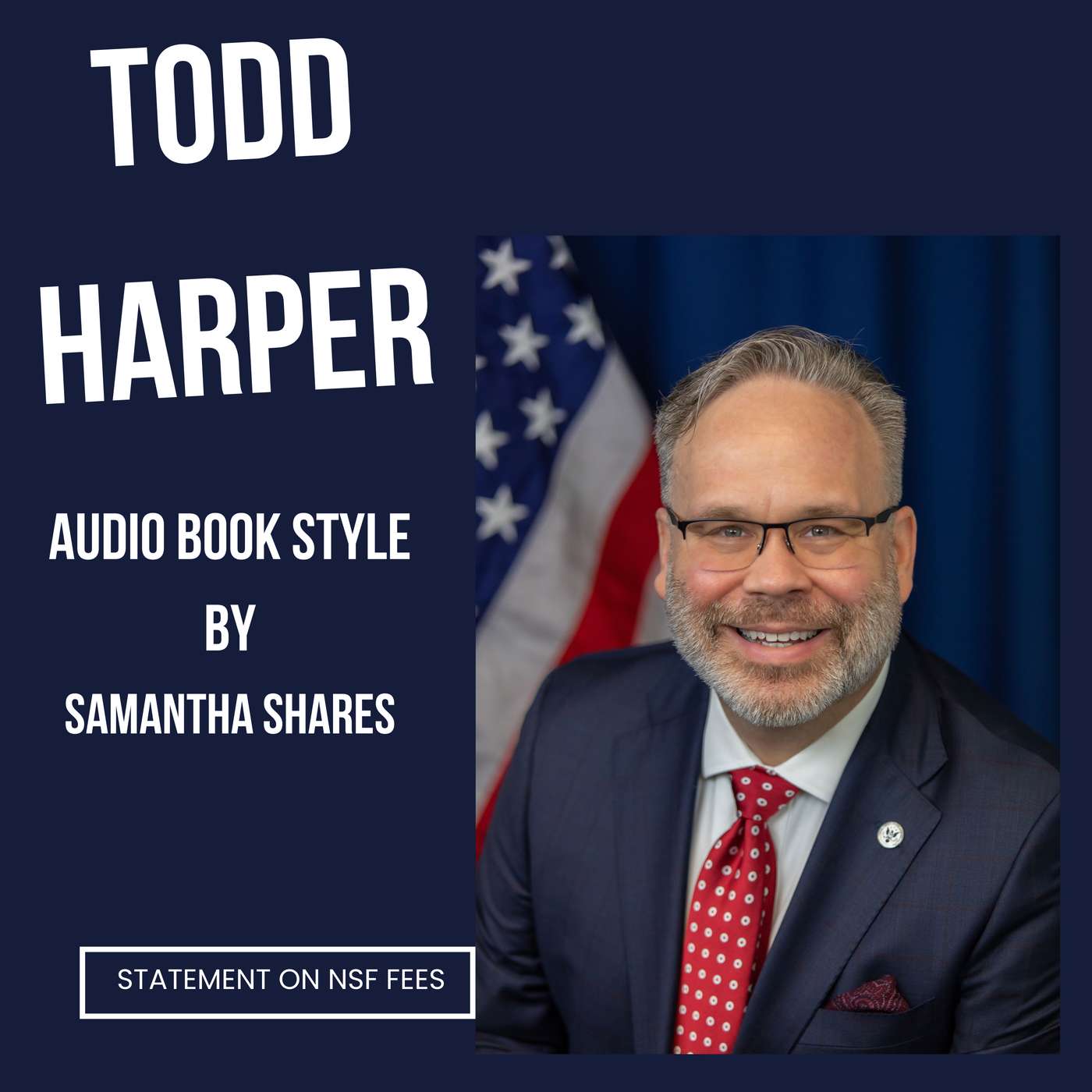
NCUA Board Member Todd Harper Statement on the Decision to Curtail the Collection of Overdraft and Non-sufficient Fund Fees
Description
www.marktreichel.com
https://www.linkedin.com/in/mark-treichel/
Hello, this is Samantha Shares. This episode covers NCUA Board Member Todd Harper Statement on the Decision to Curtail the Collection of Overdraft and Non-sufficient Fund Fees
The following is an audio version of that Statement This podcast is educational and is not legal advice. We are sponsored by Credit Union Exam Solutions Incorporated, whose team has over two hundred and Forty years of National Credit Union Administration experience. We assist our clients with N C U A so they save time and money. If you are worried about a recent, upcoming or in process N C U A examination, reach out to learn how they can assist at Mark Treichel DOT COM. Also check out our other podcast called With Flying Colors where we provide tips on how to achieve success with N C U A.
And now the Statement.
NCUA Board Member Todd Harper issued the following statement about the agency’s decision to curtail the collection of total overdraft and non-sufficient fund (NSF) fees for federally insured credit unions with more than $1 billion in assets beginning with Call Reports for the first quarter of 2025.
For markets to work efficiently, transparency is needed. That’s a bedrock principle of economics. And, it’s one of the many reasons why credit union member-owners and the public should have clear visibility into the income a credit union generates from overdraft and NSF fees charged to its member-owners.
To advance credit union efforts to benchmark fees against other financial institutions, improve marketplace competition, and increase consumer understanding of the fees they’re charged within the credit union system, the NCUA required federally insured credit unions with more than $1 billion in assets to disclose, separately, income from overdraft and NSF fees beginning with the 2024 first quarter Call Report. With today’s release of the 2024 fourth quarter Call Report results, however, that desirable transparency experiment will regrettably end.
During the last year, we’ve found that reporting institutions have collected $3.8 billion in such fees. Some charged no fees at all. For most reporting credit unions, overdraft and NSF fees accounted for between 2 and 5 percent of revenue. Some outliers charged fees amounting to as much as 18 percent of income. For those billion-dollar-plus credit unions with higher overdraft and NSF fees, we also found that they did not use those fees to subsidize better interest rates or lower other fees.
Federally insured banks with more than $1 billion in assets began reporting these numbers in 2015. Since then, consumers have benefitted as banks have lowered their reliance on such fees. In fact, the Consumer Financial Protection Bureau found that roughly two out of three banks with $10 billion or more in assets have eliminated NSF fees, saving consumers $2 billion annually. Yet, among credit unions with greater than $10 billion in assets, four out of five continue to charge NSF fees. That overreliance on such fees is one of the many reasons why the NCUA began collecting and publicly reporting this data on Call Reports.
But, by unilateral action by the Chairman, credit union member-owners and the public will now no longer have access to this important information. If credit unions are to live up to their statutory purpose of supporting the financial needs of ‘people of modest means and the credit union movement’s oft-touted ‘people-helping-people’ philosophy, then credit union member-owners should have access to this basic market information, so they can make better decisions about how and where to deposit and access their hard-earned money.
While the NCUA will no longer publish overdraft and NSF fee income for individual credit unions on a real-time quarterly basis, the agency will instead collect the data during supervisory examinations