Podcast Episode Details
Back to Podcast Episodes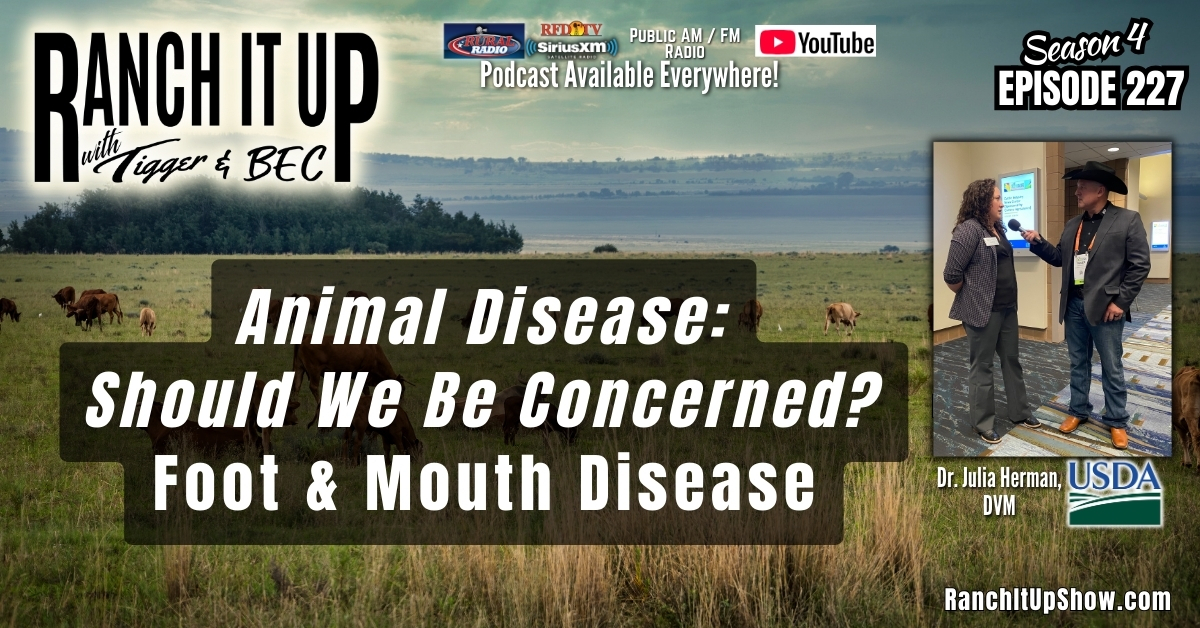
Animal Health & Disease Management: Should We Be Concerned & Tariff Updates
Season 5 Episode 227
Join me Jeff Tigger Erhardt, Rebecca Wanner AKA BEC and my crew as we dive into Foot & Mouth Disease, Animal Health & Disease Management. A must hear for anyone in the cattle business. Plus news, sale recaps, cattle sale info and market commentary that you will only get on this all new episode of The Ranch It Up Radio Show. Be sure to subscribe on your favorite podcasting app or on the Ranch It Up Radio Show YouTube Channel.
Season 5, EPISODE 227
Animal Health & Disease Management: Should We Be Concerned & Tariff Updates Improving Animal & Disease Management Practices: Foot & Mouth Disease, and Tariff News Foot & Mouth Disease: In LivestockFoot-and-mouth disease (FMD) is a severe, fast-spreading viral disease that primarily affects cloven-hoofed animals, including cows, pigs, sheep, goats, and deer.
FMD is one of the most challenging animal diseases to control. Although most infected animals survive, they're left weak and unable to produce the level of meat and milk prior to infection. FMD was first discovered in the United States in 1870 and eradicated in 1929.
FMD is not a human health or food safety threat. The disease is not related to hand, foot, and mouth disease, a common childhood illness caused by a different virus.
How To Identify Foot & Mouth DiseaseThere are 7 known types and more than 60 subtypes of the FMD virus, meaning immunity to one type doesn't protect animals against other types or subtypes. The first signs of illness usually appear within 2 to 14 days after infection. Here's what to look for:
- Fever
- Great increase in temperature for 2 to 3 days
- Blisters/Vesicles
- Blisters can develop on the tongue and lips, in and around the mouth, on the mammary glands, and around the hooves. They rupture and discharge clear or cloudy fluid.
- Erosions
- When blisters pop, they leave raw, eroded areas surrounded by ragged fragments of loose tissue.
- Excess saliva
- Infected animals may have sticky, foamy, and stringy saliva.
- Loss of appetite
- Painful tongue and mouth blisters may lead animals to eat less.
- Lameness and a reluctance to move or stand
- Abortions
- Animals can experience spontaneous abortions and sterility.
- Milk
- Dairy cows may have low milk production.
- Heart disease and death
- These symptoms are especially prevalent in newborn animals.
FMD Can Easily Be Confused With Other Diseases
FMD may be confused with other diseases that produce blisters, including vesicular stomatitis, bluetongue, bovine viral diarrhea, foot rot in cattle, and swine vesicular disease. The only way to tell if the blisters are caused by the FMD virus is through laboratory testing. If you observe mouth or feet blisters in your animals, report them immediately so that they can be tested.
How To Prevent Foot & Mouth Disease- Report signs of disease. Livestock owners, livestock transport and slaughter personnel, and private veterinarians should watch for symptoms of FMD and immediately report sick animals to Federal, State, Tribal, or local anim
Published on 9 months, 2 weeks ago