Episode Details
Back to Episodes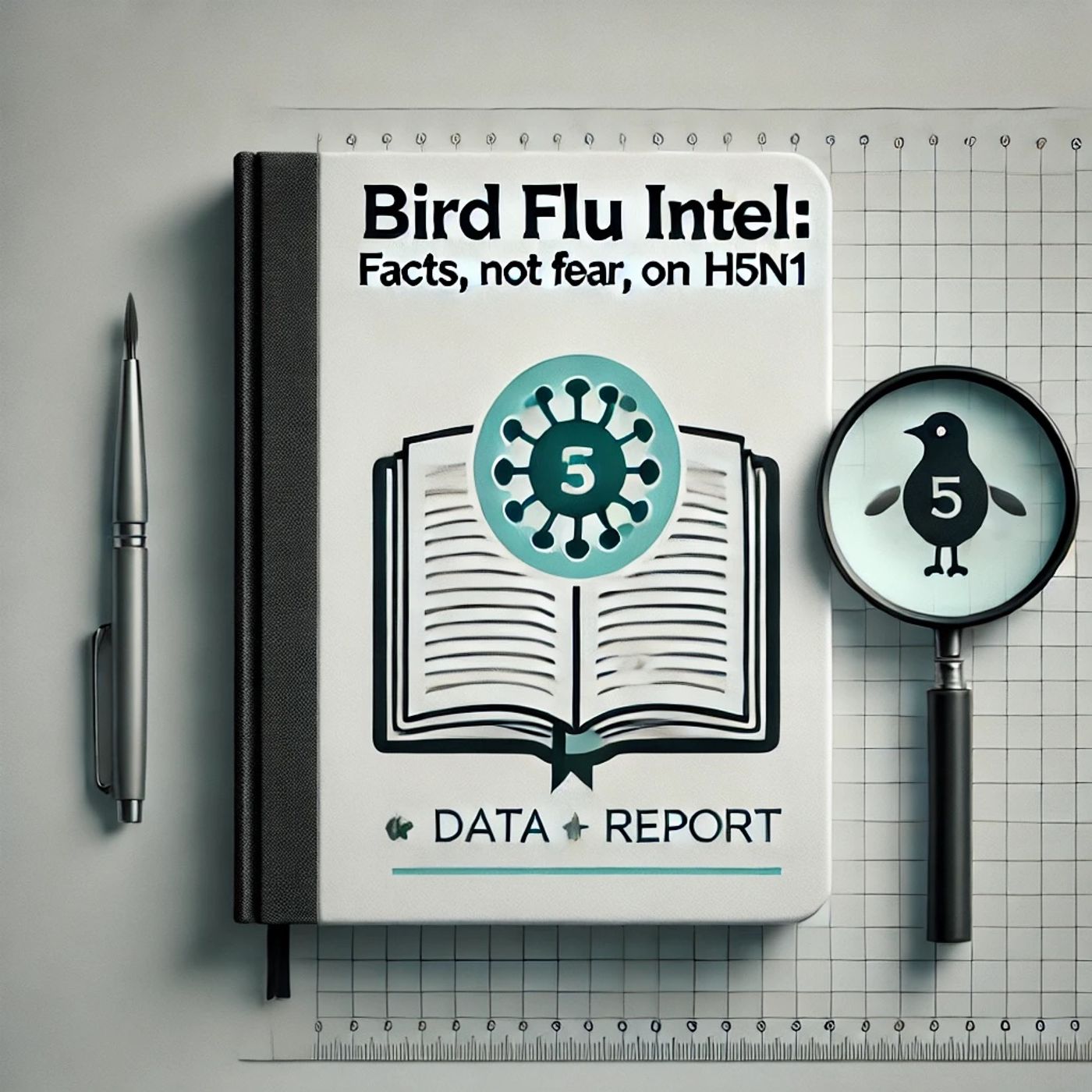
H5N1 Bird Flu Facts: Debunking Myths and Understanding the Real Risks of Transmission and Infection
Published 1 year, 1 month ago
Description
Welcome to our podcast, Bird Flu Intel: Facts, Not Fear, on H5N1, where today we debunk some common myths about bird flu. Our aim is to sift through the noise and offer you a clear perspective based on scientific evidence.
Let's dive into some misconceptions surrounding H5N1. One common myth is that H5N1 bird flu is easily transmitted between humans. To date, while H5N1 has shown it can infect humans who have direct contact with infected birds, there is scant evidence supporting easy human-to-human transmission. The World Health Organization continually monitors the virus for changes and, as of now, reports no sustained human transmission. This is crucial to understanding the actual risk level.
Another myth is that consuming poultry products poses a high risk of infection. In reality, the virus is not typically transmitted through fully cooked poultry or eggs. Proper cooking kills the virus, making properly prepared poultry products safe to eat. Adherence to basic food safety practices remains essential in preventing any foodborne illness.
A third, fear-inducing misconception is that H5N1 is the next global pandemic. While H5N1 is a concern due to its high mortality rate among those directly infected, many factors determine whether a virus can cause a pandemic, including its ability to transmit effectively from person to person. Current monitoring shows H5N1 has not evolved these traits.
Misinformation can spread quickly in today's digital landscape, fueled by alarmist headlines and social media shares. This is harmful, as it can lead to unnecessary fear, stigma, or even harmful behaviors. It can also divert attention and resources from actions that genuinely protect public health.
To navigate this landscape, it's vital for listeners to evaluate information quality. Check the source – is it reputable and well-regarded in scientific circles? Second, cross-reference information with trusted entities like the Centers for Disease Control and Prevention or the World Health Organization. Finally, be wary of sensationalism. Credible reports focus on evidence and balanced perspectives, not fear-mongering.
The current scientific consensus on H5N1 emphasizes that vigilance is necessary, but not panic. Surveillance in birds and humans helps in early detection and response. While the pathogenicity of the virus in birds is quite high, the same doesn't apply between humans, underscoring the importance of scientific monitoring and research.
However, legitimate scientific uncertainty remains, particularly regarding if and when the virus might mutate to become easily transmissible between humans. Scientists are actively researching this, underscoring the need for continued investment in both surveillance and vaccine development.
Stay informed by engaging with reputable sources, and remember: knowledge is a powerful tool against fear. Informed discussions help maintain a balanced view, reducing unnecessary anxiety and ensuring preparedness. Thank you for joining us today on Bird Flu Intel, where facts replace fear. Stay safe, stay informed.
This content was created in partnership and with the help of Artificial Intelligence AI
Let's dive into some misconceptions surrounding H5N1. One common myth is that H5N1 bird flu is easily transmitted between humans. To date, while H5N1 has shown it can infect humans who have direct contact with infected birds, there is scant evidence supporting easy human-to-human transmission. The World Health Organization continually monitors the virus for changes and, as of now, reports no sustained human transmission. This is crucial to understanding the actual risk level.
Another myth is that consuming poultry products poses a high risk of infection. In reality, the virus is not typically transmitted through fully cooked poultry or eggs. Proper cooking kills the virus, making properly prepared poultry products safe to eat. Adherence to basic food safety practices remains essential in preventing any foodborne illness.
A third, fear-inducing misconception is that H5N1 is the next global pandemic. While H5N1 is a concern due to its high mortality rate among those directly infected, many factors determine whether a virus can cause a pandemic, including its ability to transmit effectively from person to person. Current monitoring shows H5N1 has not evolved these traits.
Misinformation can spread quickly in today's digital landscape, fueled by alarmist headlines and social media shares. This is harmful, as it can lead to unnecessary fear, stigma, or even harmful behaviors. It can also divert attention and resources from actions that genuinely protect public health.
To navigate this landscape, it's vital for listeners to evaluate information quality. Check the source – is it reputable and well-regarded in scientific circles? Second, cross-reference information with trusted entities like the Centers for Disease Control and Prevention or the World Health Organization. Finally, be wary of sensationalism. Credible reports focus on evidence and balanced perspectives, not fear-mongering.
The current scientific consensus on H5N1 emphasizes that vigilance is necessary, but not panic. Surveillance in birds and humans helps in early detection and response. While the pathogenicity of the virus in birds is quite high, the same doesn't apply between humans, underscoring the importance of scientific monitoring and research.
However, legitimate scientific uncertainty remains, particularly regarding if and when the virus might mutate to become easily transmissible between humans. Scientists are actively researching this, underscoring the need for continued investment in both surveillance and vaccine development.
Stay informed by engaging with reputable sources, and remember: knowledge is a powerful tool against fear. Informed discussions help maintain a balanced view, reducing unnecessary anxiety and ensuring preparedness. Thank you for joining us today on Bird Flu Intel, where facts replace fear. Stay safe, stay informed.
This content was created in partnership and with the help of Artificial Intelligence AI