Episode Details
Back to EpisodesMormonism Live: 075: Fugate’s Kinderhook Fugazi
Published 3 years, 8 months ago
Description
Bill and RFM tell the story of the Kinderhook Plates episode in Mormon history in Mormonism Live fashion. From original Documents to Conspiracy Theories to a honest transparent conversation around the facts. We discuss the history, the tests done to attempt to discern their dating and method of inscription, the Church’s commentary around them, and even their connection to the Book of Abraham. You won’t want to miss this!
A. The setup for the Kinderhook dig
- April 16th 1843 – Robert Wiley – excavation of Indian Burial- Kinderhook Illinois
- Dream 3 nights in a row to dig there – Playing on Joseph Smith connection?
- hired men to dig with him – shaft 10 feet down (RFM indicates that there are multiple reports of varying depths)
- discovered skeleton and 6 bell shaped brass plates covered with symbols
- One of the men was a Mormon Church member
B.) Joseph hears reports (likely the mormon in the dig) and requests to see the plates
- Joseph Smith examines them
- States he won’t translate them them until they are sent off to various Antiquarian Societies
- “In any case, the translation for which hope had been expressed in the Times and Seasons did not appear. In a letter dated April 8, 1878, Wilbur Fugate recalled: “We understood Jo Smith said [the plates] would make a book of 1200 pages but he would not agree to translate them until they were sent to the Antiquarian society at Philadelphia, France, and England.”” They were sent and the answer was that there were no such Hieroglyphics known and if there ever had been, they had long since passed away. Then Smith began his translation”””
- What would have been the timeframe to mail something to these antiquarian societies and to get a response back? Would he have mailed the plates? An impression sketch? We have one witness – years removed (The Fugate letter to a Mr. Cobb was written in 1878/1879)
- There may have been a translation manuscript but if so it has been lost.
- Folks are making tracing of the kinderhook plates in Smith’s possession
- “In any case, the translation for which hope had been expressed in the Times and Seasons did not appear. In a letter dated April 8, 1878, Wilbur Fugate recalled: “We understood Jo Smith said [the plates] would make a book of 1200 pages but he would not agree to translate them until they were sent to the Antiquarian society at Philadelphia, France, and England.”” They were sent and the answer was that there were no such Hieroglyphics known and if there ever had been, they had long since passed away. Then Smith began his translation”””
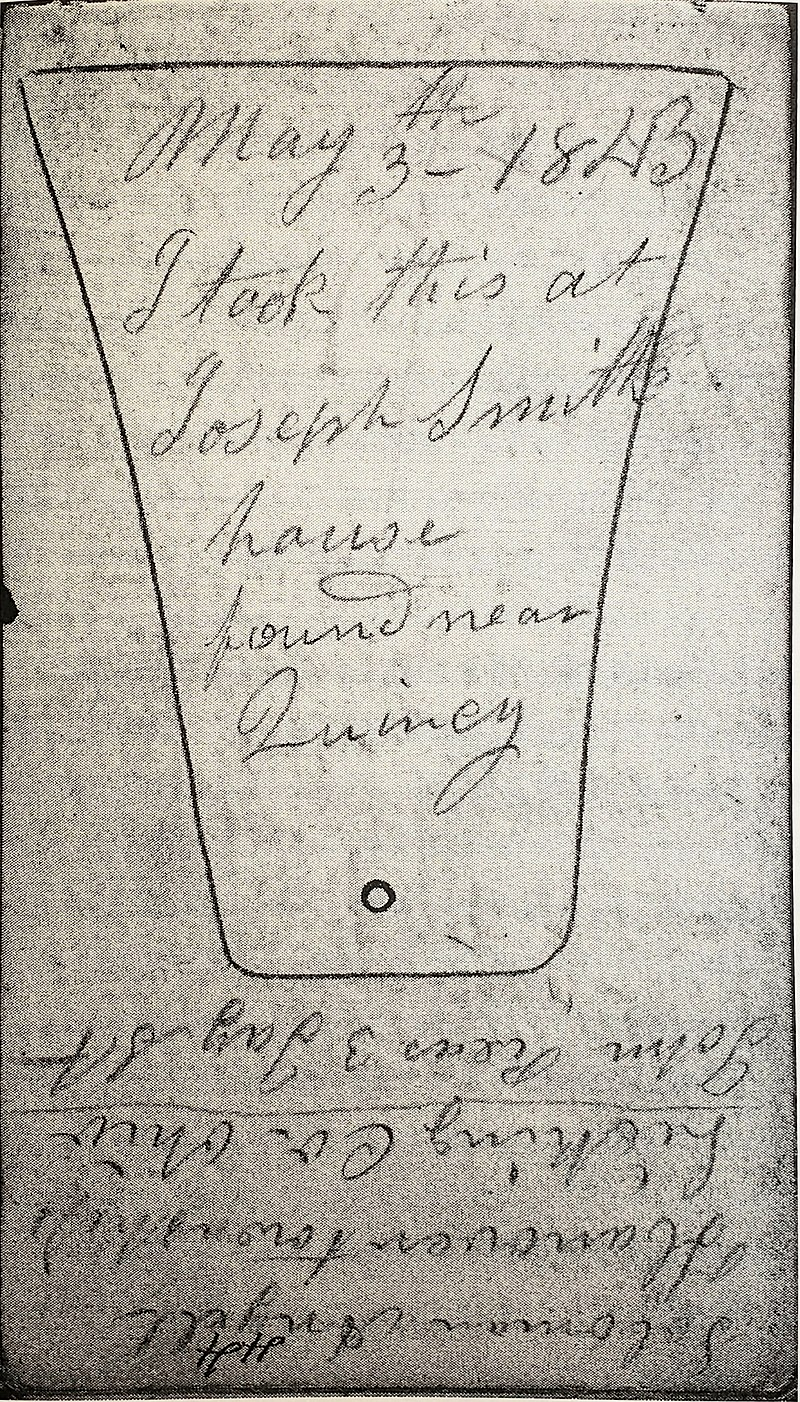
C.) Joseph attempts some sort of translation
- Smith’s private secretary, William Clayton, recorded that upon receiving the plates, Smith sent for his “Hebrew Bible & Lexicon”, possibly suggesting that he might try to translate the plates by conventional means, rather than by use of a seer stone or direct revelation.

- On 1 May 1843, Clayton wrote in his journal: and as published in multiple places, “I have seen 6 brass plates … covered with an