Episode Details
Back to Episodes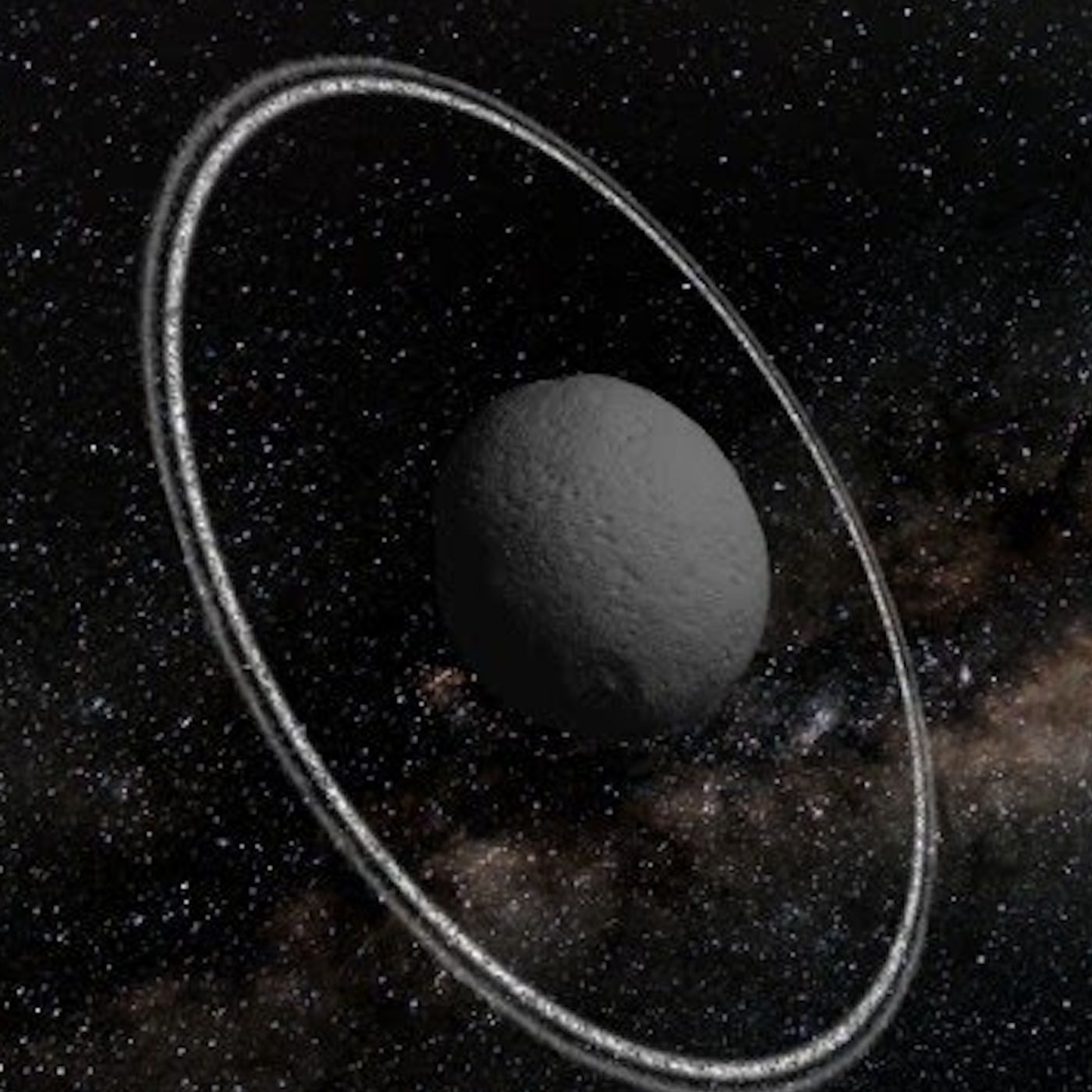
23E-35-An Asteroid With A Ring
Published 6 years, 10 months ago
Description
Programs 31-60
Travelers in The Night
Programs
Contents
1 31-A Gentle Breakup Of An Asteroid
2 32-A Peanut Shaped Asteroid with a Moon
3 33-A Busy Month in the Earth's Neighborhood
4 34- Number 5000
5 35-An Asteroid With A Ring
6 36- Earth and Moon as Evening Stars
7 37-Slow Movers At The Edge of Our Solar System
8 38-The Big Ones
9 39-Dash Cams and the Anatomy of An Airburst
10 40-Itokawa A Strange Space Peanut
11 41-Navigating The Night Sky
12 42-Astronauts Reveal Sobering Data On Asteroid Impacts
13 43-First Earth-Size Planet in 'Habitable Zone'
14 44-A Unique Metal World; Asteroid Psyche
15 45-A World Full of Holes
16 46-How Far Is Forever
17 47-Earth Approaching Space Rocks Collected Over 6 Nights
18 48-Large Dangerous Asteroids Still Appear Suddenly Without Warning
19 49-Earth Approaching Wannabees
20 50-Asteroid 2014 JO25: What An Incredible Ride
21 51-Asteroid 2007 VK184 - Eliminated As An Impact Risk to Earth
22 52- Another Large Bright Suddenly Appearing Asteroid
23 53- Where Is Juno
24 54- Tour a Neighbor World
25 55-RADAR Telescopes Pair Up to Image Near-Earth Asteroid
26 56-A Whopper or A Comet
27 57-Hold A Traveler In The Night In Your Hand
28 58-NASA Hunts for A Special Asteroid
29 59-Spotting Travelers In The Night
30 60-A Close Visit With A Message
31-A Gentle Breakup Of An Asteroid
Click to Listen
Published PRX April 3, 2014
Recorded March 21, 2014
remixed July 15, 2014
Newton formulated that the change in motion for an object depends on the amount of force and the length of time it is applied. For this reason a baseball pitcher tries to have a long pull on the ball before releasing it.
Astronomers have a theory, called the Yorp effect, that light from the Sun produces a very tiny torque which increases the rate of spin of an object. The effect is so small that it would take billions of years to be produce a measurable outcome. How can such an idea ever be tested?
In September of 2013, the Pan-STARRS group found a strange moving object in the night sky. The plot thickened when the Keck Telescope on Mauna Kea Hawaii found that instead of being a single body it appeared to be three small objects embedded in a cloud of gas and dust several thousands of miles in diameter. The Hubble Space Telescope was used to see what is going on.
Hubble found that this object changes significantly over a period of months, that it has 6 tails, and that pieces of it continue to emerge from the center and slowly move away at a walking pace.
An asteroid collision is too violent to cause what is seen. The object is too cold for expanding gases to cause it to break up. The best explanation which fits the data is that Sun light has slowly, over billions of years, increased P/2013 P5's rate of spin causing it to gently come apart. Some of the dust and small particles which escape from it will orbit the Sun. When the Earth runs into them we may see them as meteors in our night sky.
For Travelers in the Night this is Dr. Al Grauer.
Go to travelersinthenight.org for more information.
© 2014 A. D. Grauer and ℗ 2014 A. D. Grauer
More Information On The Break Up Of An Asteroid
32-A Peanut Shaped Asteroid with a Moon
Click to Listen
Published PRX April 3, 2014
Recorded March 29, 2014
remixed July 15, 2014
It appears that Hektor and its moon were created by a collision between two icy asteroids early in the 4.5 billion year history of our solar system when things were more chaotic. They happened to land in a gravitational dip which has allowe
Travelers in The Night
Programs
Contents
1 31-A Gentle Breakup Of An Asteroid
2 32-A Peanut Shaped Asteroid with a Moon
3 33-A Busy Month in the Earth's Neighborhood
4 34- Number 5000
5 35-An Asteroid With A Ring
6 36- Earth and Moon as Evening Stars
7 37-Slow Movers At The Edge of Our Solar System
8 38-The Big Ones
9 39-Dash Cams and the Anatomy of An Airburst
10 40-Itokawa A Strange Space Peanut
11 41-Navigating The Night Sky
12 42-Astronauts Reveal Sobering Data On Asteroid Impacts
13 43-First Earth-Size Planet in 'Habitable Zone'
14 44-A Unique Metal World; Asteroid Psyche
15 45-A World Full of Holes
16 46-How Far Is Forever
17 47-Earth Approaching Space Rocks Collected Over 6 Nights
18 48-Large Dangerous Asteroids Still Appear Suddenly Without Warning
19 49-Earth Approaching Wannabees
20 50-Asteroid 2014 JO25: What An Incredible Ride
21 51-Asteroid 2007 VK184 - Eliminated As An Impact Risk to Earth
22 52- Another Large Bright Suddenly Appearing Asteroid
23 53- Where Is Juno
24 54- Tour a Neighbor World
25 55-RADAR Telescopes Pair Up to Image Near-Earth Asteroid
26 56-A Whopper or A Comet
27 57-Hold A Traveler In The Night In Your Hand
28 58-NASA Hunts for A Special Asteroid
29 59-Spotting Travelers In The Night
30 60-A Close Visit With A Message
31-A Gentle Breakup Of An Asteroid
Click to Listen
Published PRX April 3, 2014
Recorded March 21, 2014
remixed July 15, 2014
Newton formulated that the change in motion for an object depends on the amount of force and the length of time it is applied. For this reason a baseball pitcher tries to have a long pull on the ball before releasing it.
Astronomers have a theory, called the Yorp effect, that light from the Sun produces a very tiny torque which increases the rate of spin of an object. The effect is so small that it would take billions of years to be produce a measurable outcome. How can such an idea ever be tested?
In September of 2013, the Pan-STARRS group found a strange moving object in the night sky. The plot thickened when the Keck Telescope on Mauna Kea Hawaii found that instead of being a single body it appeared to be three small objects embedded in a cloud of gas and dust several thousands of miles in diameter. The Hubble Space Telescope was used to see what is going on.
Hubble found that this object changes significantly over a period of months, that it has 6 tails, and that pieces of it continue to emerge from the center and slowly move away at a walking pace.
An asteroid collision is too violent to cause what is seen. The object is too cold for expanding gases to cause it to break up. The best explanation which fits the data is that Sun light has slowly, over billions of years, increased P/2013 P5's rate of spin causing it to gently come apart. Some of the dust and small particles which escape from it will orbit the Sun. When the Earth runs into them we may see them as meteors in our night sky.
For Travelers in the Night this is Dr. Al Grauer.
Go to travelersinthenight.org for more information.
© 2014 A. D. Grauer and ℗ 2014 A. D. Grauer
More Information On The Break Up Of An Asteroid
32-A Peanut Shaped Asteroid with a Moon
Click to Listen
Published PRX April 3, 2014
Recorded March 29, 2014
remixed July 15, 2014
It appears that Hektor and its moon were created by a collision between two icy asteroids early in the 4.5 billion year history of our solar system when things were more chaotic. They happened to land in a gravitational dip which has allowe