Episode Details
Back to Episodes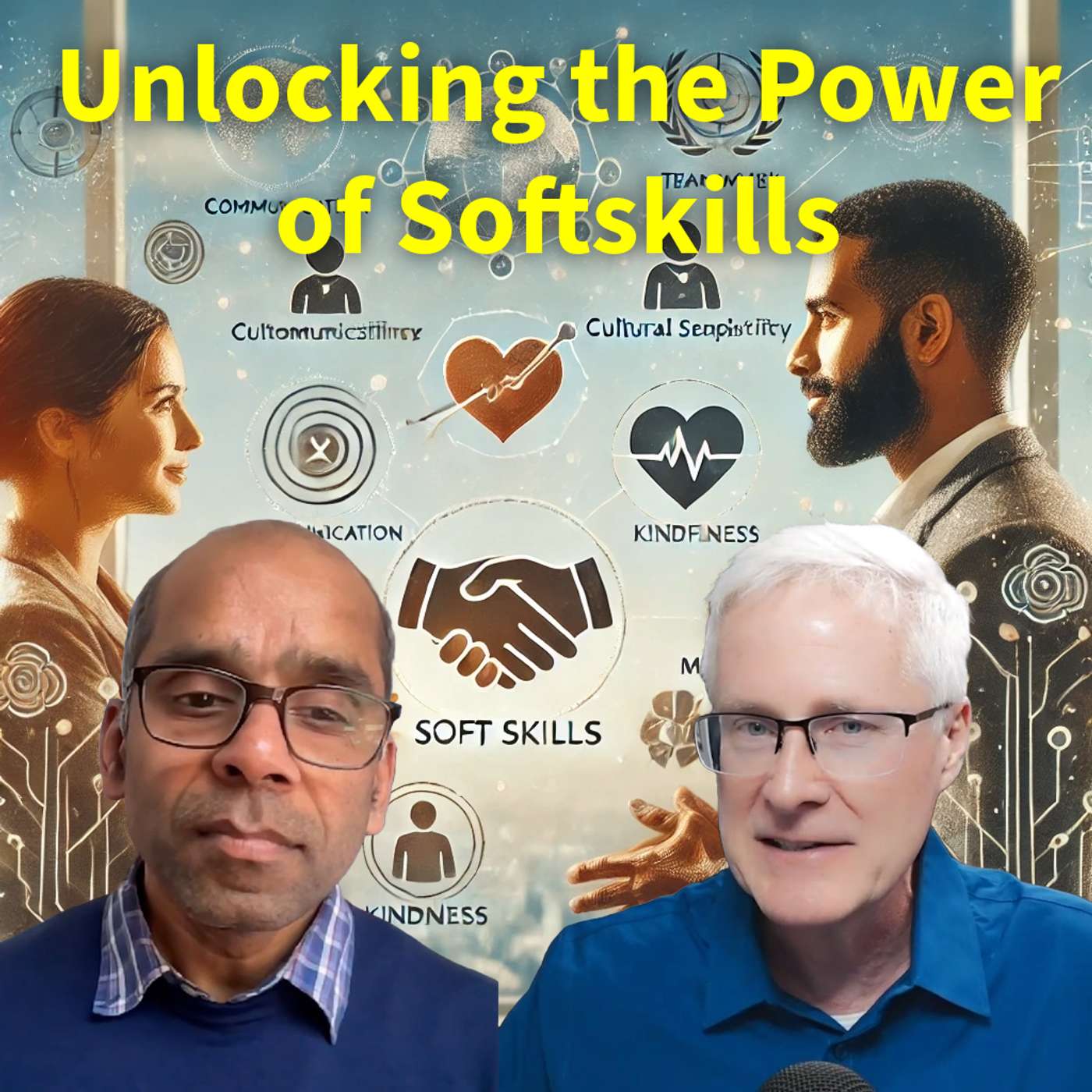
#245 Unlocking the power of soft-skills
Description
Check out my new book AI Augmented Teams on Amazon or on my website paidar.ai/books.
In this episode, Dr. Darren and Arun discuss the critical importance of non-technical or soft skills for technical professionals. They explore how these skills can be learned and developed, the significance of effective communication in team dynamics, and the impact of cultural sensitivity in diverse work environments. The discussion also highlights the role of mindfulness in professional life and the increasing relevance of soft skills in emerging technologies like AI. The conversation emphasizes that kindness and gratitude are essential to a positive workplace culture. ## Takeaways Non-technical skills are essential for success in technical roles. Soft skills can be learned and developed over time. Effective communication is crucial for team dynamics. Cultural sensitivity enhances workplace interactions. Mindfulness helps manage stress and improve focus. Soft skills will become more critical with the rise of AI. Kindness and gratitude foster a positive work environment. Organizations should prioritize training in soft skills. Understanding different communication styles is vital in diverse teams. Building relationships takes time and effort, especially in new environments.
In the fast-paced world of technology, hard skills often take the limelight. However, a growing body of research and anecdotal evidence highlights the importance of soft skills—those non-technical interpersonal traits that can make or break a team's success. From communication to empathy, these competencies are essential for engineers and technologists navigating diverse environments. In this blog post, we will explore the relevance of soft skills, the importance of cultivating them, and practical strategies for enhancing them.
The Importance of Soft Skills in Technology
Understanding the fundamental differences between hard and soft skills can help illuminate why the latter is crucial in a tech environment. Hard skills typically refer to the technical expertise needed to perform specific job functions, such as coding in Java or using particular software tools. In contrast, soft skills encompass the personal attributes that enable someone to interact effectively with others. This can include communication, teamwork, conflict resolution, and emotional intelligence.
With the rise of collaborative projects often involving cross-functional teams, practical soft skills have become more critical than ever. In a scenario where engineers must work in sync with designers, marketers, and stakeholders, technical proficiency alone isn't enough. Effective communication can minimize misunderstandings and foster a more inclusive atmosphere, while emotional intelligence can help navigate conflicts that invariably arise in team dynamics. Thus, elevating soft skills to the same importance as hard skills can improve project outcomes and create a healthier workplace culture.
Cultivating Soft Skills: A Lifelong Journey
One of the most common misconceptions about soft skills is that they are innate qualities—traits you possess or don't. While it's true that some individuals may have a natural affinity for strong interpersonal skills, everyone can refine these skills over time. Soft skills can be learned through practice and dedication, like any technical skill.
For instance, public speaking, often seen as an intimidating soft skill to master, can be improved through structured feedback and constant practice. Similarly, skills related to emotional intelligence, like empathy and active listening, can be enhanced by conscious effort and self-awareness. Workshops, seminars, and personal development courses can provide the tools and frameworks to cultivate these essential traits. Over time, with commitment and mindfulness, anyone can traverse th