Episode Details
Back to EpisodesHow Fundamentalism and Patriarchy Fuel Abuse – Emily’s Story
Description
If you grew up in a fundamentalist Christian home, you may be all too familiar with how fundamentalism and patriarchy fuel abuse.
To know if you’re experiencing this type of abuse in your church or home, take our free emotional abuse test.
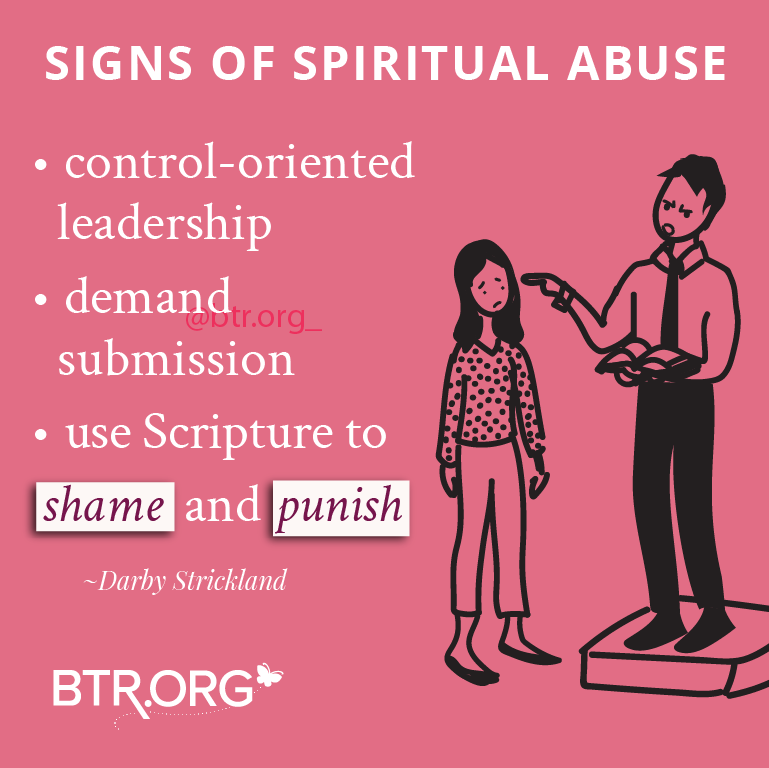
Emily is on the Betrayal Trauma Recovery Podcast, sharing her experiences with a fundamentalist cult. Recognizing and then escaping the abusiveness of her upbringing has led her to support other victims – including the Betrayal Trauma Recovery Community.
Fundamentalism & Patriarchy Are Intertwined
You can’t have fundamentalist teachings without patriarchy lurking ominously. Patriarchy is simply disguised misogyny, and misogyny is at the root of abuse.
Using Religion To Excuse & Enable Abuse
Fundamentalist religious communities use patriarchal (misogynistic) doctrines to excuse and enable abuse: Whether you’ve recently wondered if there are abusive patterns in your faith community, or you’ve been nuanced for some time. Betrayal Trauma Recovery Group Sessions are a safe place for you to process your trauma and find a community of women who will never judge you on your journey. We love you, we believe you.
Transcript: How Fundamentalism And Patriarchy Fuel Abuse
Anne: I am so honored to have Emily on today’s episode. She’s a trauma recovery advocate for people who’ve experienced abuse within a Christian environment. She grew up in a fundamentalist cult for 23 years and experienced childhood domestic violence. We will talk about how fundamentalism and patriarchy fuel abuse. Emily began her journey to recovery and eventually found Jesus her ultimate healer.
Welcome, Emily.
Emily: Oh, thank you, Anne, so much for having me on today. I’m so excited about this. I’ve been looking forward to this for quite a while.
Anne: So let’s start with your own personal story. Can you talk to us about your personal experiences in fundamentalism and patriarchy? And as you’re explaining that, would you also mind sharing your definition of fundamentalism?
Emily: Absolutely, so my parents raised me in a Baptist Christian home. My parents were both school teachers at what I consider a fundamentalist patriarchal Christian school.
So there are so many definitions of fundamentalism. There’s the definition where Christians just take the Word of God as inerrant, and they take it literally. And I would say I am still a Christian, and I would say I still believe in the inerrancy of God’s Word. I still take it pretty lite