Podcast Episode Details
Back to Podcast Episodes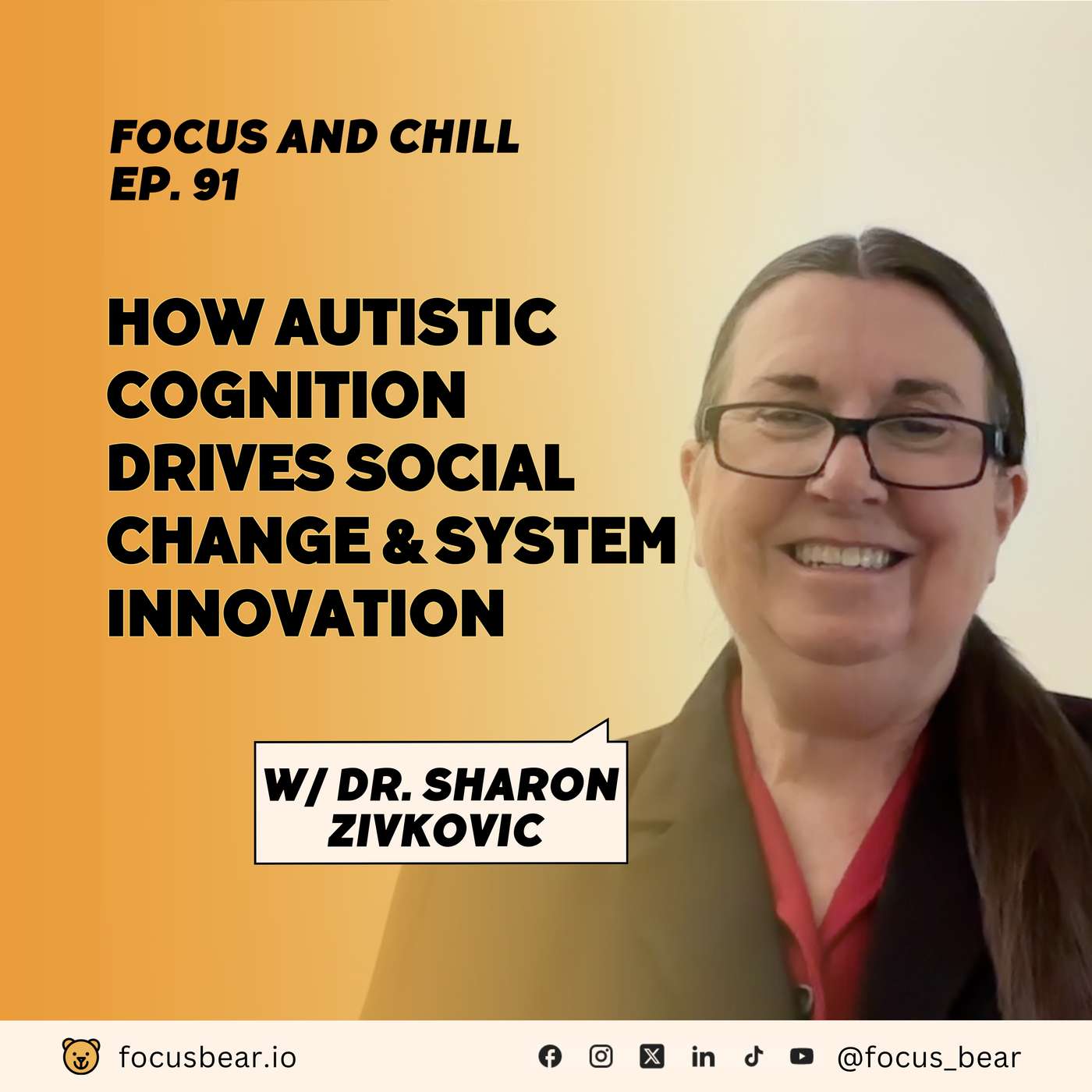
Episode 91: Dr. Sharon Zivkovic
Episode 91
Welcome to episode #91! We’re thrilled to be joined by Dr. Sharon Zivkovic today.
Dr. Sharon Zivkovic is an autistic social entrepreneur, systems thinker, and complexity scientist. As the CEO of Community Capacity Builders, she has used autistic cognition and systemizing strengths to develop and commercialize innovative solutions for wicked problems.
Sharon has been recognized with a Fresh Scientist Award and her work is featured on the Complexity Sciences Map for Applied Complexity. Most recently, she founded the Centre for Autistic Social Entrepreneurship, which aims to create a neurodiversity-affirming entrepreneurial ecosystem.
In this episode, we discuss how autistic cognition can be a superpower in systems thinking, innovation, and entrepreneurship.
Welcome to the show, Sharon!
Questions
JN: When did you first realize you were neurodivergent?
- Knew she was different as a child but autism wasn’t associated with girls at the time
- Struggled in school due to difficulty processing information
- Was eventually signed out of school at 14 and spent 16 years on welfare
JN: What led you back to education later in life?
- Wanted to be financially independent when her daughter turned 16
- Went back to high school as the only mature-age student, then pursued university degrees
- Developed self-learning strategies, including recording lectures and transcribing them at home
JN: What was your career path before entrepreneurship?
- Worked in accounting and economic development, but struggled with traditional employment
- Was successful in jobs but found she was “uncontrollable” as an employee
- Eventually started Community Capacity Builders to work on her own terms
JC: What inspired you to become a social entrepreneur?
- Developed social innovation programs focused on community capacity building
- Won the Enterprising Woman of the Year Award for her work in social enterprise
- Started seeing autistic cognition as an advantage in problem-solving and system innovation
JC: What is a "wicked problem" and how does complexity science help solve them?
- Wicked problems are complex issues like climate change & poverty with no simple solutions
- Complexity science helps map out the interconnected causes and effects
- Uses system transitions and structured problem-solving to drive change
JN: How did receiving an autism diagnosis at 61 impact you?
- Helped her understand why traditional employment never worked
- Realized she had built the perfect life for an autistic person—self-employed, off-grid, full control over work
- Frustrated by the deficit-based approach of disability services
JN: What challenges do autistic entrepreneurs face?
- Rigid business structures don’t work for many autistic thinkers
- Struggle with delegation, executive function, and bureaucracy
- Need support systems tailored to their cognitive strengths
JC: What productivity strategies work best for you
Published on 10 months ago