Podcast Episode Details
Back to Podcast Episodes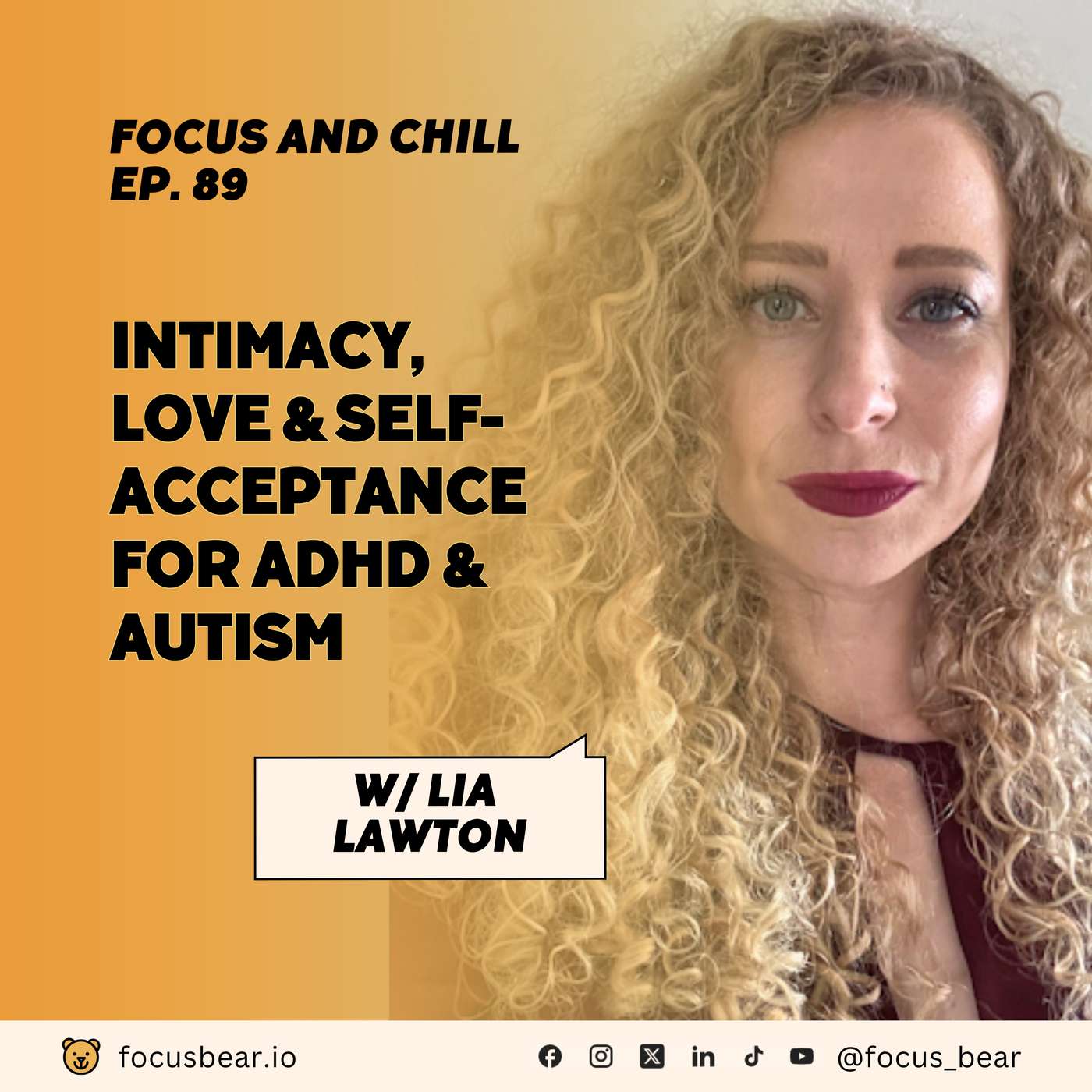
Episode 89: Lia Lawton
Episode 89
Welcome to episode #89! We’re thrilled to be joined by Lia Lawton today.
Lia Lawton is a neurodivergent psychologist and psychosexual therapist, passionate about helping clients explore intimacy, communication, and relationships in ways that are authentic to their unique neurotypes. She runs Fine Sanctuary, a private practice that provides therapy for ADHD, autism, and sexual health concerns.
Diagnosed with ADHD in her late 20s, Lia understands firsthand the challenges of masking, late diagnosis, and navigating relationships as a neurodivergent adult. She is also working on developing neurodivergent-friendly tech tools to support better communication and connection.
In this episode, we dive into how ADHD and autism affect relationships, intimacy, emotional regulation, and self-acceptance.
Welcome to the show, Lia!
Questions
JN: When did you first realize you were neurodivergent?
- Late 20s—her dad was diagnosed first and encouraged her to get assessed
- Had struggled with dyscalculia (number dyslexia) in school but wasn’t identified as neurodivergent
- ADHD traits were dismissed in school as “lazy” or “talking too much”
JN: What was school like for you growing up?
- Thrived in primary school but struggled after transitioning to a larger, all-girls school
- Was misunderstood and labeled as lazy, leading to complete withdrawal
- A teacher once wrote in a report: "Lia handed in no work this year. Good luck for year 11."
JN: What was your career path before psychology?
- Worked in event management, nightclubs, and the strip club industry
- Loved fast-paced, high-stimulation environments that suited her ADHD brain
- A bad therapy experience led her to return to university to study psychology
JC: How did getting diagnosed with ADHD change things for you?
- Medication was life-changing, but not a complete fix
- Helped level the playing field but still required additional strategies
- Found alternative supports like binaural beats and heavy metal music for focus
JC: How do ADHD and autism impact relationships and intimacy?
- Emotional regulation issues can cause communication breakdowns
- Masking in relationships leads to burnout and resentment
- Many neurodivergent people struggle with sensory sensitivities & intimacy disconnect
JC: What are some common intimacy struggles for neurodivergent clients?
- Porn addiction, anxiety around sex, erectile dysfunction, painful sex, and mismatched libidos
- Relationship challenges when one partner is neurodivergent and the other isn’t
- Communication breakdowns due to different processing styles
JN: How do you help couples navigate neurodivergence in relationships?
- Explains the brain differences to both partners to build understanding
- Helps clients develop clearer communication strategies
- Encourages acceptance of different intimacy needs rather than forcing a "norm"
JN: What new projects are you working on?
- Exploring AI and app development to create neurodivergent-friendly communication tools
- Writing a book on A
Published on 10 months ago