Episode Details
Back to Episodes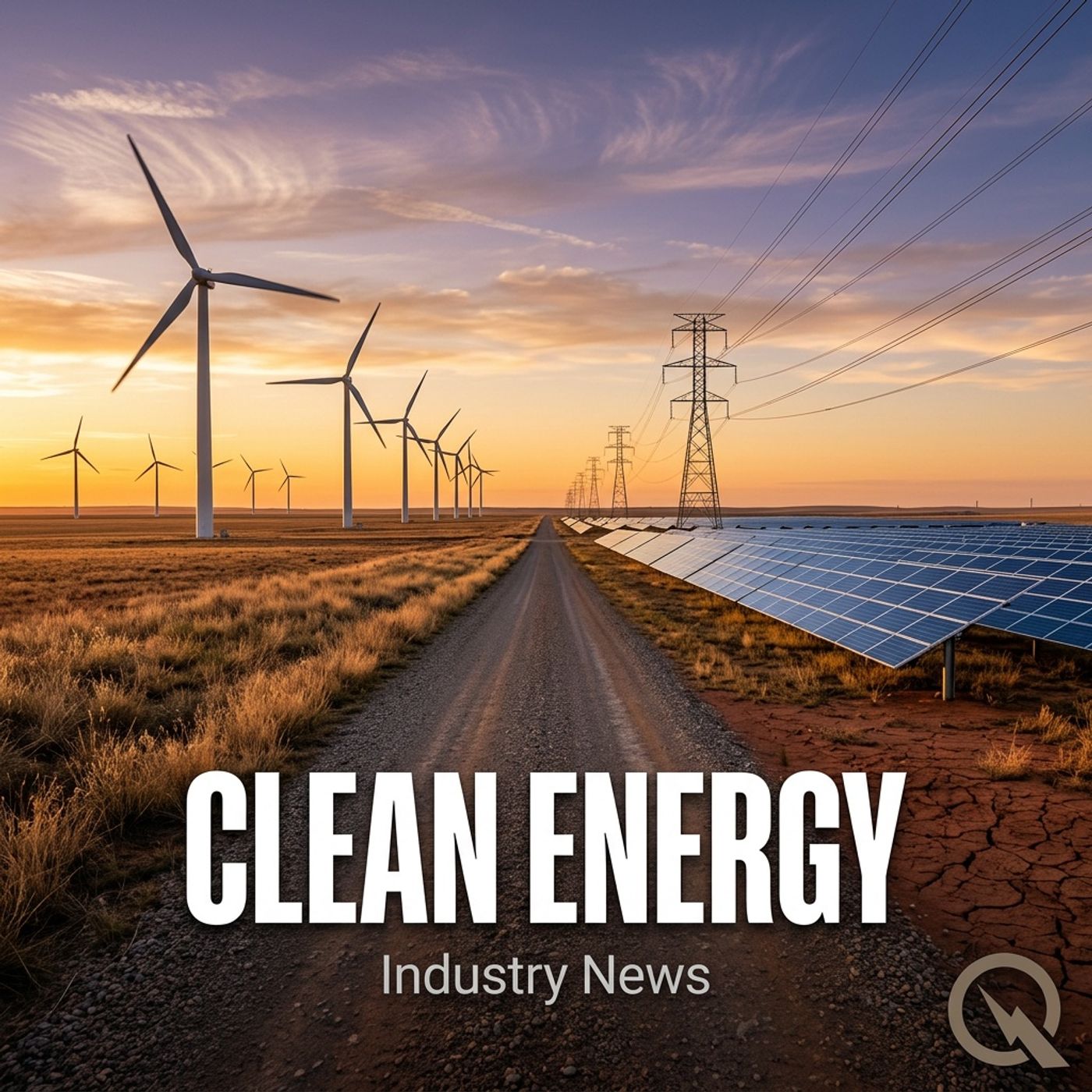
Clean Energy Industry Outlook 2025: Growth, Challenges, and Opportunities
Published 1 year, 2 months ago
Description
The clean energy industry is experiencing significant growth and transformation, driven by increasing demand, technological advancements, and supportive policies. According to Deloitte's 2025 Renewable Energy Industry Outlook, renewables accounted for nearly 90% of all new builds and expansions in the first nine months of 2024, with solar and wind capacity additions leading the way[1].
The US Energy Information Administration (EIA) expects wind capacity to rise to 153.8 GW by the end of 2024, up by 6.5 GW from a year earlier, while solar capacity is expected to increase by a record-breaking 38.4 GW to 128.2 GW[1]. Battery storage is also on the rise, with a record-breaking 14.9 GW added in 2024, bringing the total to 30.9 GW[1].
The industry is also seeing significant investments and partnerships. For example, California has emerged as a hub for battery manufacturing, with companies like Sparkz and Statevolt investing in new facilities[5]. Pacific Gas & Electric Company (PG&E) received a $15 billion loan from the US Department of Energy to expand battery storage and hydropower generation[5].
However, the industry is also facing challenges, including regulatory uncertainty and potential disruptions to energy trade flows. The incoming administration may revisit policies, such as the green hydrogen tax credits, which could impact the industry's growth[1][2].
Despite these challenges, the clean energy industry is expected to continue growing, driven by increasing demand from industries such as cleantech manufacturing, artificial intelligence, and carbon management. Deloitte estimates that these industries will drive approximately 57 GW of additional demand by 2030, with renewables competing to fill the resource gap[1].
In terms of consumer behavior, there is a growing demand for clean energy, with residential solar attachment rates expected to rise from 14% in 2023 to a record 25% in 2024[1]. The electric vehicle market is also growing, although at a slower rate, with growth rates falling from above 30% year over year in 2023 to less than 13% year over year in the first half of 2024[2].
Overall, the clean energy industry is experiencing significant growth and transformation, driven by increasing demand, technological advancements, and supportive policies. While there are challenges ahead, the industry is expected to continue growing, with renewables playing a critical role in meeting rising power demand.
Recent statistics and data from the past week include:
* The EIA revised its forecast for 2025 US natural gas prices, leaving other forecasts largely unchanged[3].
* The US Energy Information Administration (EIA) published its February Short-Term Energy Outlook (STEO), which includes forecasts for 2025 and 2026[3].
* The clean energy industry has created over 400,000 new jobs across the US since the passage of the clean energy plan in August 2022[5].
In comparison to previous reporting, the industry is seeing continued growth and investment, with renewables accounting for an increasing share of new builds and expansions. However, there are also challenges ahead, including regulatory uncertainty and potential disruptions to energy trade flows. Industry leaders are responding to these challenges by investing in new technologies and partnerships, and by advocating for supportive policies.
This content was created in partnership and with the help of Artificial Intelligence AI
The US Energy Information Administration (EIA) expects wind capacity to rise to 153.8 GW by the end of 2024, up by 6.5 GW from a year earlier, while solar capacity is expected to increase by a record-breaking 38.4 GW to 128.2 GW[1]. Battery storage is also on the rise, with a record-breaking 14.9 GW added in 2024, bringing the total to 30.9 GW[1].
The industry is also seeing significant investments and partnerships. For example, California has emerged as a hub for battery manufacturing, with companies like Sparkz and Statevolt investing in new facilities[5]. Pacific Gas & Electric Company (PG&E) received a $15 billion loan from the US Department of Energy to expand battery storage and hydropower generation[5].
However, the industry is also facing challenges, including regulatory uncertainty and potential disruptions to energy trade flows. The incoming administration may revisit policies, such as the green hydrogen tax credits, which could impact the industry's growth[1][2].
Despite these challenges, the clean energy industry is expected to continue growing, driven by increasing demand from industries such as cleantech manufacturing, artificial intelligence, and carbon management. Deloitte estimates that these industries will drive approximately 57 GW of additional demand by 2030, with renewables competing to fill the resource gap[1].
In terms of consumer behavior, there is a growing demand for clean energy, with residential solar attachment rates expected to rise from 14% in 2023 to a record 25% in 2024[1]. The electric vehicle market is also growing, although at a slower rate, with growth rates falling from above 30% year over year in 2023 to less than 13% year over year in the first half of 2024[2].
Overall, the clean energy industry is experiencing significant growth and transformation, driven by increasing demand, technological advancements, and supportive policies. While there are challenges ahead, the industry is expected to continue growing, with renewables playing a critical role in meeting rising power demand.
Recent statistics and data from the past week include:
* The EIA revised its forecast for 2025 US natural gas prices, leaving other forecasts largely unchanged[3].
* The US Energy Information Administration (EIA) published its February Short-Term Energy Outlook (STEO), which includes forecasts for 2025 and 2026[3].
* The clean energy industry has created over 400,000 new jobs across the US since the passage of the clean energy plan in August 2022[5].
In comparison to previous reporting, the industry is seeing continued growth and investment, with renewables accounting for an increasing share of new builds and expansions. However, there are also challenges ahead, including regulatory uncertainty and potential disruptions to energy trade flows. Industry leaders are responding to these challenges by investing in new technologies and partnerships, and by advocating for supportive policies.
This content was created in partnership and with the help of Artificial Intelligence AI