Episode Details
Back to Episodes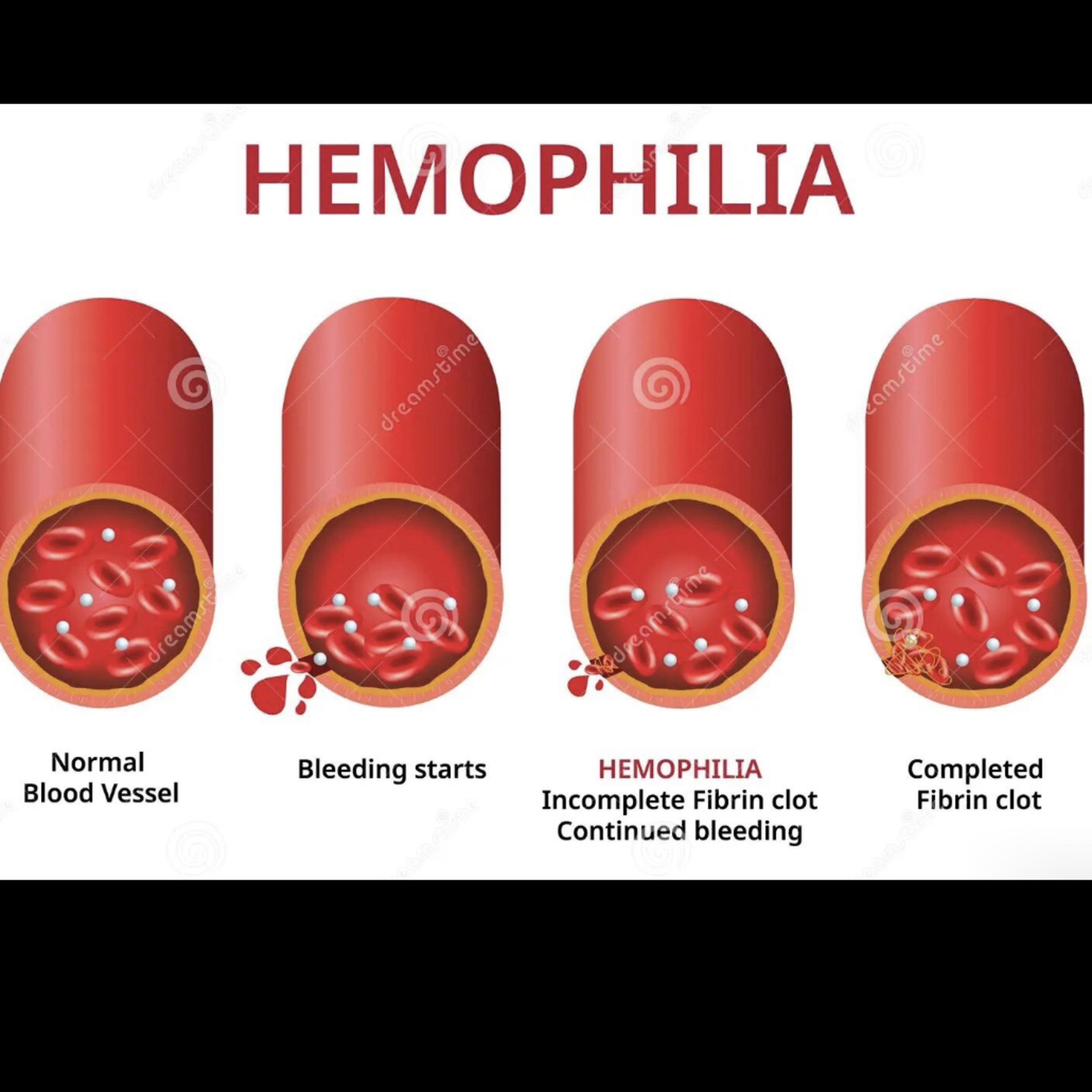
📝 “What are the Different Types of Hemophilia?”
Published 1 year, 1 month ago
Description
Quick Review #266 - #pathology #oralpathology #doctorgallagher #oralsurgery #oralsurgeon #dentist #dentistry #dental #hemophilia
Hemophilia is a group of inherited bleeding disorders caused by deficiencies in specific clotting factors, leading to impaired blood coagulation and prolonged bleeding.
1 - Hemophilia A (Classic Hemophilia)
- Deficient Factor: Factor VIII (FVIII)
- Genetic Basis: X-linked recessive disorder, primarily affecting males
- Prevalence: The most common form, occurring in approximately 1 in 5,000 male births
- Pathophysiology: Factor VIII is crucial in the intrinsic coagulation pathway, serving as a cofactor for Factor IX in the conversion of Factor X to its active form. Without FVIII, thrombin generation is significantly reduced, resulting in unstable clot formation and prolonged bleeding.
- Clinical Manifestations:
- Spontaneous or excessive bleeding after minor trauma
- Hemarthrosis (bleeding into joints, especially knees, elbows, and ankles)
- Muscle hematomas and deep tissue hemorrhages
- Intracranial hemorrhages, which can be life-threatening
- Prolonged bleeding following surgery or dental procedures
2 - Hemophilia B (Christmas Disease)
- Deficient Factor: Factor IX (FIX)
- Genetic Basis: X-linked recessive disorder, similar to Hemophilia A
- Prevalence: Affects approximately 1 in 25,000 male births
- Pathophysiology: Factor IX is a serine protease involved in activating Factor X within the intrinsic coagulation pathway. Its deficiency results in impaired thrombin production, leading to defective clot formation and prolonged bleeding, similar to Hemophilia A.
- Clinical Manifestations:
- Indistinguishable from Hemophilia A
- Frequent spontaneous joint and muscle hemorrhages
- Prolonged bleeding following trauma or surgical procedures.
3 - Hemophilia C (Factor XI Deficiency)
- Deficient Factor: Factor XI (FXI)
- Genetic Basis: Autosomal recessive disorder, affecting both males and females
- Prevalence: More commonly observed in Ashkenazi Jewish populations
- Pathophysiology: Factor XI is part of the intrinsic coagulation pathway, though it plays a less critical role than FVIII and FIX. Its deficiency leads to variable bleeding patterns, with symptoms generally milder than those seen in Hemophilia A and B.
- Clinical Manifestations:
- Mild to moderate bleeding tendencies
- Prolonged bleeding after surgical procedures, particularly in dental extractions, tonsillectomies, and other invasive procedures
References:
- Phasura, A. (n.d.). Hemophilia: Damaged blood vessel, Haemophilia coagulation disorder
- Peyvandi, F., Garagiola, I., & Young, G. (2016). The past and future of hemophilia: Diagnosis, treatments, and its complications. The Lancet, 388(10040), 187–197
- Franchini, M., & Mannucci, P. M. (2013). Hemophilia A and hemophilia B: The role of coagulation factors and current treatment. Blood Transfusion, 11(4), 487–493
- ChatGPT.2025
#podcast #dentalpodcast #doctorgallagherpodcast #doctorgallagherspodcast #doctor #dentist #dentistry #oralsurgery #dental #dentalschool #dentalstudent #doctorlife #dentistlife #oralsurgeon #doctorgallagher
2.11.2025