Podcast Episode Details
Back to Podcast Episodes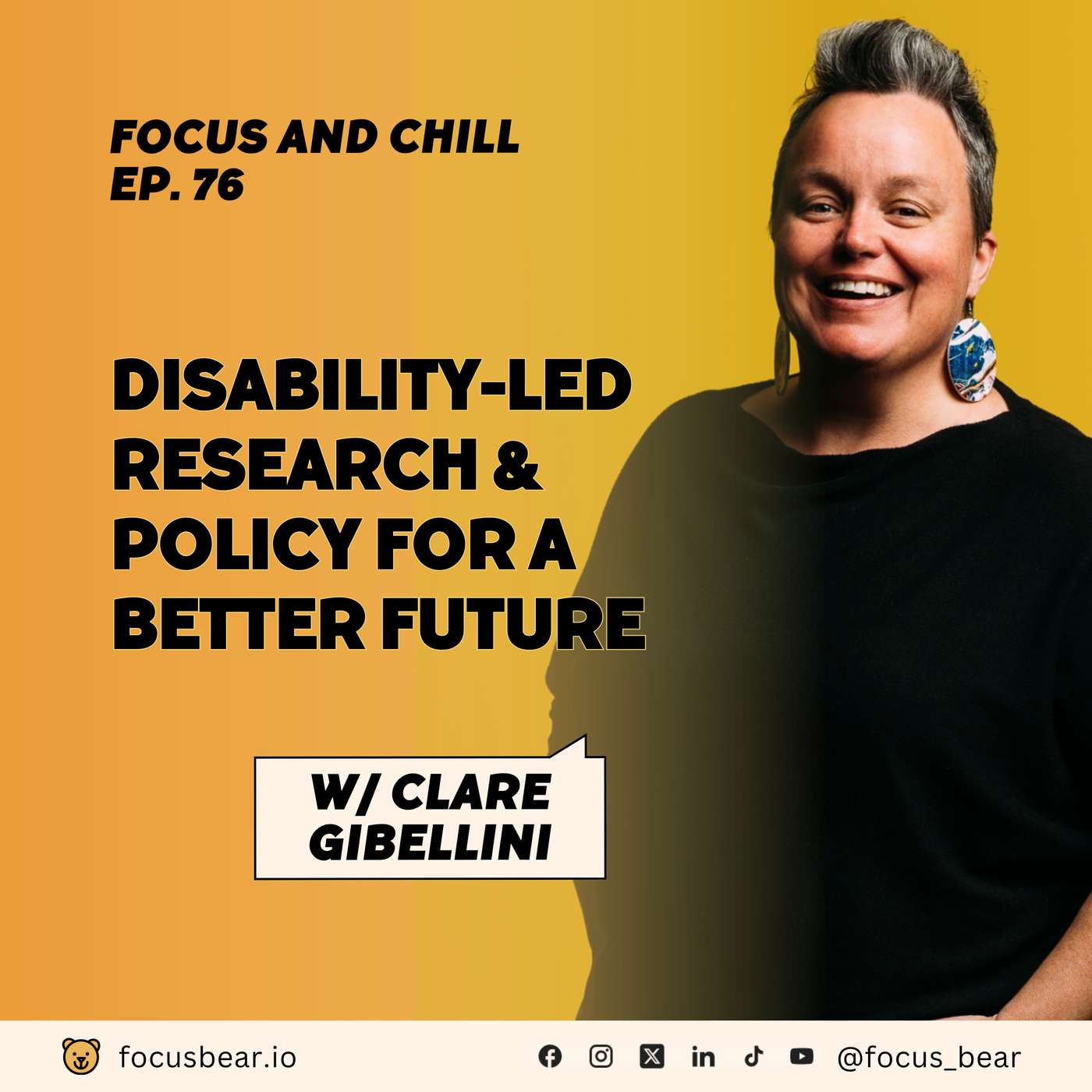
Episode 76: Clare Gibellini
Episode 76
Welcome to episode #76! We’re thrilled to be joined by Clare Gibellini today.
Clare Gibellini is a passionate advocate for disability inclusion in Australia and internationally. She is the co-chair of the Oversight Council for the First National Autism Strategy and the deputy chair of WA’s Ministerial Advisory Council on Disability. Clare also works as a policy officer for Women with Disabilities Australia and has been newly appointed as the chair for the National Disability Research Partnership.
With a background in advocacy, research, and policy reform, Clare is committed to creating a more inclusive world. In this episode, she shares her journey of discovering her neurodivergence, the challenges of navigating multiple roles, and her strategies for balancing advocacy, productivity, and self-care.
Welcome to the show, Clare!
Questions
JN: What was your journey to discovering your neurodivergence?
- Grew up as a military kid, constantly moving, which made it difficult to understand differences
- Realized similarities with her son after his autism diagnosis
- Received her own autism diagnosis from the same clinician who diagnosed her son
- Diagnosis helped her understand herself, parent differently, and practice self-compassion
JN: How did the diagnosis change your self-perception?
- Stopped internalizing negative self-talk
- Developed strategies to manage social situations and advocate for herself
- Shifted perspective from “something’s wrong with me” to “society isn’t built inclusively”
JN: What are your current work roles?
- Policy officer at Women with Disabilities Australia
- Co-chair of the National Autism Strategy
- Chair of the National Disability Research Partnership (NDRP)
- Advocates for more disability-led research and inclusive policy development
JC: How do you manage multiple high-responsibility roles?
- ADHD helps her balance tasks by switching between projects
- Strong support network keeps her accountable and reminds her to take breaks
- Finds fulfillment in advocacy work, which fuels her motivation
JC: How do you prevent burnout in advocacy and policy work?
- Limits social media engagement to avoid negativity and toxicity
- Has hobbies unrelated to disability work, including volunteering for emergency services
- Engages in creative activities like crocheting, gardening, and baking
- Works out regularly to manage chronic pain and mental well-being
JN: What does your work in disability research aim to achieve?
- Advocates for disability-led, purpose-driven research to inform better policies
- Aims to include lived experience in research rather than extractive studies
- Pushes for research that improves real-life outcomes rather than abstract academia
JC: How do you optimize productivity during the day?
- Works from home to manage sensory needs
- Uses a yoga ball chair for movement while working
- Schedules movement breaks and weight training to stay regulated
- Uses live transcription instead of note-taking to stay fully engaged in meetings
JC: What productivity advice doesn’t work for you?
- Finds back-to-back meetings overwhelming and non-productive
- Rejects corporate jargon and vague email requests—prefers direct communication
- Pushes back against the expectation to have cameras on in every virtual meeting
JN: What does your morning routine look like?
- Not a morning person, keeps routine simple
- Prepares everything the night before to reduc
Published on 10 months, 1 week ago