Episode Details
Back to Episodes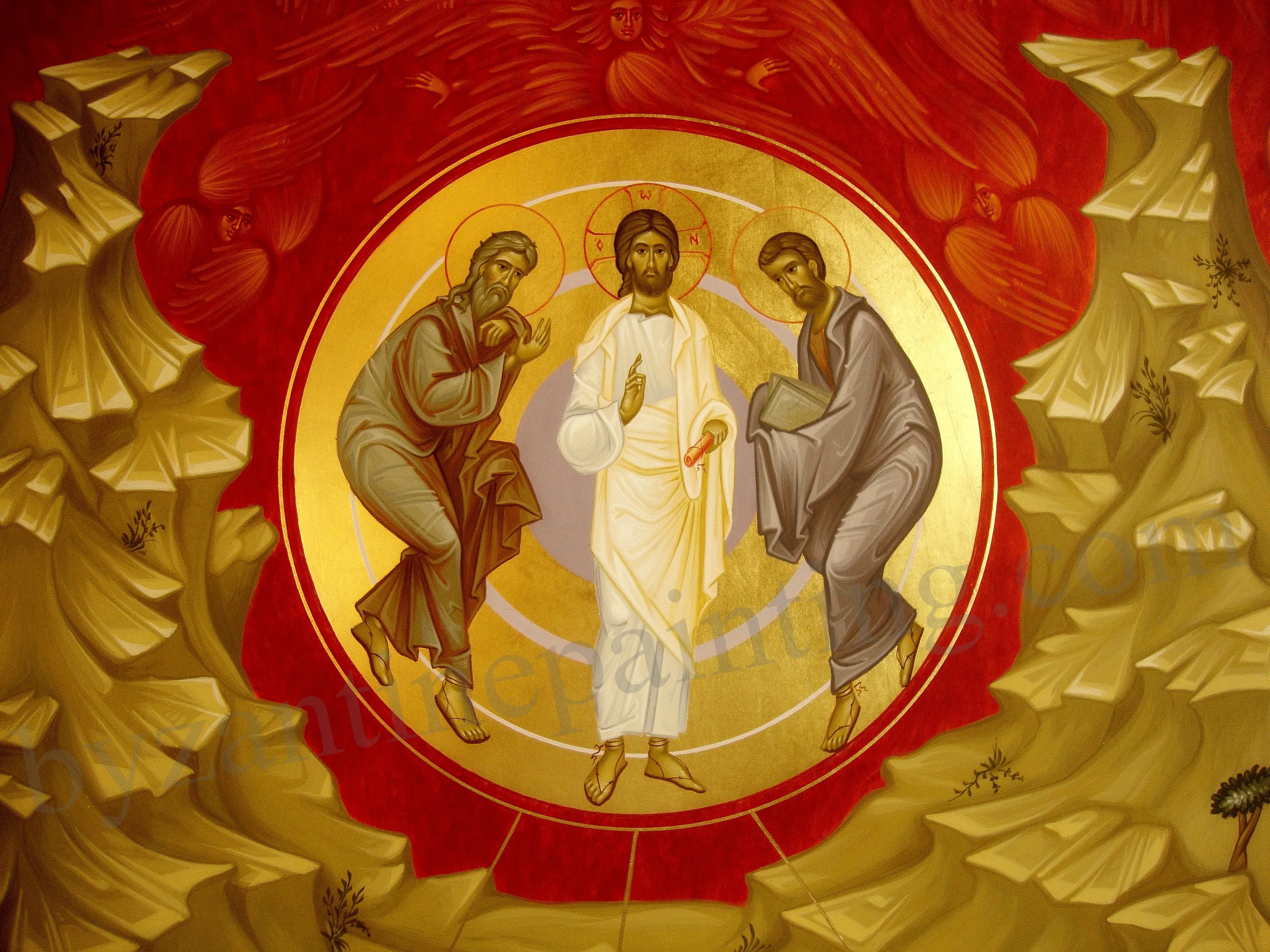
Transfigured by Grace
Description
Thanks for reading Brewing Theology! Subscribe for free to receive new posts and support my work.
Six days after a dramatic journey through Caesarea Philippi – where Peter declared Jesus to be the Son of God, and Jesus foretold of his pending suffering, death, and resurrection – Jesus took three disciples with him up a high mountain. Mountaintop experiences within Israel were known to be where a person would encounter God. Remember, after leading Israel to freedom through the Red Sea, Moses ascended Mount Sinai and descended back to his people with God’s Top-Ten after encountering God in a burning bush.
While on the mountain, Moses and the prophet Elijah appear, and Jesus is transfigured.
His face shines.
His clothing is dazzling white.
A voice calls out from the clouds, “This is my Son, the Beloved; with him, I am well pleased; listen to him!”[i]
You may not have realized it this morning when you decided to attend church, but today is a significant turning point in the church’s year. The Christmas decorations are neatly packed and put away. Epiphany is over. If the season of Epiphany was a crescendo, gradually and more grandly exposing the glory of Jesus of Nazareth, then the Transfiguration of Jesus is the climax, the fortissimo.
As we prepare for the transition into the season of Lent, trading the bright lights of Epiphany for the shadows of Lent, the Transfiguration of Jesus is the grand revelation of who Jesus is – then, now, and forever.
Peter, the rock upon which the church was built, with his front-row seat to this event, was so moved that he wanted to commemorate the occasion by building memorials or tents. Peter wanted to make dwelling places for Jesus, Moses, and Elijah.
Three structures to commemorate the event.
After all, Peter may have thought this could not, would not get more grand or divine than Jesus, Moses, and Elijah, and a voice from the clouds declaring Jesus to be the begotten son of God, the creator of the cosmos.
As they descended the mountain, Jesus told the three – Peter, James, and John – to keep the story to themselves, telling “no one about the vision until after the Son of Man has been raised from the dead.”[ii]
“Do not tell anyone about this until the thing I told you about 16 verses ago happens,” Jesus says to Peter, James, and John.
According to the synoptic gospels – Mark, Matthew, and Luke – aside from the Resurrection of Christ, the Transfiguration is the grandest event in Jesus’ ministry. On the Transfiguration, Rev. Fleming Rutledge writes that the Transfiguration “is the most unambiguous revelation of Jesus as Messiah prior to the Resurrection.”
On the seventh day after their journey through Caesarea Philippi, the disciples, well three of them, see the glory of the Son of Man, the One who was with the Father on the first, second, third, fourth, fifth, and sixth days of creation, and who rested on day seven.
There were witnesses to the Transfiguration just as there were witnesses to Jesus calming the seas, feeding the ten thousand, and healing a demon-possessed boy. In his second letter, Peter wrote, “For we did not follow cleverly devised myths when we made known to you the power and coming of our Lord Jesus Christ, but we had been eyewitnesses of his majesty. For he received honor and glory from God the Father when that voice was conveyed to him by the Majestic Glory, saying, ‘This is my Son, my Beloved, with whom I am well pleased.’”[iii]
What, then, is the task of the preacher? What, then, is the task of the church with knowledge of the full majesty of the Son of God revealed to creation?
We could take the approach that even after the mountaintop experience, Jesus came down the mountain to continue his work, and we should do likewise. I have preached that ser