Episode Details
Back to Episodes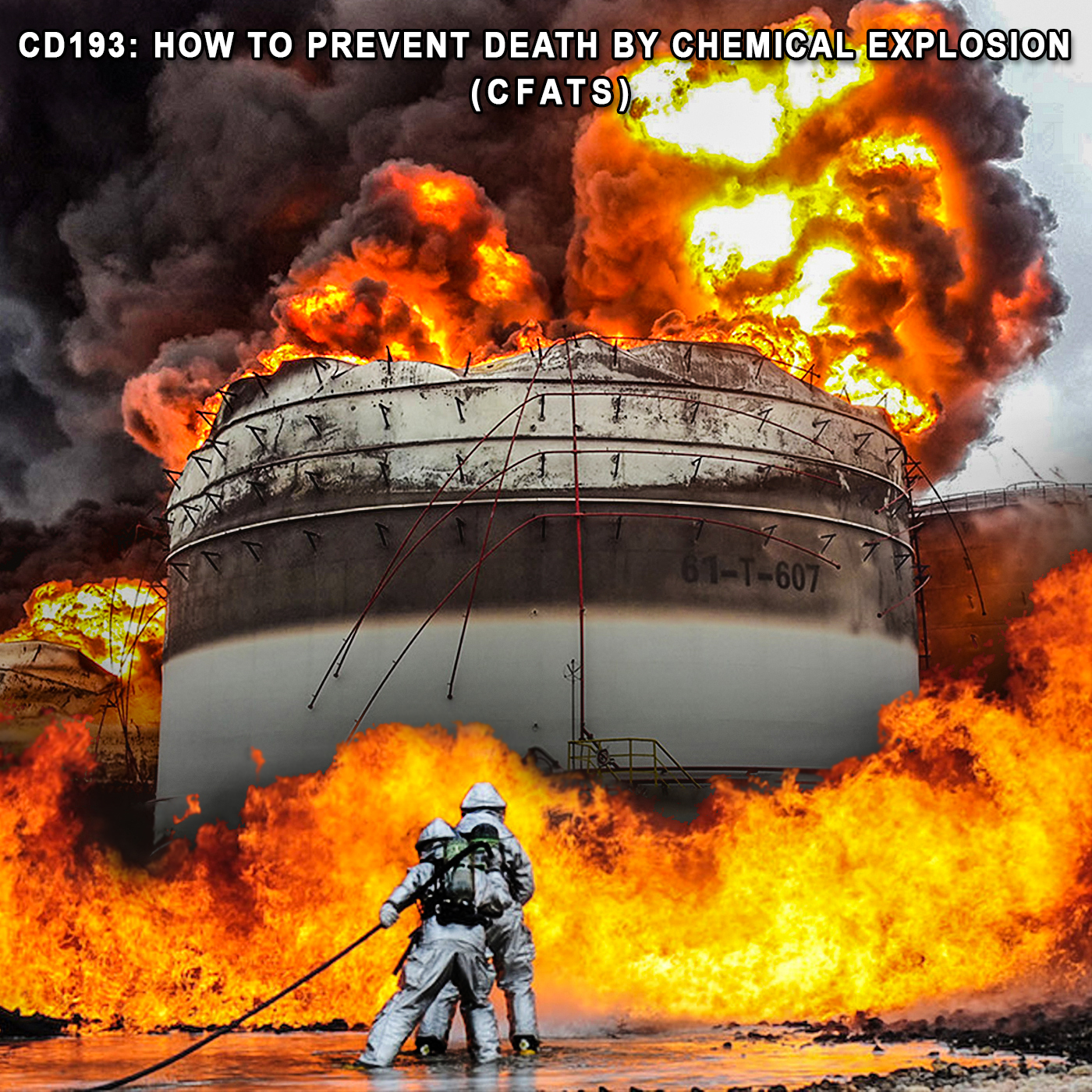
193: How to Prevent Death by Chemical Explosion (CFATS)
Episode 193
Published 7 years, 5 months ago
Description
Chemical storage facilities exist all over the country and one of them recently caught fire, poisoning the residents Houston, Texas for three days. In this episode, learn about a Department of Homeland Security program - the CFATS program- designed to protect us from terrorist attacks on dangerous chemical storage facilities like the one in Texas and also discover what needs to be done to ensure that CFATS actually protects us from the threats these chemical facilities pose. There is still work to be done. Please Support Congressional Dish – Quick Links Click here to contribute monthly or a lump sum via PayPal Click here to support Congressional Dish for each episode via Patreon Send Zelle payments to: Donation@congressionaldish.com Send Venmo payments to: @Jennifer-Briney Send Cash App payments to: $CongressionalDish or Donation@congressionaldish.com Use your bank's online bill pay function to mail contributions to: 5753 Hwy 85 North, Number 4576, Crestview, FL 32536 Please make checks payable to Congressional Dish Thank you for supporting truly independent media! House Homeland Security Committee Committee Members How to Contact: For Senators: firstname_lastname@lastnameofsenator.senate.gov (underscore between first and last) For Representatives: firstname.lastname@mail.house.gov Hearings Securing Our Nation's Chemical Facilities: Stakeholders Perspectives on Improving the CFATS Program, House Committee on Homeland Security Subcommittee on Cybersecurity, Infrastructure Protection, and Innovation, March 12, 2019. YouTube 370 views Witnesses: John Morawetz: Health and Safety Representative ICWUC Health and Safety Representatives International Chemical Workers Union Council Dr. Mike Wilson, Ph.D, MPH: National Director, Occupational and Environmental Health Program, BlueGreen Alliance Pamela Nixon: President, People Concerned About Chemical Safety Kirsten Meskill: Director, Corporate Security, BASF Sound Clips: 13:00 Chairman Cedric Richmond (LA): Since CFATS was established, the number of 'high risk' chemical facilities has dropped by half. 13:10 Chairman Cedric Richmond (LA) I believe - and DHS agreed - that there is an opportunity to take the data on how facilities are reducing risk and use it to develop voluntary best practices that other facilities could use to reduce risk. 13:20 Chairman Cedric Richmond (LA) Also, it is not clear to me that CFATS facilities are including employees in the development of site security plans, vulnerability assessments, or inspections – as they are required to by law. 13:30 Chairman Cedric Richmond (LA) Finally, if CFATS is going to be successful, we need to be sure that the program is taking all relevant factors into account to assess risk. Otherwise, we can't trust that CFATS is truly capturing the nation's highest risk facilities. For example, right now, DHS does not consider whether the facility is located near a hospital, a school, a residential area, a military base, a power plant, or close to other chemical facilities. Any of these factors could make a facility a more attractive target, or make an event even worse for the surrounding community. 21:00 Dr. Mike Wilson: In the area of emergency response, CFATS gives authority to the secretary to provide information to local governments and I quote "to help ensure that first-responders are properly prepared and provided with the situational awareness needed to respond to security incidents at covered chemical facilities," endquote. This is useful but it's not sufficient if the objective is to give firefighters the ability to respond effectively to an industrial chemical incident. As we know from the experience of the Emergency Planning and Community Right-to-Know Act, or EPCRA, firefighters need much more than chemical information. They need to talk to the people who run the facilities in their jurisdiction. They need to get inside those facilities regularly to see how chemicals are stored and processed in order to imagine what could go wr