Episode Details
Back to Episodes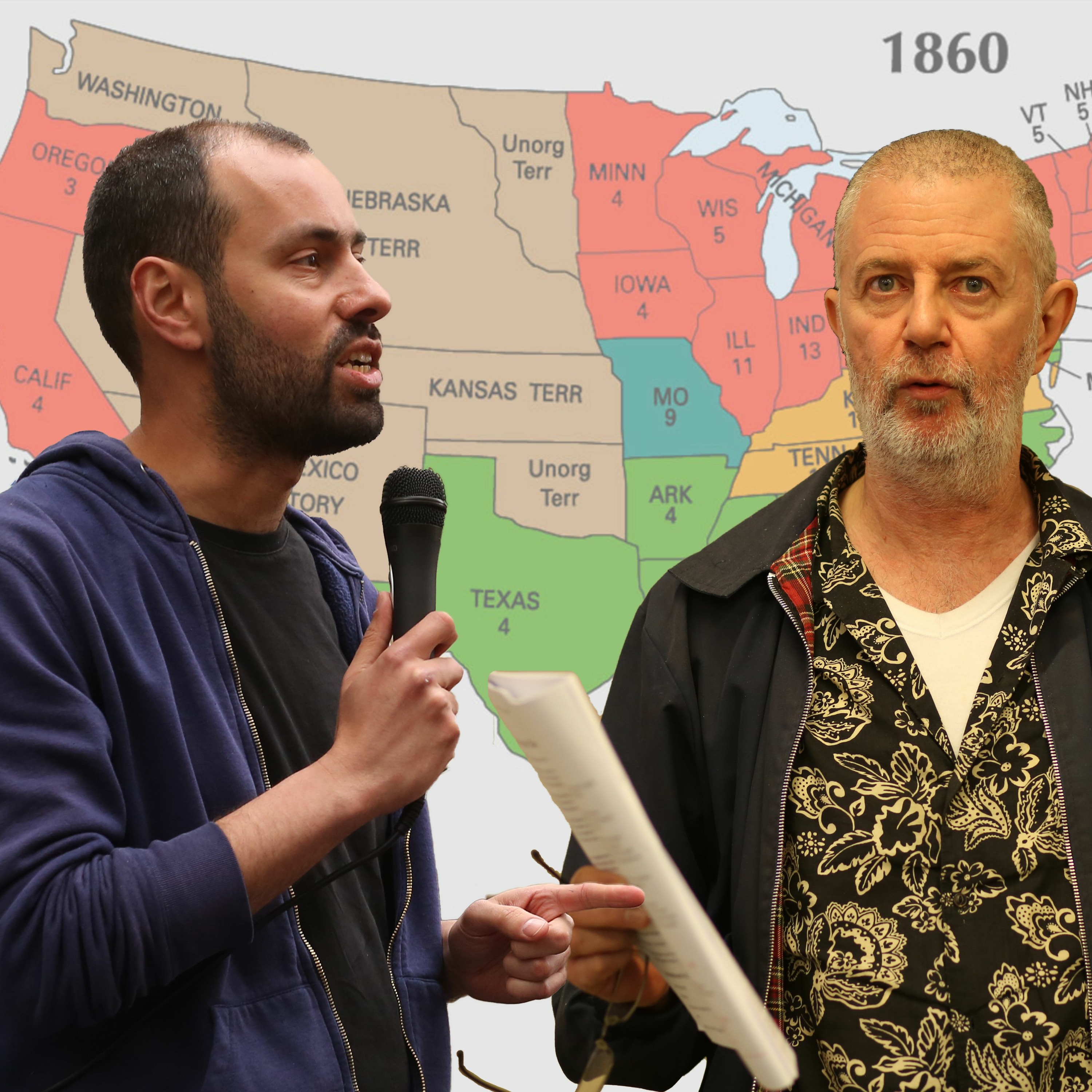
Marxists on the US Civil War and the fight against slavery
Published 6 years, 1 month ago
Description
Mark Osborn and Sacha Ismail discuss the history of the Civil War, British workers' mobilisation and the lessons for the internationalist, anti-racist left of today. Introductory speeches from a meeting of the same name. Upcoming meetings: https://www.workersliberty.org/c19-online . All audio: https://workersliberty.org/audio
**Timeline**
1850s
US politics convulsed by issue of slavery; breakdown of old party political system, rise of Republicans; armed clashes over whether Kansas will be slave or free state
1859
Abolitionist John Brown attempts to lead slave uprising at Harpers Ferry, Virginia
1860
November: Republican Abraham Lincoln elected President
December: South Carolina secedes from US
1861
Six other Southern slave states secede, Confederate States of America formed, soon grows to eleven states
April: Civil War begins, slaves start to flee to US army
August: US Congress passes first anti-slavery war measures
November-December: Trent crisis seems to threaten US-British war December: British workers’ meetings in support of US begin
1862
Summer: Congress, led by Radical Republicans, pushes US policy in more radical anti-slavery direction
Second half of year: Wave of workers’ meetings in Lancashire
22 September: Lincoln issues Emancipation Proclamation promising to free slaves in Confederate states
November: Recruitment of black soldiers begins tentatively
31 December: Great meeting at Free Trade Hall in Manchester, meetings in London
1863
1 January: Emancipation Proclamation comes into effect, recruitment of black soldiers massively accelerates
26 March: “Monster” workers’ meeting at St James’ Hall, London
1864
September: Foundation of International Working Men’s Association
November: Lincoln re-elected
1865
April-June: Confederacy surrenders
14 April: Lincoln assassinated by Confederate sympathiser
December: Thirteenth Amendment to US Constitution ratified, slavery abolished throughout US
1867
“Radical Reconstruction” begins in US, enfranchising ex-slaves; Reform Act enfranchises over a million British workers
**Recommendations, referenced by the speakers**
Pamphlet: https://www.workersliberty.org/node/25435
Article: https://www.workersliberty.org/story/2017-07-26/workers-against-slavery-us-civil-war-first-international-and-british-working-class
Pull-out: https://www.workersliberty.org/index.php/revolution-black-liberation-workers-liberty-342
Article: https://www.workersliberty.org/story/2019-12-03/trump-blocked-putting-harriet-tubman-20-note-why
"Beyond Equality" by David Montgomery
Glory (1989 film)
Sacha mentioned "Forced Into Glory" by Lerone Bennett Junior, which gives the case against Lincoln, but he thinks it is one-sided
**Description**
The American Civil War of 1861-5 was the most important event in US history, and one of the most important in world history. The victory of the North liberated four million black slaves and abolished slavery, although the movement it unleashed did not defeat racism.
In Britain, despite hardship caused by the war, the working class rallied to Lincoln and abolition, and Karl Marx wrote for a New York paper about the pro-North mobilisations in London and the textile towns of northern England. These mobilisations helped pave the way for a new growth of the British labour movement and for the emergence of the International Working Men's Association (the First International).