Episode Details
Back to Episodes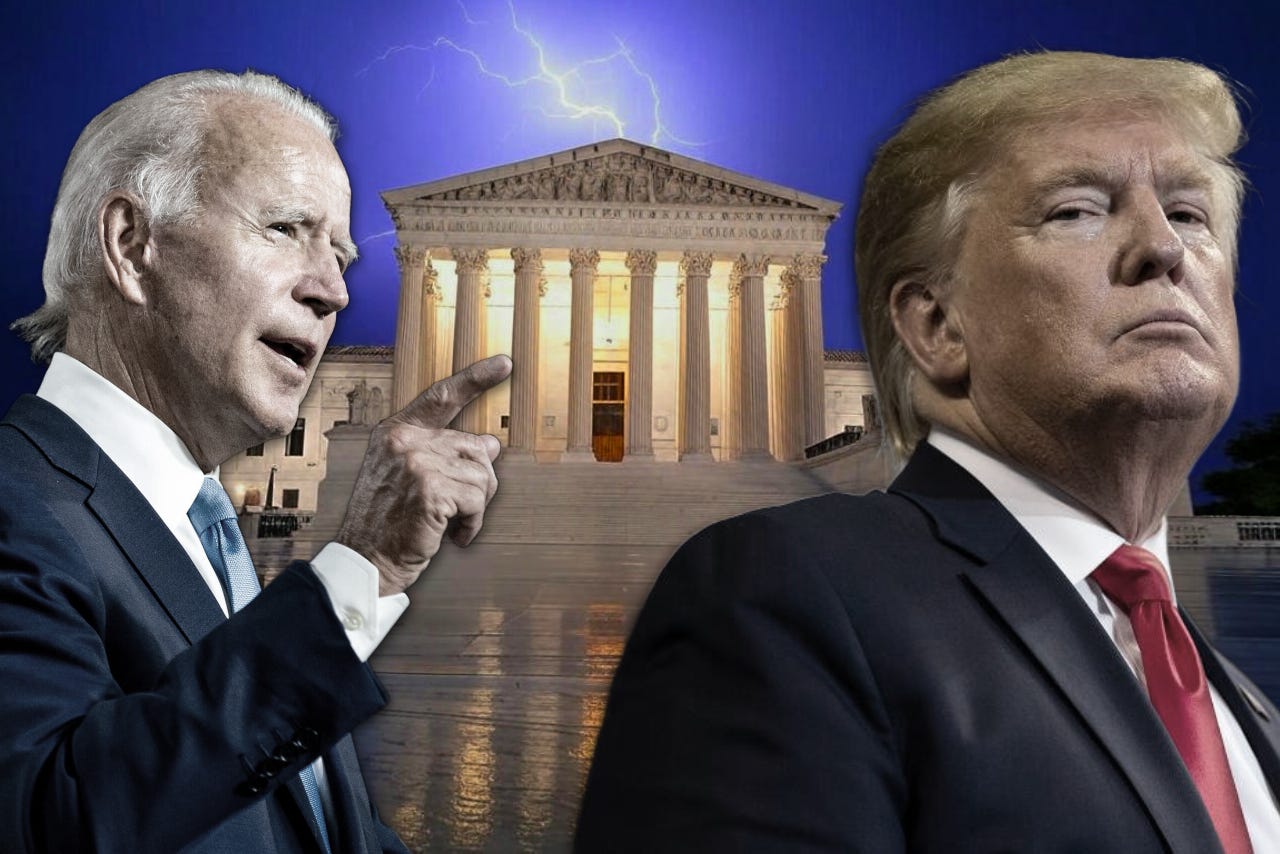
Pre-Emptive Pardons: A Question Of Constitutionality
Description
In his final hours as President of the United States, Joe Biden issued a series of preemptive pardons for Anthony Fauci, Mark Milley, the members of the January 6th Committee, and his extended family. This action was one of the most disgusting uses of presidential power to grant reprieves and pardons in the history of our Republic. And the action’s constitutionality should be questioned.
In Article II, Section 2 of the US Constitution, the president is vested with the power to “grant reprieves and pardons” through these words:
“The President shall…have power to grant reprieves and pardons for offenses against the United States, except in cases of impeachment.”
The keywords here are “for offenses against the United States,” which infers a criminal conviction in federal court. In fact, the US Supreme Court has already ruled on that. If you accept a pardon, there is an inference of guilt. Therefore, the question that begs to be asked is valid: Are pre-emptive presidential pardons constitutional?
Biden, in the early days of his presidency, lauded the Wilson and Roosevelt administrations, both of which expanded presidential authority and the purview of the Executive Branch unconstitutionally. Roosevelt’s New Deal was choke-full of presidential authority expansion beyond the limits of the Constitution. Brion McClanahan documents each—and the expansionist agendas of Wilson and Truman, as well as several others, in his book, 9 Presidents Who Screwed Up America: And Four Who Tried to Save Her. It’s definitely worth the time.
So, it should come as no surprise that Biden felt unencumbered by the Constitution in his actions, specifically with his precedent-setting issuance of pre-emptive presidential pardons. It’s never happened before, and, through an originalist's view of the Constitution, it appears unconstitutional.
Some would attempt to defend Biden’s actions by juxtaposing them with President Gerald Ford’s pardon of Richard Nixon after his resignation stemming from the Watergate scandal. But there are significant differences between the two.
Ford’s pardon of Nixon was singular, focused solely on Nixon, covering all federal offenses he committed or was under investigation for during his presidency. It was a direct response to a specific legal threat—a threat that had already been initiated. Ford’s action prevented any further legal action against Nixon.
Biden’s actions, conversely, were preemptive because no investigative or legal actions had commenced against anyone receiving a pre-emptive pardon. Biden’s actions were aimed at protecting individuals from potential future legal actions regardless of any criminal conduct.
Biden issued pre-emptive pardons to Fauci, Milley, the J6 Committee, and his family members. However, according to the Constitution, presidential pardons are only valid for issuance in instances of transgressions against the United States. So, how could they be valid and binding?
But what to do? Well, if Biden can execute precedential actions, so can President Trump.
President Trump should instruct his Solicitor General to file an emergency petition with the US Supreme Court (SCOTUS) to definitively rule on the parameters of the presidential reprieve and pardon clause in Article II, Section 1.
It can be successfully argued that Article III, Section 1 gives t