Episode Details
Back to Episodes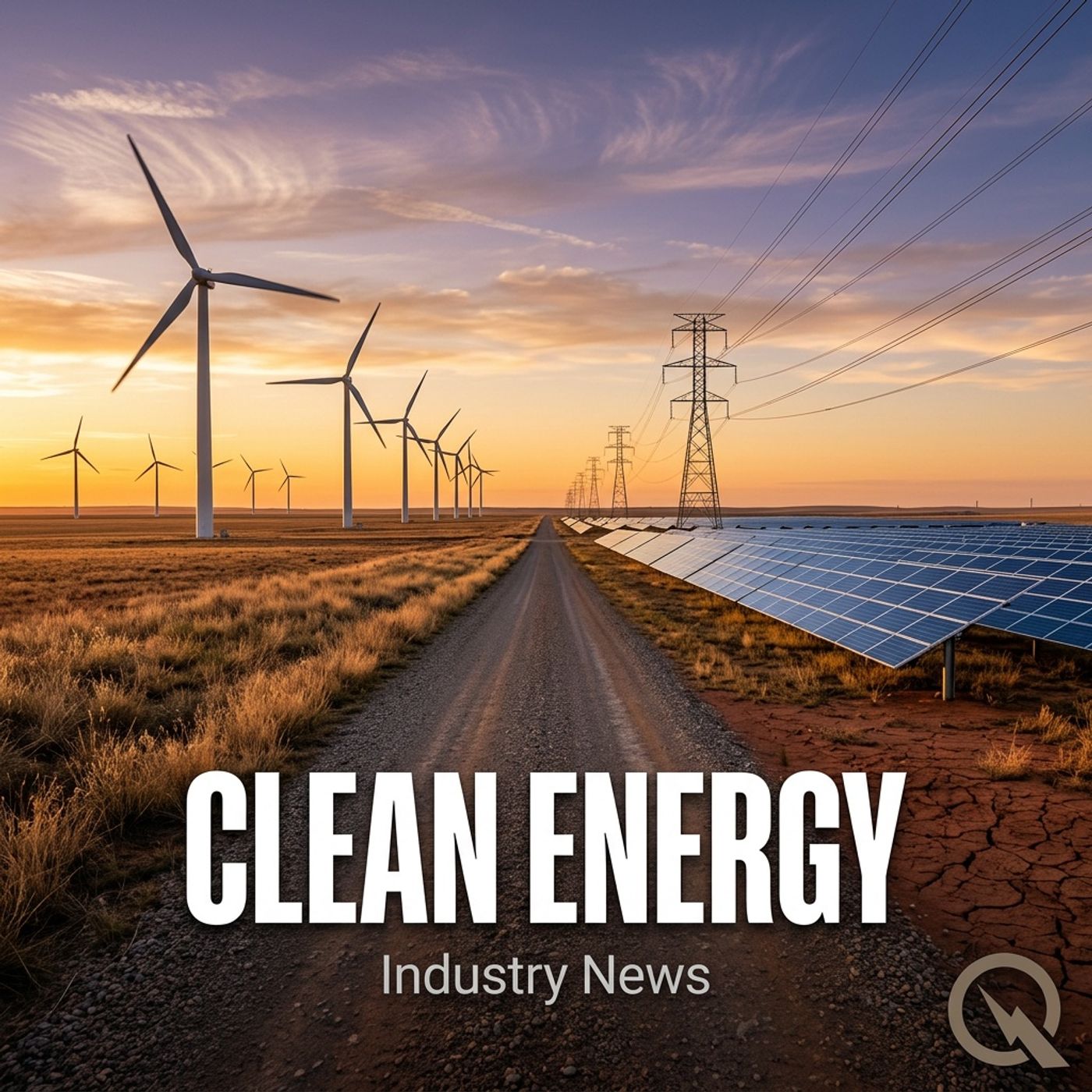
Clean Energy's Unstoppable Rise: Powering the Future with Renewables, AI, and Policy Solutions
Published 1 year, 2 months ago
Description
The clean energy industry is experiencing significant growth and transformation, driven by increasing demand, technological advancements, and supportive policies. According to Deloitte's 2025 Renewable Energy Industry Outlook, renewables accounted for nearly 90% of all new builds and expansions in the first nine months of 2024, with solar and wind capacity additions leading the charge[1].
The US Energy Information Administration expects wind capacity to rise to 153.8 GW by the end of 2024, up by 6.5 GW from the previous year, while solar capacity is expected to increase by a record-breaking 38.4 GW to 128.2 GW[1]. Battery storage is also experiencing rapid growth, with a record-breaking 14.9 GW added in 2024, bringing the total to 30.9 GW[1].
The International Energy Agency's World Energy Outlook 2023 reports that renewables are expected to account for nearly 50% of the global electricity mix by 2030, up from around 30% today[2]. The report also notes that the transition to clean energy is happening worldwide and is unstoppable, with immense benefits including new industrial opportunities, jobs, greater energy security, cleaner air, and a safer climate[2].
Artificial intelligence's insatiable energy demand is reshaping the grid, pushing for rapid deployment of clean and reliable energy sources[3]. Data centers, in particular, are driving electricity demand growth, with tech companies committing to sourcing all their power from clean energy[1][3].
Industrial policies are also playing a critical role in advancing clean energy goals, with governments deploying new strategies to spur clean energy manufacturing and establish stronger market positions[3]. The World Economic Forum notes that connections between energy, trade, and manufacturing are deepening, with governments prioritizing jobs, manufacturing, energy security, and cost over emissions reduction[3].
In the US, states are building on the momentum of 2024, with North Carolina's Utilities Commission accepting Duke Energy's "Carbon Plan" to reduce greenhouse gas emissions from its electric generating facilities[5]. The plan includes developing 2.4 gigawatts of offshore wind, enough to power more than 500,000 homes[5].
Overall, the clean energy industry is experiencing significant growth and transformation, driven by increasing demand, technological advancements, and supportive policies. Industry leaders are responding to current challenges by investing in advanced technologies, forming partnerships, and advocating for supportive policies. As the industry continues to evolve, it is likely that we will see even more rapid growth and innovation in the years to come.
This content was created in partnership and with the help of Artificial Intelligence AI
The US Energy Information Administration expects wind capacity to rise to 153.8 GW by the end of 2024, up by 6.5 GW from the previous year, while solar capacity is expected to increase by a record-breaking 38.4 GW to 128.2 GW[1]. Battery storage is also experiencing rapid growth, with a record-breaking 14.9 GW added in 2024, bringing the total to 30.9 GW[1].
The International Energy Agency's World Energy Outlook 2023 reports that renewables are expected to account for nearly 50% of the global electricity mix by 2030, up from around 30% today[2]. The report also notes that the transition to clean energy is happening worldwide and is unstoppable, with immense benefits including new industrial opportunities, jobs, greater energy security, cleaner air, and a safer climate[2].
Artificial intelligence's insatiable energy demand is reshaping the grid, pushing for rapid deployment of clean and reliable energy sources[3]. Data centers, in particular, are driving electricity demand growth, with tech companies committing to sourcing all their power from clean energy[1][3].
Industrial policies are also playing a critical role in advancing clean energy goals, with governments deploying new strategies to spur clean energy manufacturing and establish stronger market positions[3]. The World Economic Forum notes that connections between energy, trade, and manufacturing are deepening, with governments prioritizing jobs, manufacturing, energy security, and cost over emissions reduction[3].
In the US, states are building on the momentum of 2024, with North Carolina's Utilities Commission accepting Duke Energy's "Carbon Plan" to reduce greenhouse gas emissions from its electric generating facilities[5]. The plan includes developing 2.4 gigawatts of offshore wind, enough to power more than 500,000 homes[5].
Overall, the clean energy industry is experiencing significant growth and transformation, driven by increasing demand, technological advancements, and supportive policies. Industry leaders are responding to current challenges by investing in advanced technologies, forming partnerships, and advocating for supportive policies. As the industry continues to evolve, it is likely that we will see even more rapid growth and innovation in the years to come.
This content was created in partnership and with the help of Artificial Intelligence AI