Episode Details
Back to Episodes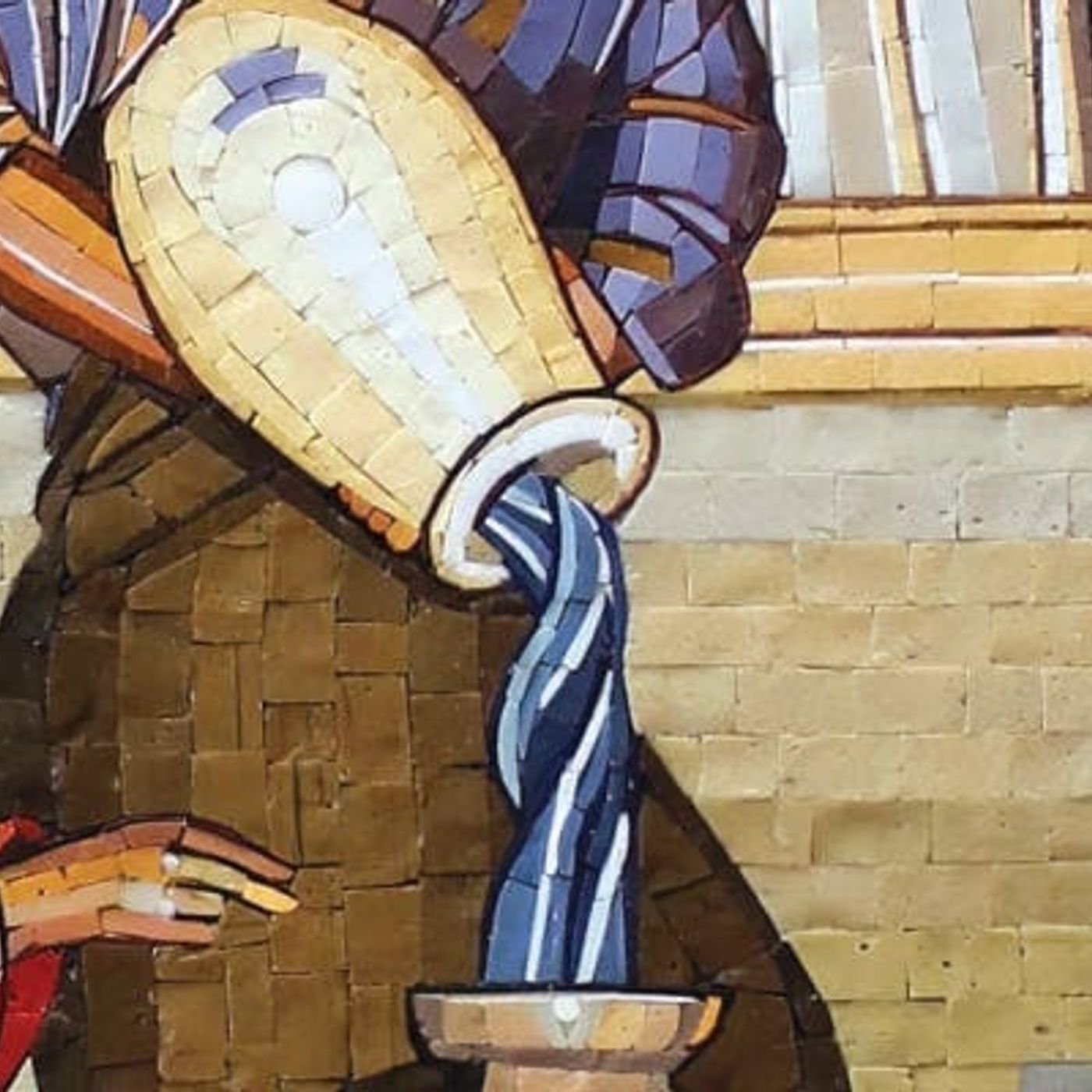
Blood and Joy
Published 1 year, 9 months ago
Description
Against Austerity"There was some one thing that was too great for God to show us when He walked upon our earth; and I have sometimes fancied that it was His mirth."This quote, from G.K Chesterton’s book Orthodoxy has been on my mind whilst I have been preparing this sermon. I am sure that Chesterton had a very clever and insightful meaning behind it, but I am not certain that I agree with him.My view is that the joy of our Lord Jesus is often veiled from our sight when we read the Gospels. This may be because our tired adult eyes have lost the ability to recognise it. Our imaginations are dry. We cannot see the twinkle in Jesus’ eye and we cannot hear the irony in his voice or conceive the humorous gestures he might make.This has become apparent to me recently as I have been reading the Sermon on the Mount with my children. I’ve never thought of the Sermon on the Mount as funny before but apparently they do. When Jesus talks about salt losing its taste, for example, or buying a lamp only to hide it under a basket, they laugh. Why? Because these are absurd images that Jesus chooses to illustrate how silly we can be at times. And there are many other examples of things that Jesus said and did that we, as adults, probably gloss over, not taking the time to appreciate the subtle satire of human nature or the humorous imagery because we are attempting to get at some kind of deep religious meaning that couldn’t possibly have anything to do with joy or laughter.And so I come to a basic point about today’s Gospel reading, before I get to the serious theology (and, of course, there is some very deep and very serious theology to talk about):‘On the third day there was a wedding at Cana in Galilee, and the mother of Jesus was there. Jesus also was invited to the wedding with his disciples.’Consider this: for the first thirty years of his life, Jesus did no ministry that we know of. He probably worked with his hands as a carpenter, in the workshop of his father Joseph. After thirty years of preparation for what would be three years of the most intense, impactful, world-shaking ministry there has been, he made a start. How? By attending a wedding.And it wasn’t just that he attended. It was that he was invited with his disciples. Immediately this tells us something about Jesus: that he was not some kind of antisocial, austere, religious killjoy who was disliked by ordinary people, that he was not aloof from the ordinary life of folks around him in his social circle, in his family milieu.Just imagine a Jewish wedding feast of this sort, that goes on and on, perhaps for days: Do you think Jesus would have joined in the dancing? Do you think he sang? Do you think he drank wine? He would have done all of these things and would have had no trouble in manifesting the joy that dwelt within him.I mention all of this because I want to speak against religious austerity. That is, the notion that religion, if it is to be proper, must be serious and cannot be joyful, mirthful, or involve humour. The fact is that we are made for joy by a God who is in himself infinite joy. We see some of the fact that we were made for joy in Jesus’ decision (in obedience to the will of the Father) to perform his first sign at a social occasion, and at the kind of social occasion most associated with joy and happiness, feasting, song, and wine.All of this is not to say that we ought not to take seriously our religious obligations or that we ought not to dress smartly at church, or whatever it might be. But it is to say that we mustn’t do these things in a spirit of stuffy self-righteousness and self-importance, or, even worse, in a spirit of judgemental pharisaism that looks down on other people and maybe even other Christians because they are doing things properly. This is a deadly spiritual trap into which it is very, very easy indeed to fall. I have seen it many times. Indeed, sometimes I see it in my own heart.The Blood of the New CovenantBut there is a richness and a