Episode Details
Back to Episodes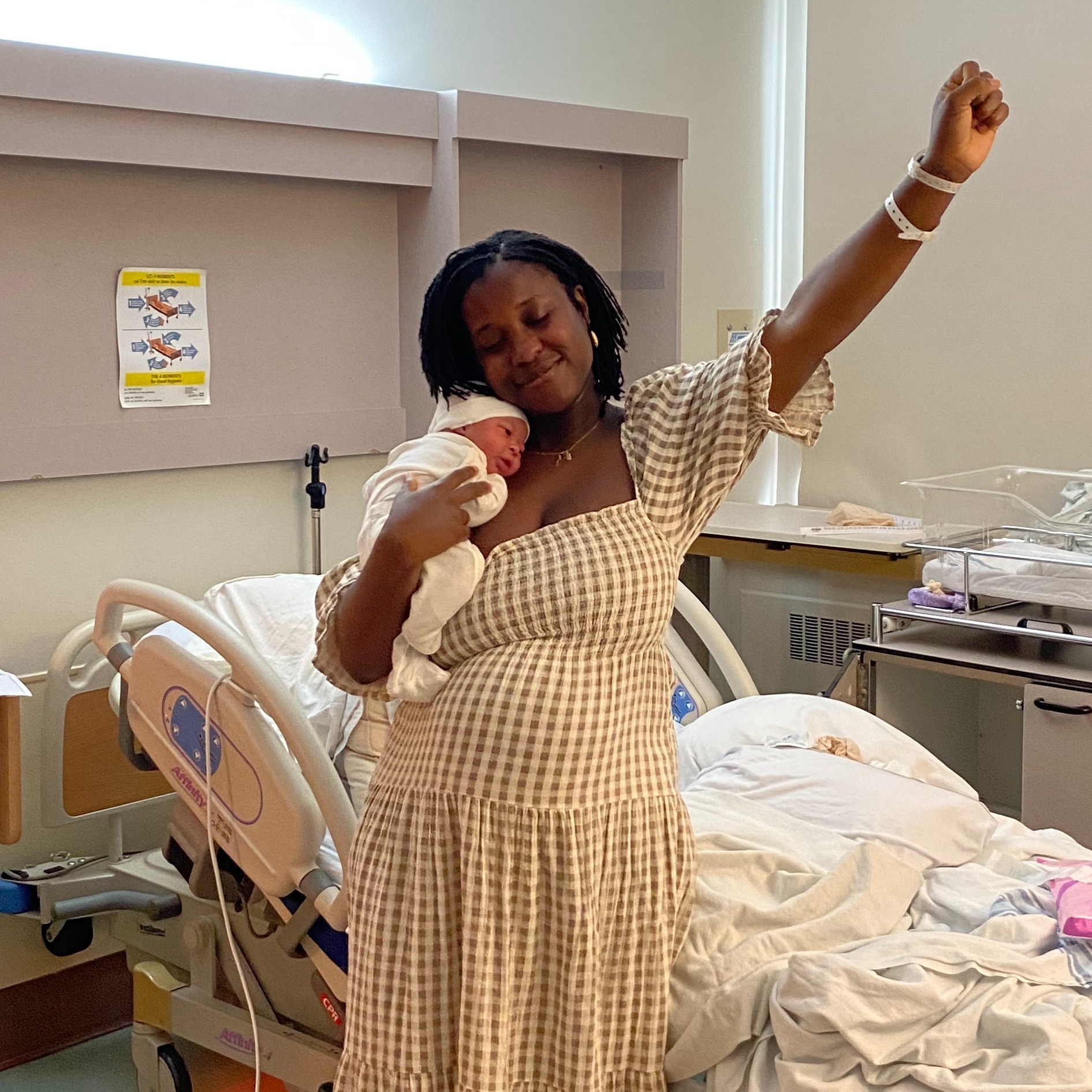
Episode 371 Aisha's Special Scar VBA2C After "Failure to Progress" + Uterine Dehiscence
Description
Aisha’s episode is full of wisdom and inspiration! With her first two births, Aisha worked so hard to deliver vaginally, but ultimately had two undesired Cesareans. She was told in the operating room that she had uterine dehiscence, was given a special scar, and should never try to deliver vaginally.
But her intuition was telling her a different story. She dove into research. She found a community and listened to podcasts like The VBAC Link. She knew a VBA2C was possible, and she knew she had to try.
Aisha’s VBA2C journey involved interacting with supportive and very unsupportive providers, hiring a fantastic doula, being proactive with labor comfort measures, planning for the unexpected, staying firm in her desires, asynclitic positioning, and pushing her baby boy out in just 45 minutes with a nuchal hand!
How to VBAC: The Ultimate Prep Course for Parents
Full Transcript under Episode Details
Meagan: Hello, Women of Strength. It’s The VBAC Link, and we have a VBA2C story coming your way. Have you ever wondered what VBA2C means? If you haven’t noticed, in the VBAC world, there are a lot of acronyms. VBA2C is one of them. That means vaginal birth after two Cesareans, meaning that you have had two Cesareans and want to go for a vaginal birth.
Big question, what are the chances of having a vaginal birth after two Cesareans? Is it possible? The answer is simply, yes. It is totally possible. Myself and Aisha are living proof today that it is possible. In fact, your chances of a successful VBA2C are similar to those of just a VBAC with one Cesarean.
ACOG recommends that VBA2C is a safe option, so today, I want to quickly go over a little bit more instead of a review about some education on vaginal birth after two Cesareans and share a little bit more of our blog.
Like I said, ACOG recommends that vaginal birth after two Cesareans is actually a safe option. They say, “It is reasonable to consider women with two previous low transverse Cesarean deliveries to be candidates for TOLAC.” Now, again, there’s another one of those acronyms. TOLAC- trial of labor after a Cesarean. I know that is triggering for some. It is pretty much just the medical term of saying that you are having a trial of labor after a Cesarean, so try not to let it impact you too much.
But, “for TOLAC and to counsel them based off of the combination of other factors that affect their probability of achieving a VBAC.” There are lots of things that people might go look through to see if you are eligible for a VBAC after two Cesareans.
Now, I’m sure you have probably heard this before, but proven pelvis. If you haven’t had a proven pelvis, meaning that your baby has come out vaginally before you’ve had a vaginal birth or a Cesarean– now when I say this, sometimes we have a vaginal birth, then we will have two Cesareans, and someone wants to go for a VBAC again, so they would be considered a proven pelvis or cervix to a medical staff.
But if you haven’t had a “proven pelvis”, I hope you guys can imagine my air quotes right now, that doesn’t mean that you shouldn’t be considered as someone who should have a VBAC. It says in our blog, “More important to note, there is no mention of a requirement to have had that previous vaginal delivery.” I wanted to point out that it really is not a necessary thing. I hadn’t had a vaginal birth before. My cervix also hadn’t made it to 10 centimeters before, so just know that it