Episode Details
Back to Episodes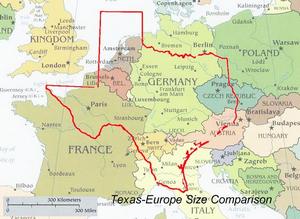
Defending American Ignorance
Description
Americans are criticized for being ignorant of geography, languages, and the world in general.

Let’s examine geography first. For example, someone from Slovakia often feels smart because he can name at least ten countries near him and explain what’s basically going on there. He says Americans are stupid because they can’t do this.
Humans are regionally focused. Today, for the average human, that radius of interest and knowledge might be 500 km. For someone in Nebraska, that means being able to name 10 states around him. For someone in Belgium, that means 10 countries. The level of geographic knowledge is effectively the same. Europe and the United States are roughly the same size. Although it’s true that a Nebraskan won’t find Belgium on a map, it’s also true that a Belgian won’t find Kansas on a map. And neither will find Togo or Cambodia. People are generally ignorant of anything that is beyond their geographic radius of knowledge.
src="/wanderlearn/episode/update/id/images/travels/europe/usa/USnews.png" alt="Imagine if they had asked people if they closely followed the news about Guinea Bissau" />The same goes for being aware of what’s going on. The Nebraskan will know what’s going on in Iowa, Missouri, Indiana, and maybe California. Meanwhile, the Belgian will have an idea of the general affairs in Luxembourg, Denmark, Germany, and maybe Greece. They’re all about the same distance from each other, the only difference is one crosses country lines while the other crosses state lines. And, of course, the American won’t know what’s going on in those European countries, just like the European won’t know what’s going on in those particular American states. Americans won’t know about the floods in Romania any more than a Romanian will know about the tornadoes in Oklahoma.
However, the European persists and says that Americans don’t know anything about world events and yet everyone knows what’s going on in America. One Latvian told me she was upset that she knows so much about America and Americans don’t know anything about Latvia. It was tough to break the news to her that Latvia’s physical, economic, and political size is insignificant. And it’s really painful to tell the same thing to the French. But it’s true.
Europeans know what’s going on America not because they’re more worldly and sophisticated, but because America has a lot of influence in their affairs. America knows little about individual European countries because not one European country has much impact on America (except for perhaps Britain or Russia). Most Europeans don’t know much more than Americans about what’s happening in Uruguay, New Zealand, and Namibia because those countries are both far and insignificant to them. And those countries don’t give a s**t about all the tiny European countries either.
In addition, educated Europeans who do know lots of stuff about the world often compare themselves with non-educated Americans. They walk through New York and tell people, “Hi, I’m from Bulgaria, do you know where that is?” They’re horrified that New Yorkers don’t know crap about Bulgaria and conclude that Americans are geographically ignorant idiots, unlike the brilliant Bulgarians.
Meanwhile, a girl from Laos goes to Bulgaria and asks the people she meets, “Do you know where Laos is?” You can guess the response. Please compare an educated, well-traveled American with an educated, well-traveled European; or the American on the street with the European on the street. You’ll discover the difference isn’t that big.
Most who complain about these issues come from countries much smaller than the US. The smaller the country, the more they’re forced to look outside because they quickly exhaust the business and travel opportuni