Episode Details
Back to Episodes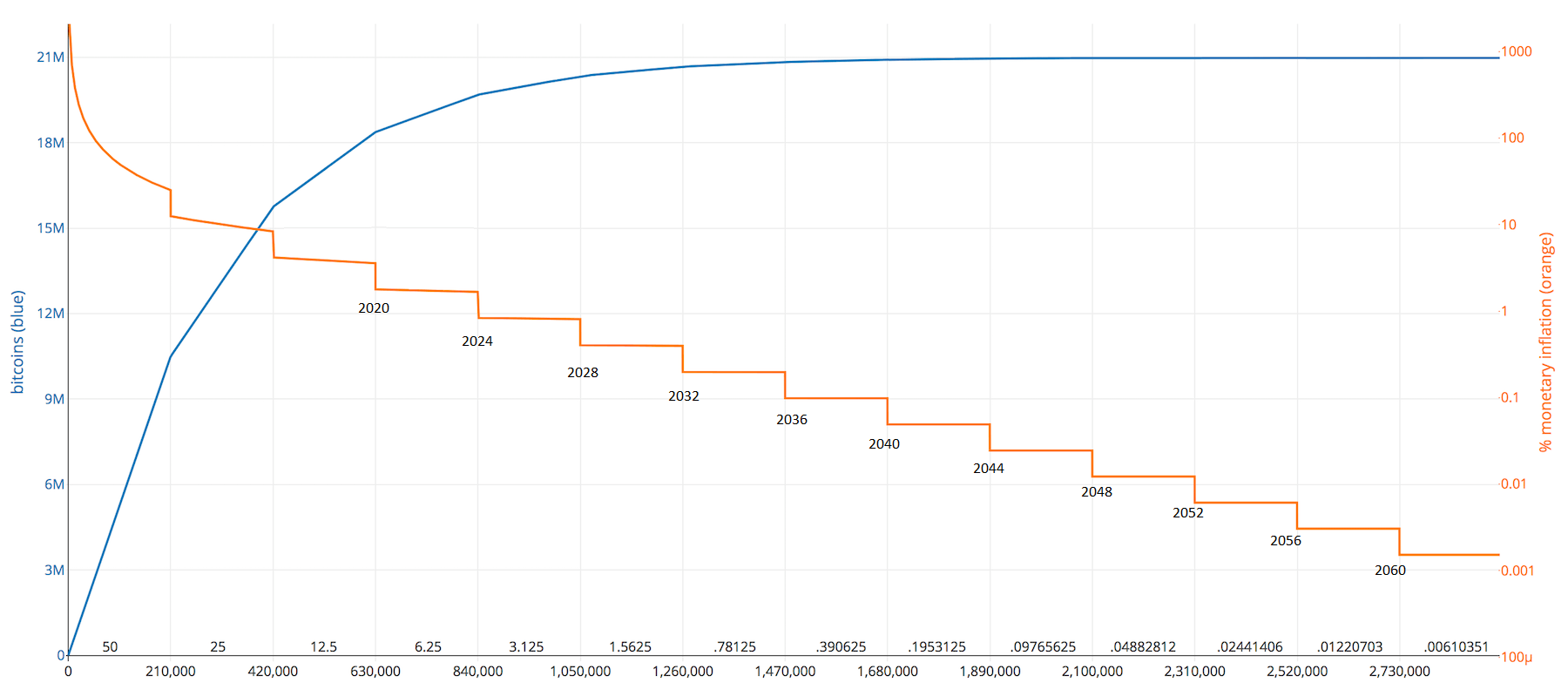
BTC Halving: Why is Bitcoin Worth Anything?
Description
Every four years, there's a US election, the World Cup, and the Olympics. They don't all happen in the same year, but they each have a 4-year cycle.
In a few minutes, there's another event that happens once every for years that few talk about: the bitcoin halving.
To celebrate, I'll give a simplified explanation of what the halving is and why it's significant.
Afterward, I will turn to a more fundamental question: why is bitcoin (BTC) worth more than a dollar and why do I keep talking about it given that I'm mostly known for my travels?
What is the Bitcoin Halving?
Every 10 minutes, a fast bitcoin miner somewhere on the planet gets rewarded for his efficiency. When the bitcoin network was first created in 2009, that reward was 50 bitcoins. Every 4 years, that reward gets cut in half.
On May 12, 2020, bitcoin will undergo its third halving. The reward will drop from 12.5 bitcoins to 6.25 bitcoins.
In 2024, the reward will be 3.125 bitcoins.
This halving will continue to occur every four years until 2140 when it will stop. At that point, we'll have 21 million bitcoins.
The Coindesk chart below sums it up.
Why is the Bitcoin Halving significant?
You're probably familiar with the US Federal Reserve injecting more liquidity into the economy. Some refer to it as "printing money boost the economy."
When the Fed does that, it devalues the dollar. When it does that for a long period of time, it adds up. That's why $1 during George Washington's time would be worth 1 cent today.
Bitcoin does the opposite. Instead of printing more bitcoin every year, we print less bitcoin every four years.
Therefore, the dollar softens over time, whereas bitcoin hardens.
Assuming bitcoin's demand grows slowly, the price will still rise because the supply is growing quite slowly nowadays.
The graph below shows how bitcoin's inflation rate will drop from about 3% in 2020 to below 1% in 2024. And it keeps declining until it has 0% inflation in 2140.
No other asset in history has had 0% inflation. Gold has low inflation, which has helped it retain its purchasing power. Still, we're constantly digging more gold out of the ground. Gold mining inflates the supply by 1-3% per year. As gold's price rises, miners have more incentive to dig for more.
Bitcoin doesn't work that way. By 2140, there will be no more bitcoin to mine. Even by 2036, bitcoin's inflation rate will be 0.1%. In comparison, gold will be at least 10 times more inflationary than bitcoin in 2036.
Shouldn't bitcoin be worthless?
Skeptics who are dumbfounded as to why bitcoin is worth more than a penny. They believe that bitcoin is "fake internet money and one big Ponzi scheme."
Those who declare that bitcoin is a Ponzi scheme don't understand what a Ponzi scheme is and/or don't understand bitcoin. Others incorrectly call it a pyramid scheme.
You can certainly accuse bitcoin of being an economic bubble (like the Tulip mania), but it's not a classic Ponzi scheme.
It's also not a pyramid scheme any more than a company stock is a pyramid scheme.
When an asset bubble pops, the asset's value rarely drops to zero. Even tulips still have value. So why does bitcoin have any value?
There are many long articles and videos explaining why bitcoin has real value. Here's a quick explanation.
Bitcoin has 14 of the 15 key properties of money. Bitcoin is:
- Scarce: only 21 million bitcoins will be mined (and 90% have already been mined).
- Durable: it's as durable as t