Episode Details
Back to Episodes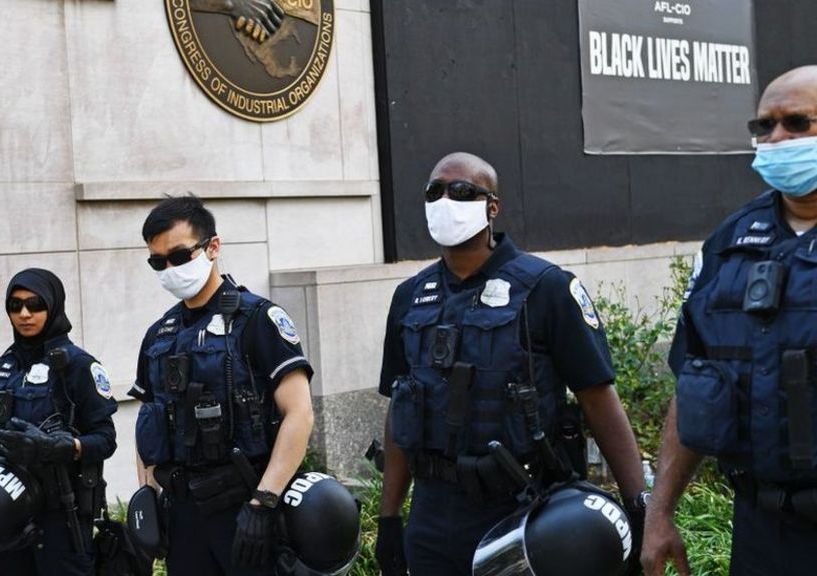
What's a Reasonable Number of Unarmed Police Shootings?
Description
It's a perverse question, but what's an acceptable number of unarmed people that the police may accidentally shoot every year?
Of course, many people's knee-jerk answer will be, "Zero!"
If you answered that way, it's time to take a deep breath and relax.
We're going to embark on a cold-hearted exercise that requires rationality, logic, and a heavy dose of realism. The implications are profound and important, so please bear with me.
After reading this long article, you're welcome to write a constructive comment at the bottom. Include what you think is a reasonable number of annual unarmed deaths and why. I will update this article as I get thoughtful and intelligent feedback.
The Black Lives Matter Thesis
A central argument in the Black Lives Matter movement is that (white) cops are disproportionately killing Black men, especially unarmed Black men. It's Exhibit A in a long list of exhibits that prove systemic, structural, and institutional racism in America's police.
This argument has been repeated so many times that it has become an axiom. Thus, questioning the Black Lives Matter thesis is tantamount to questioning whether our planet revolves around the sun.
We won't question it. Instead, we will seek to do is to quantify it.
Metrics: Quantifying success and failure
Metrics allow us to objectively measure the size of a problem. Metrics help us measure our progress.
Metrics also help us answer crucial questions: when can we declare victory? When will we know that we've solved this crisis?
In other words, when can we put down our signs, stop protesting, hug, give each other high-fives, and scream, "Mission accomplished!"?
Declaring victory ought to be based on facts and evidence, not a group's feelings or one man's opinion.
Therefore, we must set reasonable benchmarks.
We must quantify where we want to be. What does a fair and just world look like, numbers-wise?
Assuming the current number of police killings of Blacks is disproportionately high, then what number would be disproportionately low?
And what number would be tragic, but understandable?
To understand what I mean, consider other tragic numbers. Every year, hundreds of babies die at daycare centers, thousands die in traffic accidents, and millions die of preventable diseases.
Since society is not vigorously protesting all these deaths, one could conclude that these deaths, while sad, are understandable. Our society deems that all those preventable deaths are tragic but tolerable.
Therefore, the aim of this article is to help you calculate 3 numbers regarding the number of US police killings of unarmed victims:
- A shockingly high number that's worth protesting about.
- An expected number that we can begrudgingly live with and accept.
- A remarkably low number that's almost worth celebrating.
Great. Now let's analyze the data.
USA police kill way more people per capita than any other rich nation
In a list of 62 random countries, the USA ranked slightly below the median in the per-capita police caused fatalities.
This is embarrassing. High-income countries outperform the USA handily. It's humiliating that the DRC beats the USA.
Why isn't the USA in the top 10? Why isn't it clumped next to its rich allies instead of several poor and dysfunctional nations?
Doesn't this prove the US police are excessively violent?
Before we jump to that conclusion, we must consider two critical facts.
1. America's gun-filled environment
The USA is the only country that has more firearms than people. Indeed, it has 20% more guns than people.
We have twic