Episode Details
Back to Episodes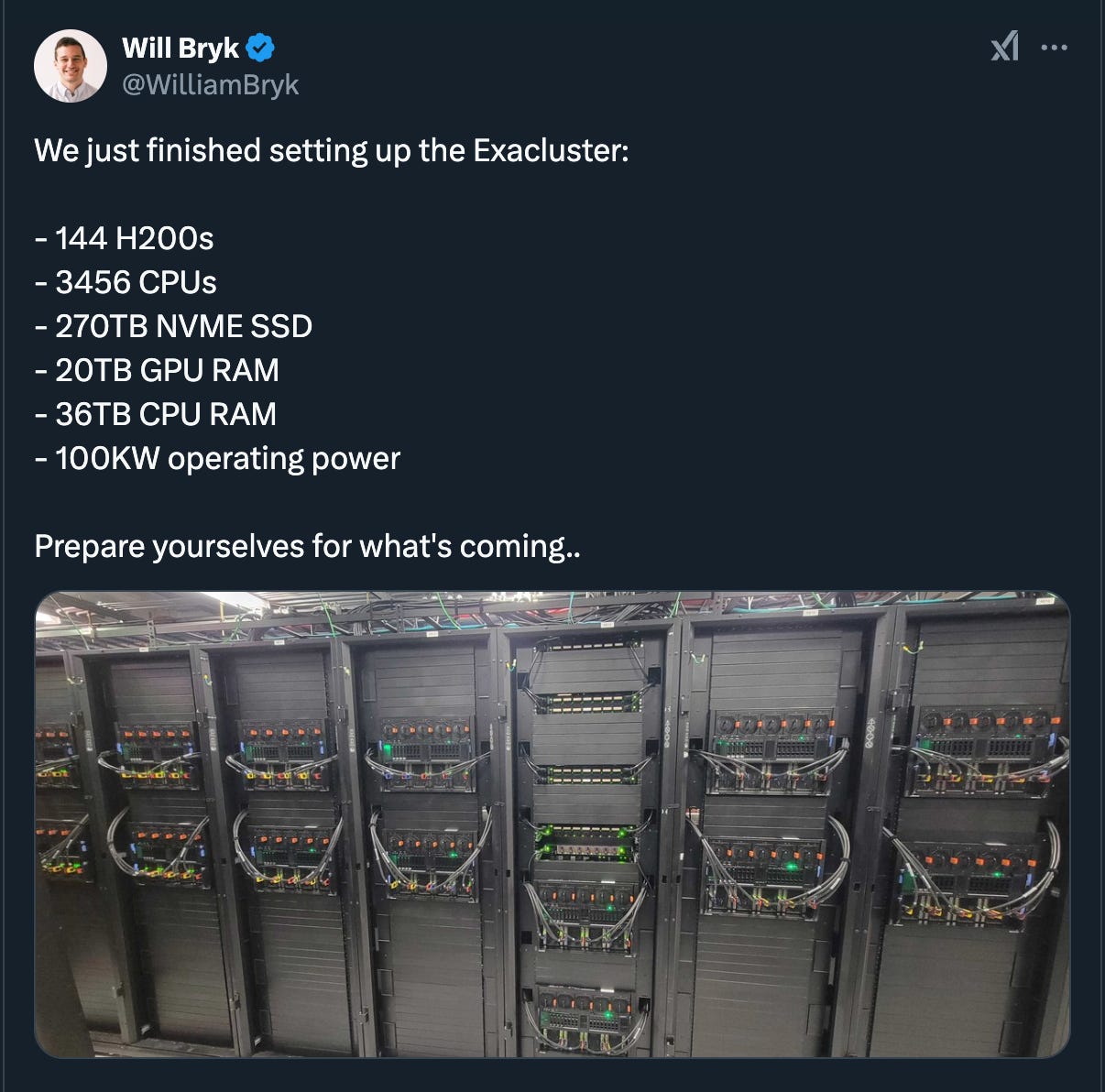
Beating Google at Search with Neural PageRank and $5M of H200s — with Will Bryk of Exa.ai
Description
Applications close Monday for the NYC AI Engineer Summit focusing on AI Leadership and Agent Engineering! If you applied, invites should be rolling out shortly.
The search landscape is experiencing a fundamental shift. Google built a >$2T company with the “10 blue links” experience, driven by PageRank as the core innovation for ranking. This was a big improvement from the previous directory-based experiences of AltaVista and Yahoo. Almost 4 decades later, Google is now stuck in this links-based experience, especially from a business model perspective.
This legacy architecture creates fundamental constraints:
* Must return results in ~400 milliseconds
* Required to maintain comprehensive web coverage
* Tied to keyword-based matching algorithms
* Cost structures optimized for traditional indexing
As we move from the era of links to the era of answers, the way search works is changing. You’re not showing a user links, but the goal is to provide context to an LLM. This means moving from keyword based search to more semantic understanding of the content:
The link prediction objective can be seen as like a neural PageRank because what you're doing is you're predicting the links people share... but it's more powerful than PageRank. It's strictly more powerful because people might refer to that Paul Graham fundraising essay in like a thousand different ways. And so our model learns all the different ways.
All of this is now powered by a $5M cluster with 144 H200s:
This architectural choice enables entirely new search capabilities:
* Comprehensive result sets instead of approximations
* Deep semantic understanding of queries
* Ability to process complex, natural language requests
As search becomes more complex, time to results becomes a variable:
People think of searches as like, oh, it takes 500 milliseconds because we've been conditioned... But what if searches can take like a minute or 10 minutes or a whole day, what can you then do?
Unlike traditional search engines' fixed-cost indexing, Exa employs a hybrid approach:
* Front-loaded compute for indexing and embeddings
* Variable inference costs based on query complexity
* Mix of owned infrastructure ($5M H200 cluster) and cloud resources
Exa sees a lot of competition from products like Perplexity and ChatGPT Search which layer AI on top of traditional search backends, but Exa is betting that true innovation requires rethinking search from the ground up. For example, the recently launched Websets, a way to turn searches into structured output in grid format, allowing you to create lists and databases out of web pages. The company raised a $17M Series A to build towards this mission, so keep an eye out for them in 2025.
Chapters
* 00:00:00 Introductions
* 00:01:12 ExaAI's initial pitch and concept
* 00:02:33 Will's background at SpaceX and Zoox
* 00:03:45 Evolution of ExaAI (formerly Metaphor Systems)
* 00:05:38 Exa's link prediction technology
* 00:09:20 Meaning of the name "Exa"
* 00:10:36 ExaAI's new product launch and capabilities
* 00:13:33 Compute budgets and variable compute products
* 00:14:43 Websets as a B2B offering
* 00:19:28 How do you build a search engine?
* 00:22:43 What is Neural PageRank?
* 00:27:58 Exa use cases
* 00:35:00 Auto-prompting
* 00:38:42 Building agentic search
* 00:44:19 Is o1 on the path to AGI?
* 00:49:59 Company culture and nap pods
* 00:54:52 Economics of AI search and the future of search technology
Full YouTube Transcript
Please
Listen Now
Love PodBriefly?
If you like Podbriefly.com, please consider donating to support the ongoing development.
Support Us