Episode Details
Back to Episodes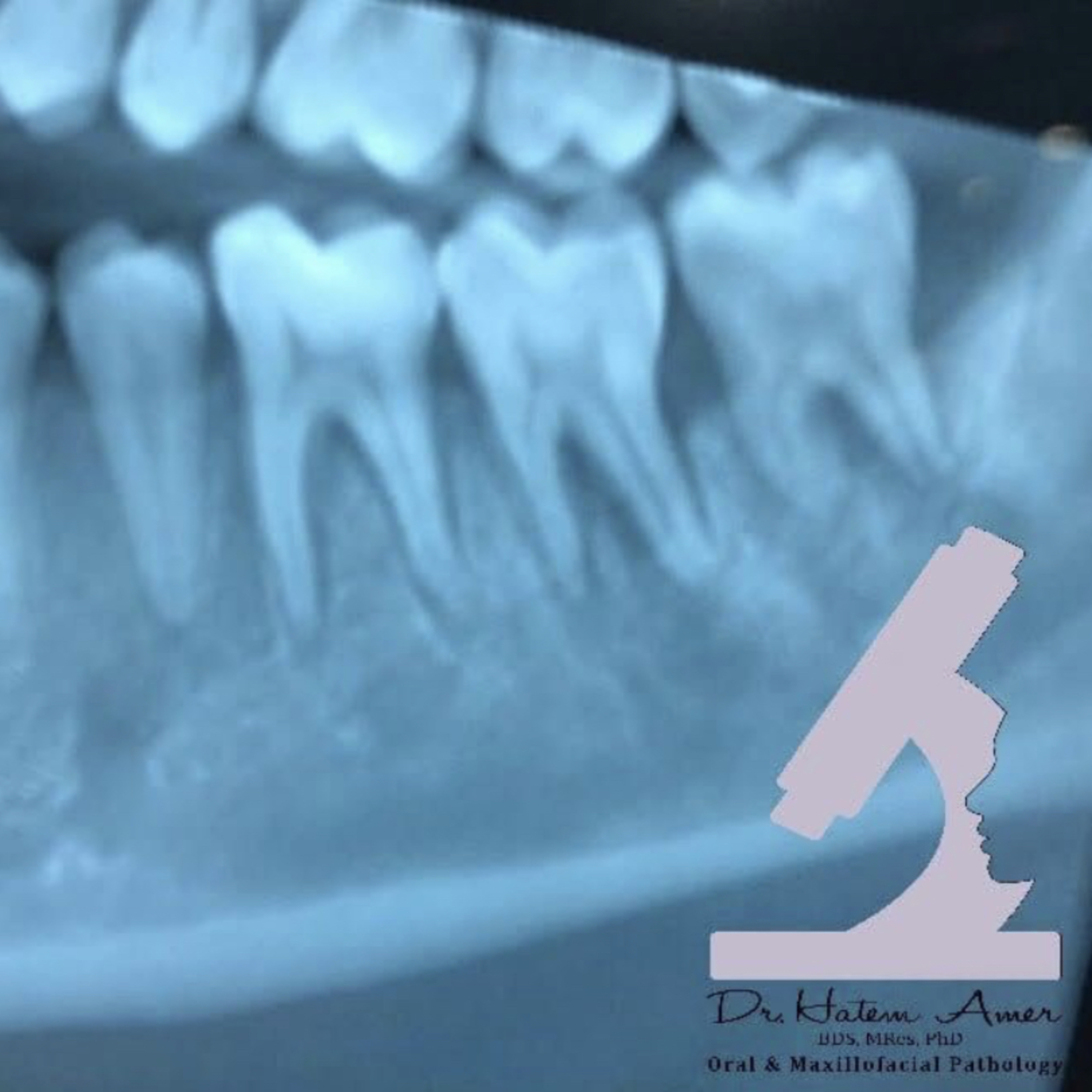
📝 “What is ‘Garrington’s Sign’ on Radiographs?”
Description
- 1.4.25
Quick Review #261 - #pathology #oralpathology #doctorgallagher #oralsurgery #oralsurgeon #dentist #dentistry #dental #oralcancer #cancer #osteosarcoma
Garrington’s sign is a radiographic feature associated with gnathic osteosarcoma, particularly in the jaws. It refers to the widening of the periodontal ligament space around multiple teeth, which is caused by tumor invasion and destruction of the surrounding alveolar bone.
This sign is considered a hallmark of aggressive bone pathology and indicates rapid bone turnover and infiltration by the malignancy. Osteosarcoma of the jaws typically presents with mixed radiolucent and radiopaque lesions due to the production of abnormal osteoid or bone by the tumor.
Key Features of Garrington’s Sign:
1. Radiographic Appearance:
• Diffuse or localized widening of the periodontal ligament spaces around the teeth in the affected region.
• Loss of the normal lamina dura.
2. Pathogenesis:
• The tumor’s aggressive nature leads to destruction of cortical bone and invasion of surrounding structures, including the periodontal ligament.
3. Diagnostic Implication:
• Garrington’s sign is not pathognomonic for osteosarcoma but serves as an important indicator of malignancy when correlated with other clinical and radiographic findings, such as sunburst periosteal reaction or Codman’s triangle.
4. Clinical Presentation:
• Patients may exhibit swelling, pain, loosening of teeth, or paresthesia, and the radiographic findings help confirm the diagnosis.
5. Differential Diagnosis:
• Other malignancies or aggressive lesions, such as metastatic disease, Ewing sarcoma, or advanced periodontal disease, may mimic these radiographic changes
References:
1. Dr. Amer, H. (2020, September 6). Osteosarcoma arising in a 17-year-old male patient! [Image with description]. Facebook. Retrieved from https://lnkd.in/e-C5Q6Ra
2. Neville, B. W., Damm, D. D., Allen, C. M., & Chi, A. C. (2015). Oral and Maxillofacial Pathology (4th ed.). Elsevier.
3. Slootweg, P. J., & Müller, H. (1990). Mandibular osteosarcoma. Cancer, 66(3), 437–442.
4. Lucas, D. R. (2009). Osteosarcoma of the jaws and craniofacial bones: Clinicopathologic review of 74 cases. Journal of Clinical Pathology, 62(1), 14–21
5. ChatGPT. 2025
#podcast #dentalpodcast #doctorgallagherpodcast #doctorgallagherspodcast #doctor #dentist #dentistry #oralsurgery #dental #dentalschool #dentalstudent #doctorlife #dentistlife #oralsurgeon #doctorgallagher