Episode Details
Back to Episodes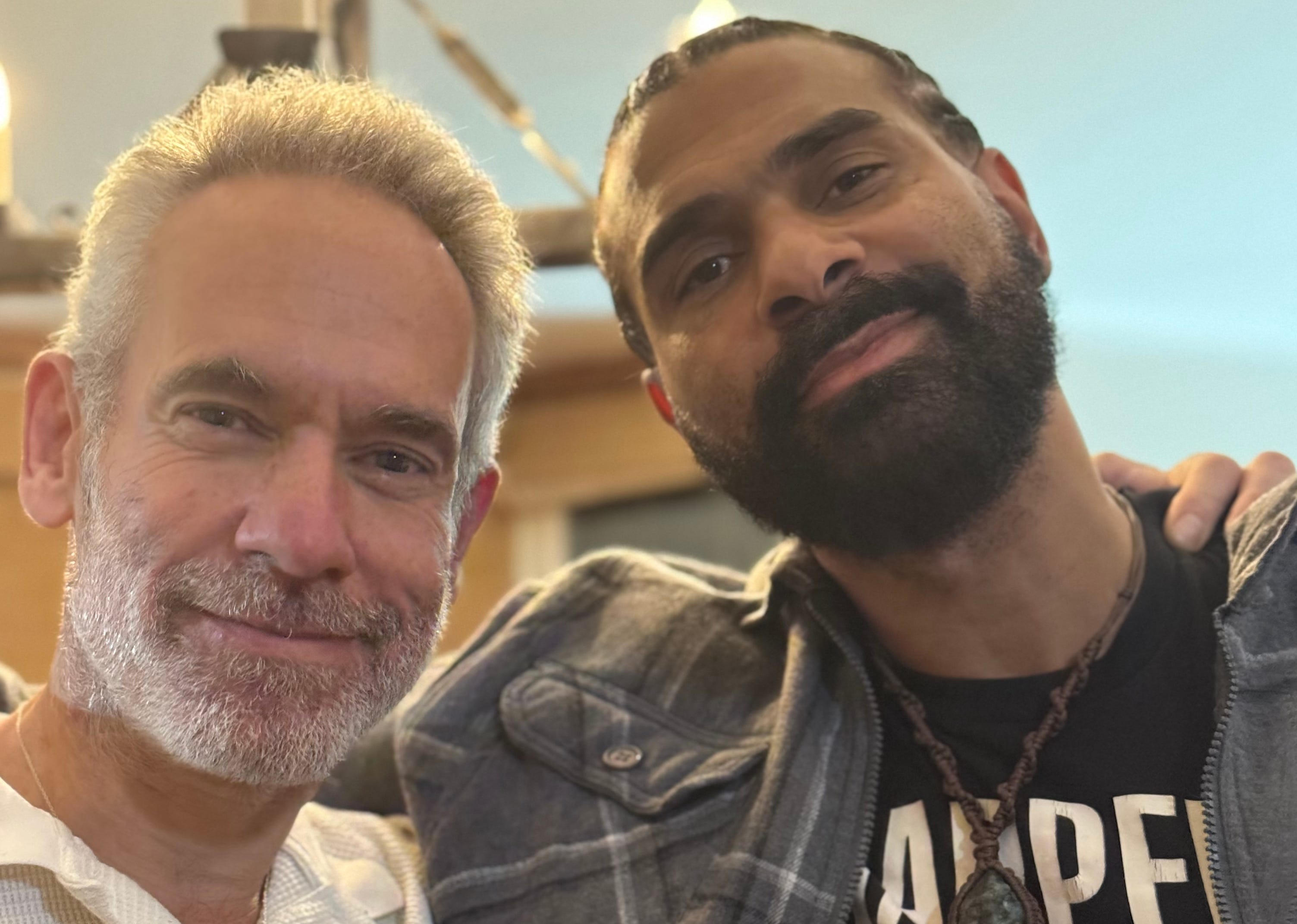
How To Win: Lessons From A Champion
Description
I was at a big family function on Christmas Eve, where I ran into my brother-in-law, who used to be a world champion boxer.
David Haye is his name. Way back when, his sister and I were married, and he is uncle to my two oldest children. I don’t know if that makes him former brother-in-law. Whatever.
I still maintain that the world doesn’t quite know what an exceptional boxer David was. His speed and power were second to none. The wins in France against Jean-Marc Mormeck to win the cruiserweight World Title, after being knocked down in the fifth, and then in Germany against the unbeaten Russian Nikolai Valuev, who at 23.4 stone and 7 feet, was the largest heavyweight in history, were two of the greatest British overseas wins ever.
In winning both cruiserweight and heavyweight world titles, he achieved something only two other boxers, Evander Holyfield before him and Oleksandr Usyk after, have managed. That tells you how good he was. Yet, he is not quite seen in the same light as those other two, largely because of injuries and losses later in his career.
I’ve known David since he was 16, and he was going to be the heavyweight champion even then. It was almost all anyone in the family talked about.
What I always most admired about him is his singularity and clarity of purpose; that and his breathtaking, fearless honesty. He hides nothing. He tells it like he sees it and then lives with the consequences. Jordan Peterson would be proud.
It’s that singularity of purpose - that winning mentality - I want to talk about today.
As a youngster, David used to spar with a fighter who was naturally more gifted but never made it through the amateur ranks. “He would rather be the guy who could have made it,” David used to say. “The guy sat in the pub 10 years from now telling everyone he could have made it. He would rather be that than take the necessary risks and make the necessary sacrifices to actually make it.”
I was always incredibly struck by that attitude.
Burn the ships: have no plan B
We all met up at David’s mum and dad’s, my old in-laws, on Christmas Eve. All our kids were there, and it was a lovely family do. David’s son, Cassius, who is 16, is turning out to be quite the tennis player. I reminded them of a story from when Cassius was seven or eight.
We were having lunch, and I said that tennis was a great sport to get good at because, unlike, say, football, if it doesn’t work out, you can always get a job as a tennis coach. You can go anywhere in the world and have a pretty nice life.
I looked to my right and saw David fuming, “What are you telling him that sh*t for? Why are you putting those kinds of doubts in his head?”
I was thinking like a risk-manager, I guess. The sports stars of old always used to get a trade first. Not so David.
His mentality reminded me of a story about Spanish conquistador Hernán Cortés, which I tell in my new book on gold to be published later this year. Cortés landed in Mexico in 1519. His purpose was to find gold and to conquer. He had 508 soldiers and 11 ships. On landing, he scuttled 10 of them. It meant there was no escape. His men now had to win - or die.
Speaking of gold, have you signed up for Charlie Morris’s monthly gold report, Atlas Pulse? It is, in my view, the best gold newsletter out there, and, best of all, it’s free. More here.
Later that night, David and I back-and-forthed on texts a bit, and I told him the Cortés story. And so we come