Episode Details
Back to Episodes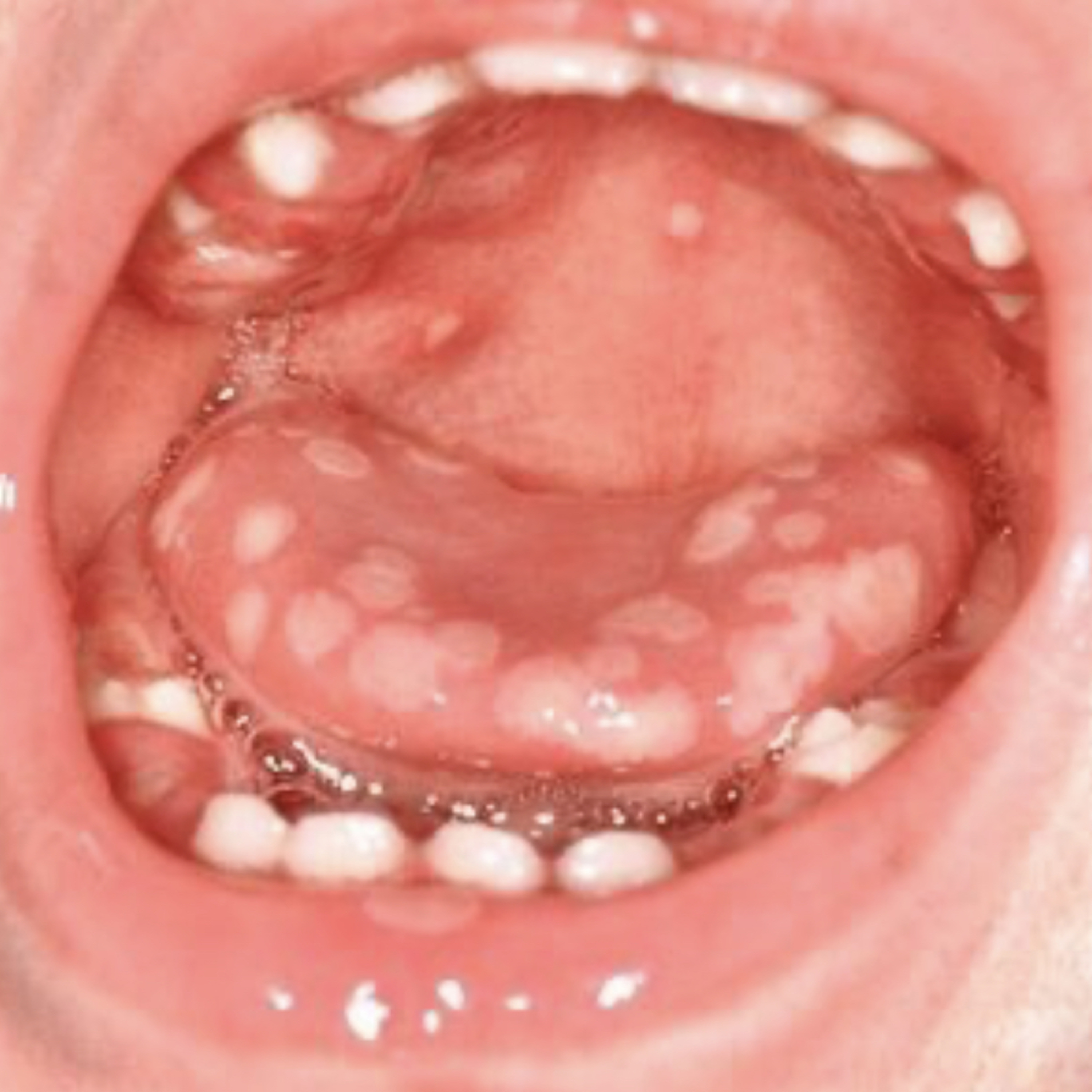
📝 “What Are Key Differences Between Coxsackievirus & Herpetic Stomatitis Oral Manifestations?”
Description
- 12.31.24
Quick Review #259 - #pathology #oralpathology #doctorgallagher #oralsurgery #oralsurgeon #dentist #dentistry #dental #herpangina #coxsackievirus #herpes #herpeticstomatitis
Coxsackievirus Herpangina
• Causative Agent: Coxsackievirus (commonly group A).
• Population Affected: Primarily affects children, especially during summer and early fall.
Oral Manifestations:
• Small vesicles (2-4 mm) on the soft palate, uvula, tonsillar pillars, and posterior pharynx.
• Vesicles rupture to form shallow ulcers with surrounding erythema.
• Rarely involves the anterior oral cavity or gingiva.
Symptoms:
• Sudden onset of high fever (101-104°F).
• Sore throat and difficulty swallowing (dysphagia).
• Headache, abdominal pain, and vomiting are common.
Systemic Signs:
• Malaise and fatigue.
• Mild rash on the hands, feet, and other body areas may occur in hand, foot, and mouth disease, but less pronounced in herpangina.
• Duration: Resolves within 7-10 days without scarring.
• Transmission: Fecal-oral route or respiratory droplets.
Herpetic Stomatitis
• Causative Agent: Herpes simplex virus (HSV-1, primarily).
• Population Affected: Most common in young children (primary infection), but can affect adults in recurrent forms (e.g., cold sores).
Oral Manifestations:
• Multiple vesicles and ulcers throughout the oral cavity, including the gingiva, lips, tongue, buccal mucosa, and palate.
• Gingival involvement leads to diffuse erythema, swelling, and bleeding (gingivostomatitis).
• Vesicles rupture to form painful ulcers.
Symptoms:
• Painful oral lesions interfere with eating and drinking.
• Fever (mild to moderate) and lymphadenopathy.
Systemic Signs:
• Cervical lymphadenopathy is common.
• Irritability and malaise, especially in children.
• Possible dehydration due to difficulty eating and drinking.
• Duration: Resolves in 10-14 days. May result in latent infection in the trigeminal ganglion, causing recurrent herpes labialis.
• Transmission: Direct contact with saliva or vesicular fluid
References:
1. The Royal Children’s Hospital Melbourne. (n.d.). HSV gingivostomatitis: Clinical practice guidelines. Retrieved December 30, 2024, from https://lnkd.in/e2ywfghm
2. Neville, B. W., Damm, D. D., Allen, C. M., & Chi, A. C. (2022). Oral and maxillofacial pathology (5th ed.). Elsevier.
3. Kumar, V., Abbas, A. K., & Aster, J. C. (2021). Robbins and Cotran pathologic basis of disease (10th ed.). Elsevier.
4. Terezhalmy, G. T., & Riley, C. K. (2023). Viral infections of the oral cavity: Clinical manifestations and management. Journal of Oral Medicine and Oral Surgery, 29(3), 205-212
5. ChatGPT. 2024
#podcast #dentalpodcast #doctorgallagherpodcast #doctorgallagherspodcast #doctor #dentist #dentistry #oralsurgery #dental #dentalschool #dentalstudent #doctorlife #dentistlife #oralsurgeon #doctorgallagher