Episode Details
Back to Episodes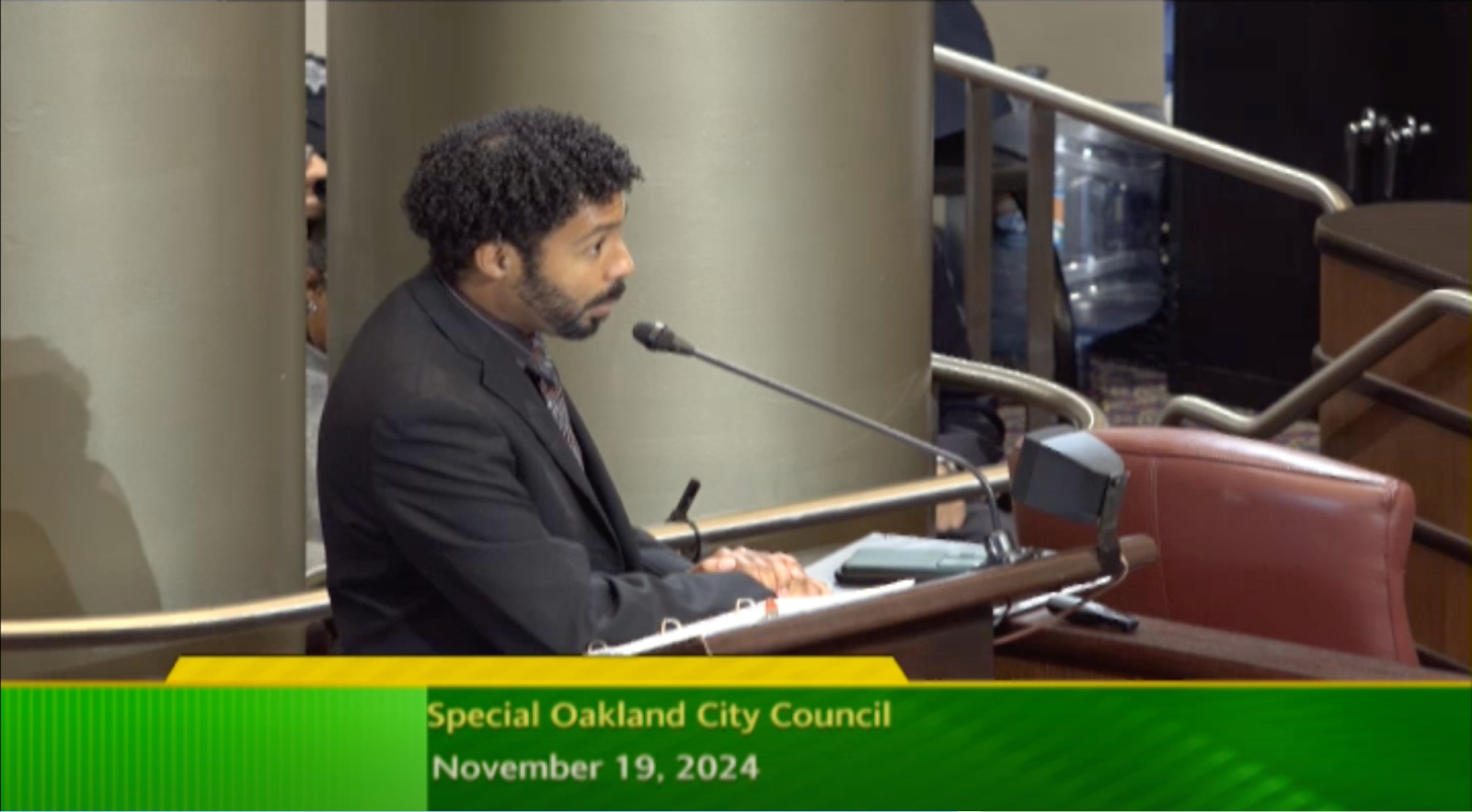
“If we do not change course, we will be roughly $115 million negative. We have already breached into our emergency reserve.”
Description
This is a complete transcript and audio recording (12 minutes) of the presentation by Budget Administrator Bradley Johnson at yesterday’s special meeting of the Oakland City Council. Mr. Johnson summarized the state of the city’s finances and urgent actions required to address the fiscal crisis. He notes that $115M must be cut from spending this year, and $140M from next year’s (FY25-26) budget to avoid insolvency.
Thank you. Director Roseman, Brad Johnson, budget administrator.
The report contains detailed information on our projected expenditures in the General Purpose Fund for city departments. In total, the General Purpose Fund is expected to exceed its now-adjusted budget by $93.4 million, which is 12% higher than that adjusted budget number.
The largest contributors to that overspending, and the two largest departments in your General Purpose Fund, are your Fire Department, which is projected to overspend by $34.5 million, or 21% of its budget, and your Police Department, which is expected to overspend by $51.9 million, or 16% of its budget.
Again, overspending in total is $93.4 million. Detailed information on those departments is available in the report. I would recommend everyone, as opposed to looking at the screen, look at the detailed report for that information, and information on all other departments is noted.
Discussing where we are projected to end the current fiscal year: we ended last fiscal year in a negative position. This is one of the first times ever we have seen this actually happen. That negative position last year was driven by an operating deficit of $80 million, meaning that last year we took in $80 million less in the General Purpose Fund than we outlaid.
This year, we are projecting our operating deficit to be $93 million. So, consistent with that last year's $80 million operating deficit, we are seeing a $93 million operating deficit this year.
After we note some excess fund balance coming back from our equipment fund and reserves required amounts for legal settlements and the expended, already carried forward allocations, we are projecting to end at roughly $115 million in the negative at the end of this fiscal year, if no action is taken.
I want to be clear about what this number means. These are trends based on your actuals. This already incorporates the fact that we have many positions in the General Purpose Fund vacant. It already incorporates the revenue trends that Director Roseman mentioned. It already incorporates the reimbursable reimbursements for OPD overtime that was mentioned at the Finance Committee earlier.
Based on our current trend, if we do not change course, we will be roughly $115 million negative.
We mentioned we ended last year in the negative position. That negative position was substantial enough that the city is now, when combining its undesignated fund balance in the General Purpose Fund—this is still an unaudited number—we have effectively tapped into our mandated emergency reserve under the Consolidated Fiscal Policy.
We have negatives. We have reserves also for OMERS, as required by that resolution for a closed retirement system, and we have a small cash balance that's due to interest in our Vital Services Stabilization Fund. But the highlight here is we have already breached into our emergency reserve.
This is, again, based on transactions that occurred last fiscal year, not ones that are forthcoming, but what we've already seen. And, again, this is the first time we've ever seen this occur since we've had this policy. I will note that this is all governed by your Consolidated Fiscal Policy.
Other funds are noted in this report. There are positive fund balances in some of these funds. These positive balances are due to prior years' overspending. They may be due to delayed expenditures. Certainly, in some of our capital funds, we have ongoing and delayed projects. However, some