Episode Details
Back to Episodes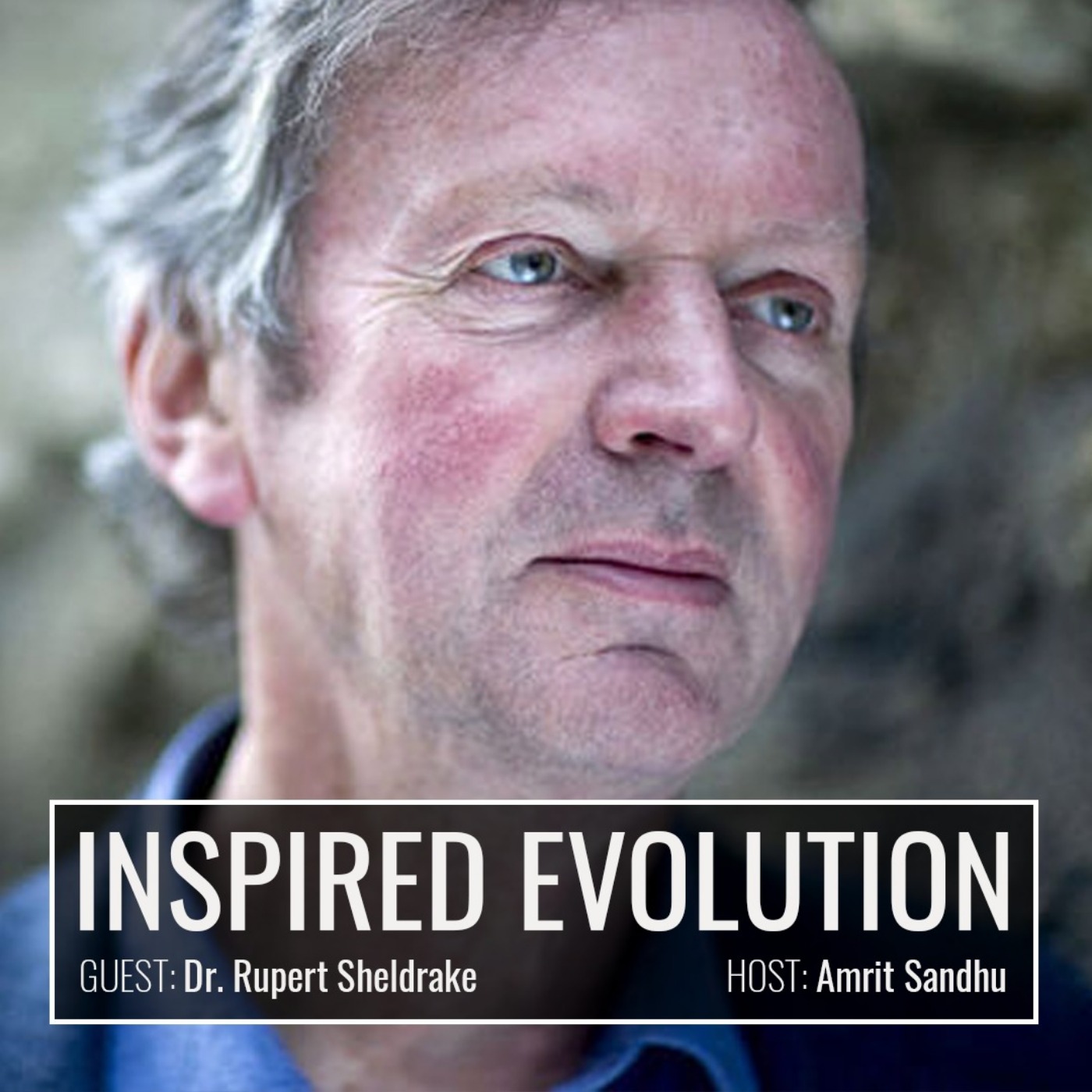
IE077 Dr. Rupert Sheldrake: Morphic Resonance: Quantum Biology Revealed (The Science of Spirituality)
Description
Our guest for this week is Dr. Rupert Sheldrake, a biologist, an international best-selling author, and the creator of the Morphic Resonance Hypothesis.
Dr. Rupert Sheldrake got his doctorate at the University of Cambridge in the field of biochemistry but has also studied philosophy and history at Harvard as part of his Frank Knox Fellowship. From then on he went to work as a Principal Plant Physiologist and Consultant Physiologist in India, at the Botany Department of the University of Malaya, Kuala Lumpur. He later engaged with extensive experimental research, studying unexplained subjects including telepathy and cases of peculiar animal behavior.
He's credited with co-discovery of the mechanism of polar auxin transport but he’s probably the most well-known aspect of his work is the Morphic Resonance Hypothesis, which posits that “memory is inherent in nature” and we discuss it much further in the podcast. Some have labeled him “controversial” as he is speaking out about the many dogmas riddling the modern scientific approach and offers alternative views, which encompass many aspects of spiritual knowledge as well. You can find more on his thoughts about scientific dogmas in his book “The Science Delusion” also known by the title “Science Set Free” in the US.
In 2017 he released the book titled “Science and Spiritual Practices” which is one of the main topics of our conversation. In it, he explores the recent scientific studies that have confirmed the connection between spiritual practices on one hand and happiness and well-being on the other.
Connect with Dr. Sheldrake:
- Website: https://www.sheldrake.org/
- YouTube: https://www.youtube.com/c/RupertSheldrakePhD
- Facebook: https://www.facebook.com/RupertSheldrake
The Science Delusion
“Well, basically the Science Delusion is the belief that science already understands the nature of reality, in principle, leaving only the details to be filled in.” - Dr. Rupert Sheldrake
We dive deep into our discussion starting off with his criticism of modern science and its approach. Dr. Sheldrake argues that scientific dogmas are so deeply integrated into our education which and are largely represented by the philosophy of mechanistic materialism, making it a default starting point for most graduates. The idea that nature and all of its subsequent products operate like a machine, made out of specific parts and compartments with a clear and distinct function. Dr. Sheldrake recognizes this as a metaphor that has seeped into and taken over the scientific narrative. He proposes a different metaphor which he believes is a more apt description of our world.
“It’s actually much more appropriate to think of nature as an organism, as alive. The whole universe is like a developing organism. It starts small with the Big Bang, a bit like the hatching of the cosmic egg. It’s been growing and expanding ever since.” - Dr. Rupert Sheldrake
Another scientific dogma that he points towards is the notion that purposeless of nature which is one of the products of the “machine metaphor”. He finds this worldview particularly depressing because it leads people on the path of secluding themselves from different aspects of life which they label as pointless, like for instance spiritual practices which is something that we’ve discussed