Episode Details
Back to Episodes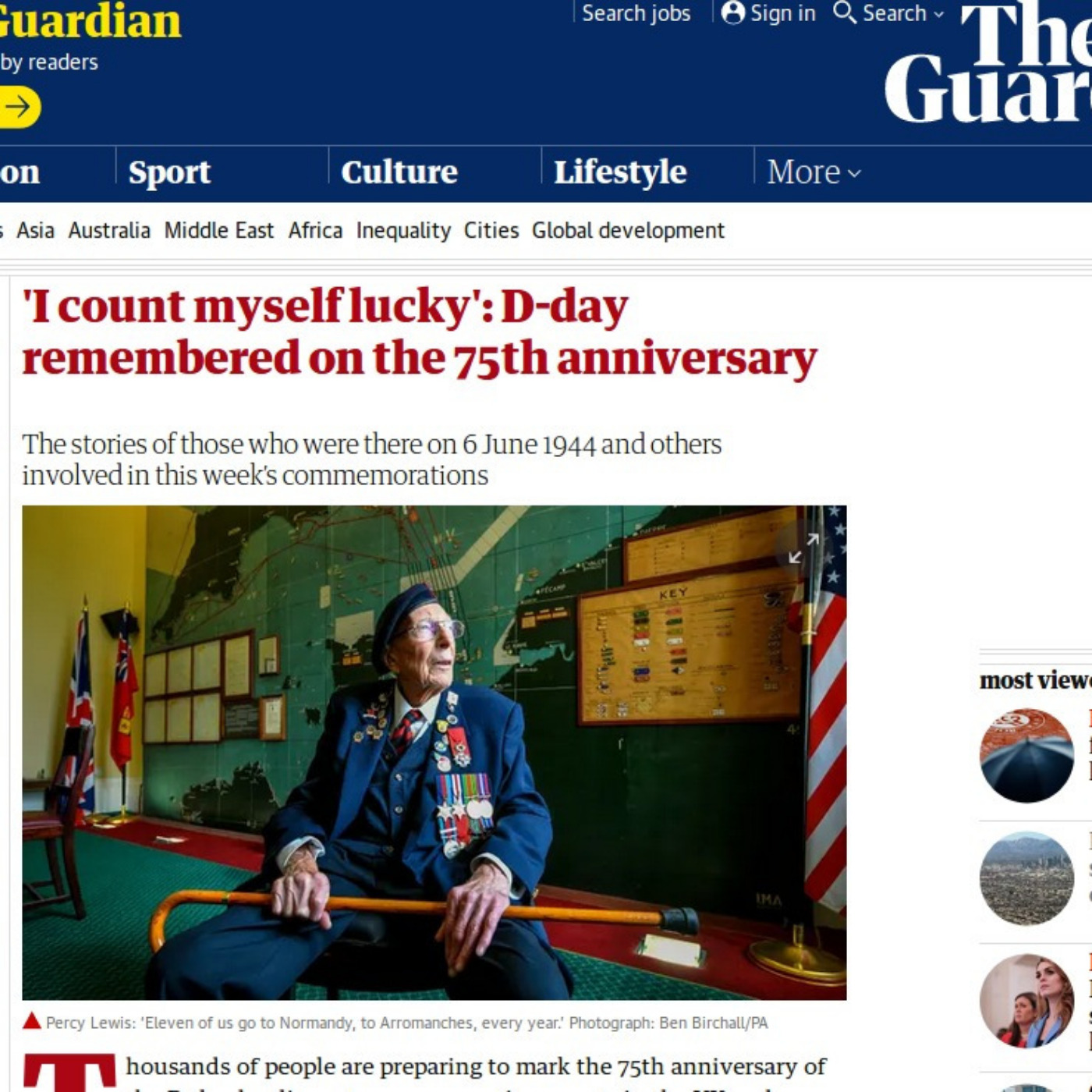
186: D-Day and the Environment
Description
Tomorrow is the 75th anniversary of D-Day.
This post is about being a part of something greater than yourself, than all of us, benefiting us all, and benefiting yourself -- one of the great feelings and experiences available to humans.
I happened to read four documents around the same time that illuminated each other and our attitudes toward acting on the environment. Our complacency in the face of a danger threatening many times more lives than Hitler is all the more glaring when compared to the honor and service of the men who defended the free world storming Normandy.
The documents were
- 'I count myself lucky': D-day remembered on the 75th anniversary, a compilation of interviews of D-Day survivors in The Guardian
- The Uninhabitable Earth, a book describing the consequences of global warming, to say nothing of plastics, mercury, extinctions, and other environmental consequences
- If Seeing the World Helps Ruin It, Should We Stay Home?, a silly account of selfish mental gymnastics for how to deny responsibility for contributing to global warming
- An email exchange with a friend abandoning a plan to avoid flying, instead planning to fly to India
A Man Who Landed at Sword Beach, Normandy
From the Guardian article
Chelsea pensioner Frank Mouqué, 94, was a corporal in the Royal Engineers who landed on Sword beach and whose job was to dispose of bombs on a stretch of land beyond the parapet next to the beach.
“We approached Sword beach in a landing craft. We had all of our gear on our backs and a rubber ring around our stomach to help keep us afloat. Let’s face it, the landing was very gory. You didn’t have time to think, survival instinct kicked in,” he said in his account published on the Royal Hospital Chelsea’s website.
“After reaching the beach, I ran up towards a parapet, and searched for mines. After 12 hours of being on the go we were exhausted and then had to dig a foxhole to sleep in. We had to dig six foot down and two foot wide.
“I slept outside for the next year or so, we had no protection from the elements. We had an oversized gas cape to go over our clothes and all our gear. We rarely slept lying down. Each time we slept in a barn we were ravaged by fleas – so even that was no good.
“It was a different time: I wasn’t a hero, I was a little cog in a big wheel. When you add all those little cogs together – then we became important. We all worked together towards peace.”
A Woman Who Supported the Normandy Soldiers from London
From the Guardian article
“We knew something big was afoot because there was an armada of boats in Portsmouth harbour. That was a giveaway.
“The VHF radio was a one-way system. When you raised your lever to transmit, the recipient couldn’t make any interjections until you had finished, and said: ‘Roger and out.’ or whatever. Then they would raise their lever, and transmit their message”.
On D-day she was in direct contact with the wireless operators on the allied invasion fleet as they stormed the beaches.
“When they raised their lever, I could hear very loud, sustained gunfire. It was really so bad that you thought: ‘Oh my God. There’s a battle going on.’ You knew. You thought: ‘God, men are dying.’ The reality suddenly hit you. For a rather naive 17-year-old, I think it was terrifying. But it was a job. You got on with it.
“The messages were all in code, so you didn’t know what was being said. But you could hear th