Episode Details
Back to Episodes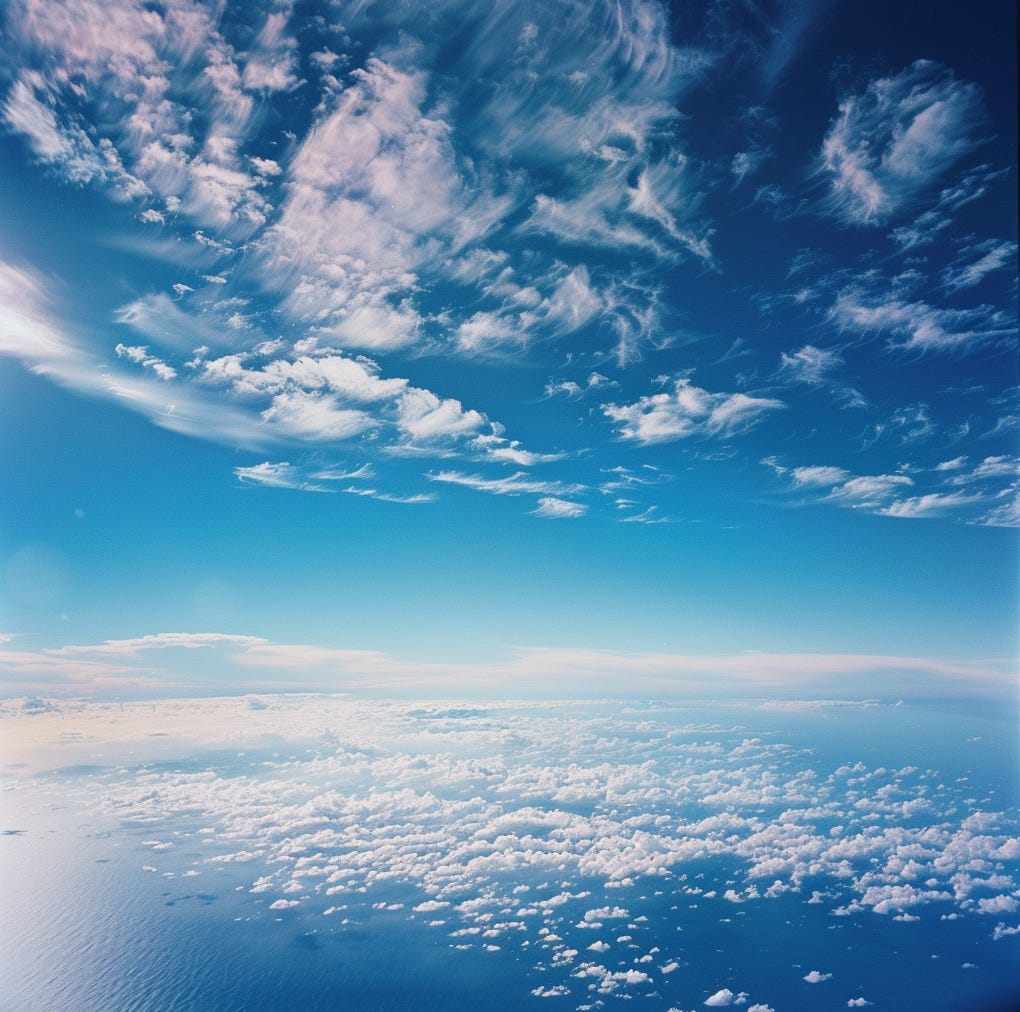
Day 15: The Heavens are Above (Gen 1:6-8).
Description
Prayer
Heavenly Father, thank you for a new day of life. Thank you for treating me infinitely better than I deserve. Where I deserve your wrath, instead you have given me patience and mercy. And yet, Lord, I am still so hard-hearted, so earthly-minded. I can make no progress unless you work in me to change my heart. Please look down upon me with mercy this morning, please meet me in the midst of this battle field of spiritual warfare. My enemies are set against me, and I have no power to overcome them – but for you. Wash my mind this morning I pray, In Jesus’ name, Amen.
Reading
Genesis 11 & John 1:1-14.
Genesis 1:6-8.
“And God said, “Let there be an expanse in the midst of the waters, and let it separate the waters from the waters.” 7. And God made the expanse and separated the waters that were under the expanse from the waters that were above the expanse. And it was so. 8. And God called the expanse Heaven. And there was evening and there was morning, the second day.”
Meditation
In our last study, we saw that there are three heavens: the heavens of our atmosphere, the heavens of outer space, and the heavenly realm where God dwells. We also saw that the scriptures make it clear that there is a relationship between the three heavens, as they use the created heavens to reveal and symbolise God’s dwelling place. Building on this, I want to point out and explore something else that we observe about the heavens on day two. It is a simple and obvious insight, but important as well. We see that: the heavens are above.
On day two, when God made the expanse and called it heaven, something that he made very clear is that there is a separation between heaven and earth – there’s an expanse. In other words, one of the key things day two reveals is that heaven remain beyond us. In Deuteronomy 30:12, Moses asks the rhetorical question: “Who will ascend to heaven and bring God’s Word to us?” He’s making the point that it would be impossible, and he goes on to make the point that it must be God who comes down to us. Proverbs 30:4 makes a similar point: “Who has ascended to heaven and come down? Who has gathered the wind in his fists? Who has wrapped up the waters in a garment? Who has established the ends of the earth?” The proverb is pointing out the fact that we cannot ascend into heaven. And was this not the key sin at the Tower of Babel in Genesis 11? Mankind in sinful pride attempted to ascend to heaven, and God judged them for it.
The point here is this: the expanse between heaven and earth is not one that can be bridged by human efforts, God must come down to us – which is exactly what he does do. In Jacob’s vision of the night, he saw a ladder between earth and heaven, not because the tower of Babel had been raised again, but because God himself had bridged the expanse. God likewise came down to Mt Sinai, and in the fullness of time in the most significant sense, God came down in the person of Christ. The Incarnation of Christ was where the great chasm between heaven and earth was finally and fully bridged.
Be ye doers of the word…
In our previous meditations, we began to see that we must learn to think like an Old Testament Hebrew. We must not wonder through this life with no thought for the expanse above our heads every day. Every day the expanse is there, a permanent and immense reminder of heavenly realities. Today’s study builds on this, and teaches us that – when we look up – we must not only consider the reality of heaven, but we must also consider the fact that there is an insurmountable expanse between heaven and earth. This is not a gap that we can bridge. Even with all modern technology at our disposal, the barest expedition into the second heaven is a massive undertaking. We cannot even fathom or measure it’s expanse. So much more the third heaven, the dwelling