Episode Details
Back to Episodes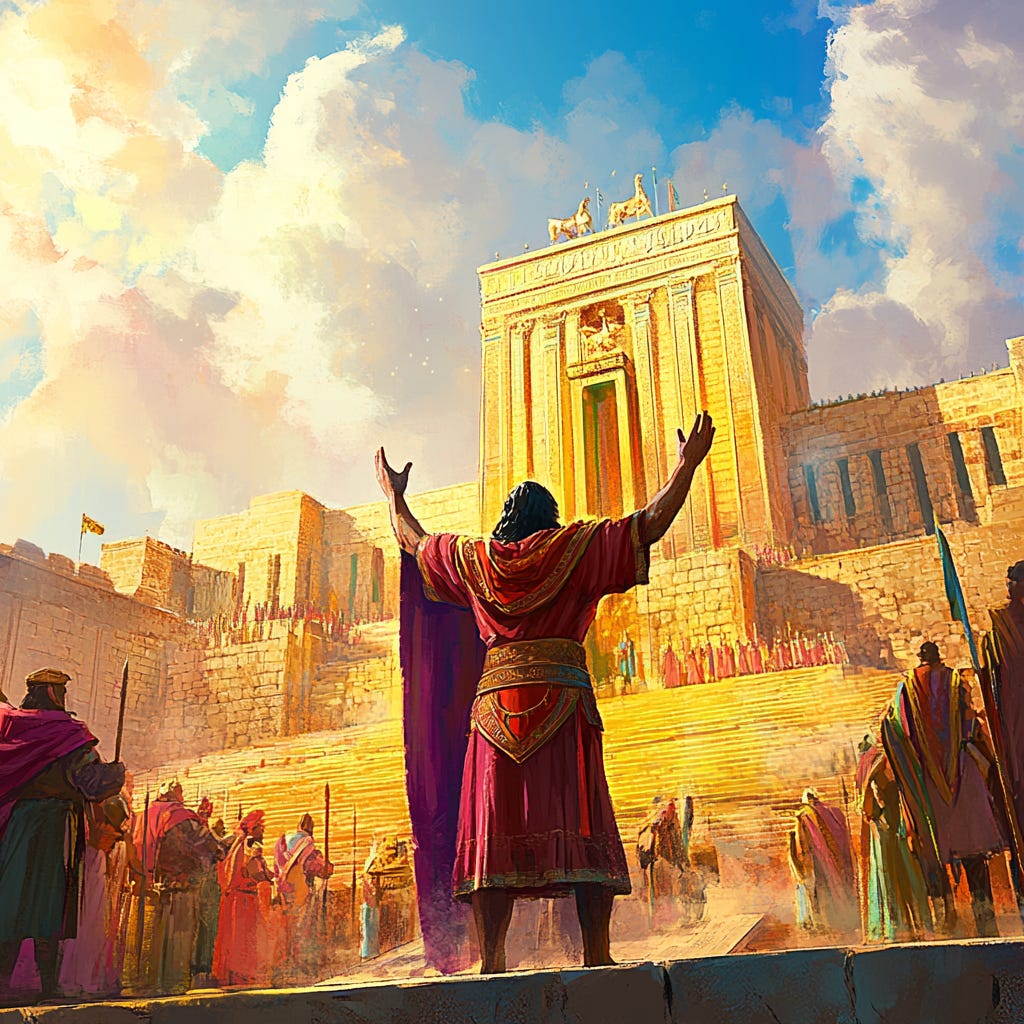
Day 38: The Rest of God (Gen 2:1-3).
Description
Prayer
Heavenly Father, truly you are the God of all grace, goodness, mercy, and compassion. I praise you for prayers answered, mercies shown, and goodness given beyond my prayers. I praise you that, in your love, you refuse to withhold the disciplines and difficulties that I need so that my remaining sinful nature may be mortified. O Lord, I pray that as I open up your word this morning, you would again wash, sanctify, and renew my mind. Draw me nearer to you, Blessed God. Help me to see more clearly your will for my life, that I may walk in your ways. In Jesus’ name I pray, Amen.
Reading
Gen 2:1-3.
“Thus the heavens and the earth were finished, and all the host of them. 2. And on the seventh day God finished his work that he had done, and he rested on the seventh day from all his work that he had done. 3. So God blessed the seventh day and made it holy, because on it God rested from all his work that he had done in creation.”
Meditation
We call the Lord’s Day “The Day of Rest”. But what does that actually mean? What is this “rest” all about really? When we use that word “rest”, probably the first thing we think about is kicking back in our favourite chair for a snooze. Is that what this means? The Sabbath is not about relaxation. But what is it about? I think as we study the scriptures on this question, there’s at least four significant things that we need to say.
Firstly, rest is a pattern for us. In Exodus 20:8 we read: “Remember the Sabbath day, to keep it holy. Six days you shall labour, and do all your work, but the seventh day is a Sabbath to the LORD your God. On it you shall not do any work, you, or your son, or your daughter, your male servant, or your female servant, or your livestock, or the sojourner who is within your gates. For in six days the LORD made heaven and earth, the sea, and all that is in them, and rested on the seventh day. Therefore the LORD blessed the Sabbath day and made it holy.” The fourth commandment makes it perfectly clear here: God rested on the seventh day to set a pattern for us to follow. The Sabbath was indeed made for man (Mk 2:27). God didn’t need the Sabbath, but he chose to give it to us as a gift for our good.
Secondly, resting is dwelling. This word that we translate as “Sabbath”, one of it’s meanings is literally “to dwell.” When you’re resting, by definition you’re not roaming. You’re staying put in one spot! In 1 Chronicles 28 we find King David announcing in Jerusalem his intention to build the Temple, which would be the dwelling place of God: “Then King David rose to his feet and said: “Hear me, my brothers and my people. I had it in my heart to build a house of rest for the ark of the covenant of the LORD and for the footstool of our God, and I made preparations for building.” Did you notice what David called the Temple? It was a “house of rest”, and a house of rest because it would be the place where God would dwell. Resting is dwelling.
King Solomon further confirmed what David had declared when he called the Temple God’s “resting place” (2 Chron 6:41). On day one of creation God made it clear that he wanted to fill the earth with his glory and presence, and that implied by definition that he would dwell here. On day seven, the day of rest, he thus initiated this rest of dwelling. He further foreshadowed this earthly dwelling in the Temple as the house of rest. Finally, God’s rest was realised as he dwelt among us in the person of Christ (Jn 1:14). In this sense, Christ is our sabbath rest, for he is God with us, our Immanuel. God’s rest will finally be consummated in the new creation when he dwells among us in fullness (Rev 21:3). Resting is dwelling and, in a sense, that’s the beating heart of the sabbath. The Lord’s Day is the day when we come and dwell together in the presence of God.
A third thing we might say a