Episode Details
Back to EpisodesUniversal Salvation pt. 2
Description
God is loving and merciful, not judgmental and cruel
Welcome back to Gnostic Insights. Last week I began sharing with you what is essentially a book report on the book called That All Shall Be Saved, Heaven, Hell, and Universal Salvation by David Bentley Hart, and he’s the translator of the New Testament that I’ve been using. So, last week we got up to page 21 out of this book, and now I’m all the way up to page 85, so we’ll see what happened in this latest round of reading.
Now, David Bentley Hart’s style of writing may not be for everyone. It’s very academic, very high-minded and educated and erudite—difficult to follow if you’re not accustomed to reading scholastic writing. But I believe his heart’s in the right place, and I agree with pretty much everything he says. I will do my best to reinterpret what he is saying in simpler words, in case you’re interested in the content, but not in its delivery method.
So, picking it up on page 21, Hart says,
And what could be more absurd than the claim that God’s ways so exceed comprehension, that we dare not presume even to distinguish benevolence from malevolence in the divine, inasmuch as either can result in the same endless excruciating despair? Here the docile believer is simply commanded to nod in acquiescence, quietly and submissively, to feel moved at a strange and stirring obscurity, and to accept that, if only he or she could sound the depths of this mystery, its essence would somehow be revealed as infinite beauty and love. A rational person capable of that assent, however, of believing all of this to be a paradox concealing a deeper, wholly coherent truth, rather than a gross contradiction, has probably suffered such chronic intellectual and moral malformation that he or she is no longer able to recognize certain very plain truths, such as the truth that he or she has been taught to approve of divine deeds that, were they reduced to a human scale of action, would immediately be recognizable as expressions of unalloyed spite.
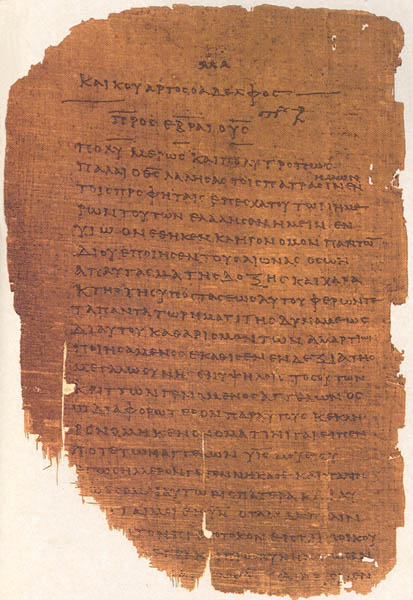
And he’s talking about the idea that most everyone and everything is going to hell and will suffer eternal torment. That is an interpretation or misinterpretation of the word brought about by incorrect translation of the original Coptic Greek. Most of our Bible translations come off of old Latin Vulgate translations, and then they’ve been modernized. But that’s how errors are brought forward. And what Hart has done in his New Testament translation is go back to the original, very oldest transcripts, still in Greek, before they were translated to Latin. And he did what he called a pitilessly accurate translation, where Hart was not trying to make the words that are being translated fit into a predetermined doctrine, like everyone going to hell, or like the Trinity, or eternal damnation.
Listen Now
Love PodBriefly?
If you like Podbriefly.com, please consider donating to support the ongoing development.
Support Us