Episode Details
Back to EpisodesCavemen Stayed Local while Women Left Home
Description
 We talk with Sandi Copeland, Adjunct Professor of Anthropology at CU, about this story:
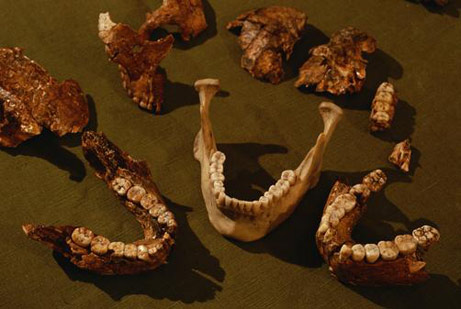
Two million years ago, two-legged apes roamed the African landscape. Many of these ancient hominins, lived in limestone caves in what is now South Africa. We know this through fossilized skull fragments and teeth from those caves.
But fossils only tell us where an individual died—not where it grew up, or where it traveled during its life. Or do they? New research from the University of Colorado that’s been published in the journal Nature, reveals that male hominins in South Africa grew up in the caves where they died, while the females who died there grew up elsewhere and migrated to the caves as adults.
The research not only sheds light on the behaviors of early human relatives; it makes use of a new technique, pioneered by the CU researchers, to quickly and cheaply analyze the birthplace of fossilized creatures.
 Producer: Shelley Schlender
Co-hosts: Joel Parker, Ted Burnham
Engineer: Shelley Schlender
For Headline Features, read on . . .
STORY 1 {Virtual water cannot remedy freshwater shortage}:
We all know what it’s like to drink or bathe in “real” water. But what about “virtual” water? “Virtual Water” is an economic calculation of the water needed to produce a certain amount of product. For instance, producing one kilogram of beef generally requires 15 thousand litres of water. It also takes water to grow crops such as juicy oranges. Virtual water transfers occur through trade. When desert destinations such as Quatar, or Las Vegas, buy oranges and beef they are indirectly importing water. And as the world’s population grows, virtual water transfer could, in theory, provide more equal water use between nations, insuring that everyone’s water needs are met.
However, according to a study published today in the journal Environmental Research Letters, banking on virtual water as a solution to global water problems could spell disaster. The study’s lead author, David Seekell, of the University of Vi