Episode Details
Back to EpisodesCricket Chorus // Foliage Science
Description
This week’s How On Earth features the following two segments:
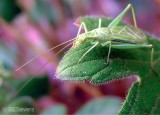
Photo credit: Scott Severs
Late-summer Cricket Chorus (start time: 1:02) One of the most poetic sounds of the end of summer is …. no, not your kids kicking and screaming because summer is over. It’s the sound of crickets, katydids and other melodic insects “chirping” at night. Our focus here is Snowy Tree Crickets in Colorado. They are called “temperature” crickets because you can calculate what the temperature is outside based on how many times these crickets “chirp” in a certain time period. How On Earth’s Shelley Schlender took a stroll recently with two Boulder naturalists — Steve Jones and Scott Severs — to learn more about how, and why, crickets in general make their chirping sound, and why we hear so many of them in the evenings this time of year. Some resources about crickets and their brethren: 1) http://songsofinsects.com/ 2) biology and recordings of nearly all singing Orthopterans (crickets, grasshoppers, katydids), at Singing Insects of North America (SINA) http://entnemdept.ufl.edu/Walker/buzz/.
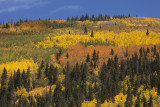
The Science of Aspen (and other) Foliage (starts: 9:40) One of the most iconic images of Colorado is aspen groves quaking in early fall in their brilliant yellow, orange and even red hues. This year