Episode Details
Back to EpisodesFractals of Colossians
Description
Fractals of Colossians
Welcome back to Gnostic Insights. Today I thought I would share with you one of the books out of the New Testament as translated by David Bentley Hart and published by Yale University Press, which, as I’ve said before, is very Gnostic in its interpretation because it uses the same words that our Gnostic Gospel uses. The translation is more precise than your normal conventional Bible.
Colossians is purportedly Paul writing a letter to this church in a town called Colossae. And I’m going to go through this verse by verse so that you can see how similar this is to the cosmology of the Tripartite Tractate that I am generally sharing with you. And he is writing this letter to the church in Colossae to exhort them to righteousness, let’s say, to help them walk in the path of the Christ.
And he says, for example, in chapter 1, verse 11, “being empowered with every power by the might of his glory for all endurance and longanimity, with joy.”
Longanimity means the disposition to be patient in the face of adversity, to suffer calmly. And boy, we could use some of that right now, right? You may not feel joyful all the time because of all that’s going on around us, but we can have endurance and longanimity if we’re walking with Christ, because he has the power over all of this.
“Giving thanks to the Father who has made you fit for participation in the Holy One’s allotment in the light.” And “the Holy Ones” is the Aeons of the Fullness of God, in my opinion. And they live in the light of the ethereal plane up there in the Fullness of God.
That is the place where the Aeons live. They are, “the Holy Ones who delivered us from the power of the darkness and translated us into the Kingdom of his love’s Son.”
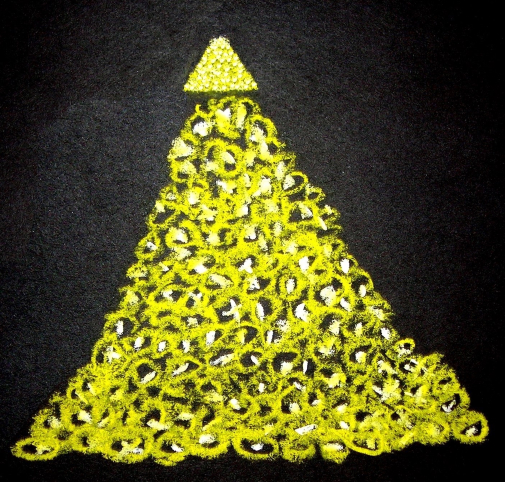
His love’s Son—that’s a peculiar way to put it. Not his beloved Son, but the Kingdom of his love’s Son. So, the Son is the first emanation of the Father, the only emanation directly out of the Father, and he is still plugged into the Father. Whereas everything else that followed, the Fullness, and then us, and of course the various Principalities and Powers—they derive from the Son.