Episode Details
Back to Episodes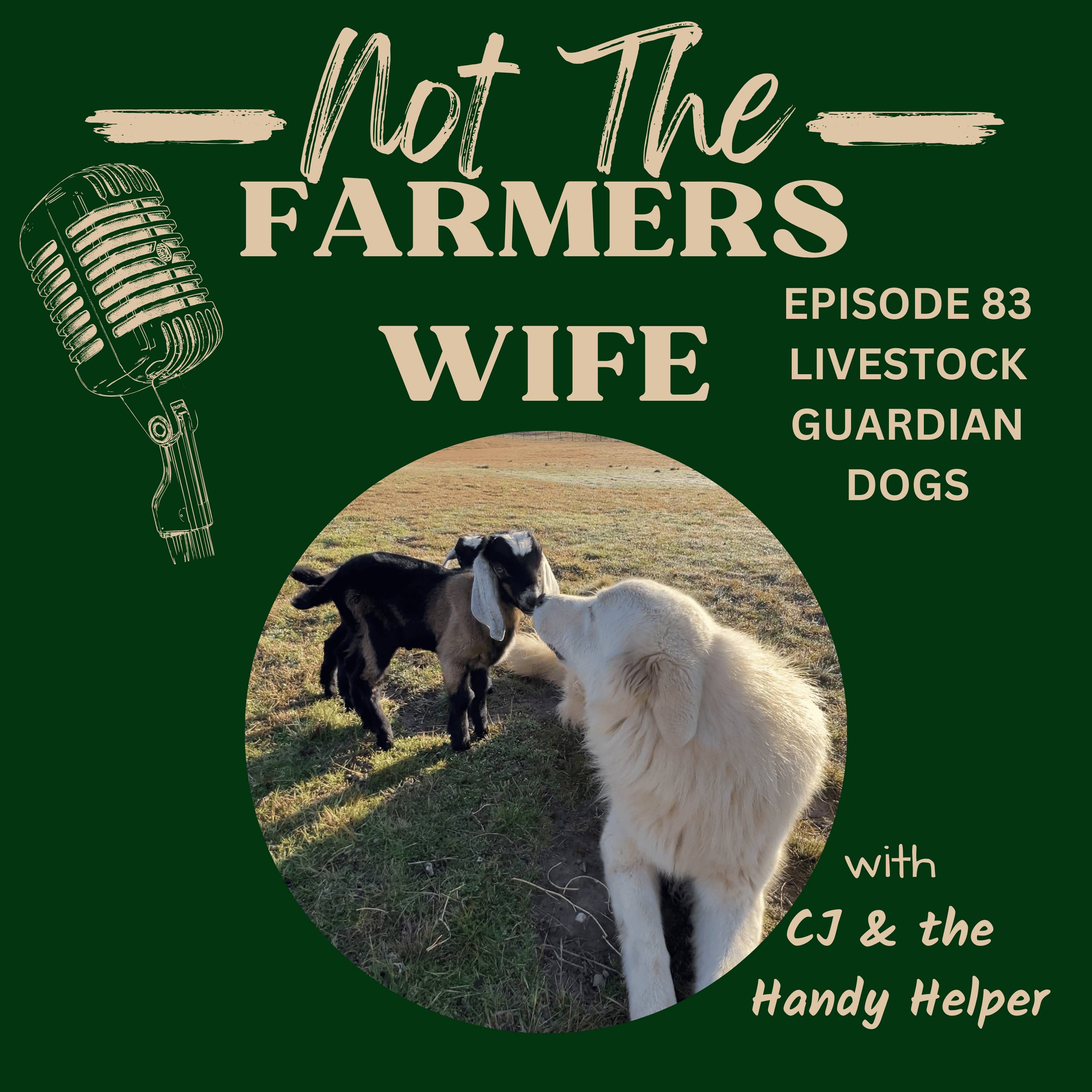
Episode 83 - Livestock Guardian Dogs
Description
Introduction Episode 83
Livestock Guardian Dogs (LGDs) play a crucial role on small farms and homesteads by protecting valuable livestock from predators. In this episode, we’ll break down the essentials of LGDs for beginners—everything from choosing the right breed to caring for your new farm guardian. Whether you're worried about foxes, hawks, or stray dogs, LGDs can be your first line of defence.
What Are Livestock Guardian Dogs?
LGDs are a specific group of dogs bred for centuries to live with and protect livestock from predators. Unlike herding dogs, which move livestock, LGDs are bred to defend the animals they live with. They instinctively bond with the flock and see it as their responsibility to keep them safe, often through patrolling, barking, and sometimes direct confrontation with predators.
Popular LGD Breeds for Small Homesteads
Some of the most popular LGD breeds include the Great Pyrenees, Anatolian Shepherd, and Maremma Sheepdog. There are about 45 different types.
Each breed has its strengths:
the Great Pyrenees is gentle and patient with livestock,
the Anatolian Shepherd has the stamina for large properties,
the Maremma is known for its quiet but effective guarding, especially for poultry.
The Maremma has a solid, muscular build, a thick white coat, a large head and a black nose. Dogs weigh some 35–45 kg and stand 65–73 cm at the shoulder, while bitches weigh 30–40 kg and stand 60–68 cm. Some dogs may be considerably larger. The coat is long and thick; it is rough to the touch, and forms a thick collar around the neck. It should be solid white; some minor yellowing may be tolerated. The nose, the lips and the skin round the eyes are black.
Understanding each breed's personality and working style is key to picking the right one for your needs.
Choosing the Right Dog for Your Farm
When selecting an LGD, consider your farm size, the type of livestock you need to protect, and the predators in your area. For example, a larger breed like the Kangal may be better for properties with large predators, while a Maremma might excel in guarding smaller poultry flocks. Also, consider your ability to train and maintain the dog—some breeds are more independent, while others need a bit more guidance.
Training an LGD
Training LGDs is a slow but rewarding process that usually takes 12 months. Puppy training starts with bonding the dog to the livestock it will protect, with minimal human interaction during work hours to keep its focus on the animals. Avoid treating the LGD like a pet, and instead focus on teaching it boundaries and to patrol its territory. Remember, patience is key, as these dogs naturally grow into their roles over time.
Housing and Containment for LGDs
LGDs need space to roam, but they should be contained in a secure, fenced area to keep them close to the animals they protect. Fencing not only keeps the LGD with the livestock but also helps prevent the dog from wandering too far, which is a common issue. While they don’t need elaborate housing, providing a basic shelter from the elements is essential, especially in extreme weather.
Feeding and Nutrition
An LGD’s diet is vital to maintaining its strength and