Episode Details
Back to Episodes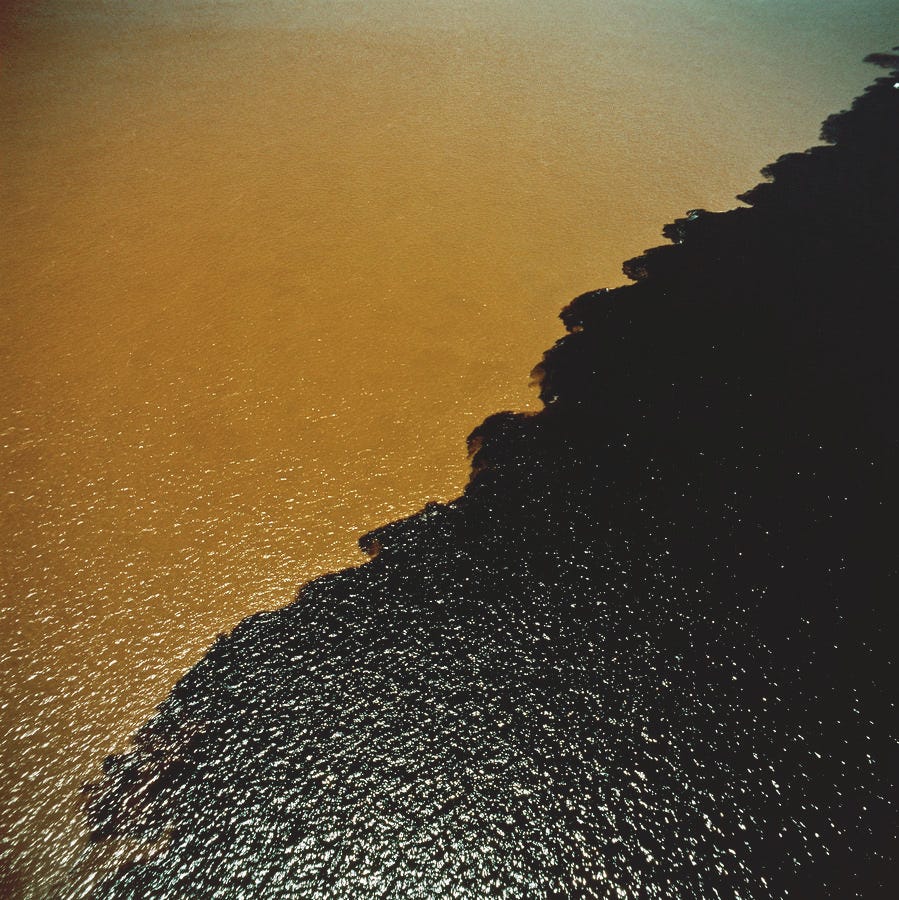
Narrated Essay: The Meeting of the Waters
Description
A few days ago, if asked, I would have said I lacked the spaciousness and sanity to write this month. I know it would have been an excuse born of scarcity and fatigue — but summer is flaring into autumn, and time can seem like a horse bolting for the barn in the back half of the year.
In a recent advisory on parents’ mental health, the Surgeon General cited an APA finding that 48% of American parents feel completely overwhelmed every day. In the ordinary overwhelm of modern life, friends exchange waves from afar with an undertone of “you can call if you’re in crisis; otherwise, just text.” Sound familiar?
But then there’s this: shadows lengthening across the field, the animalic resin of roasted chile and yellow clusters of Chamisa. In The Home Place: Memoirs of a Colored Man’s Love Affair with Nature, the ornithologist and wildlife ecologist J. Drew Lanham reflects on the restlessness of autumn’s arrival:
“The Germans have a fine word for it: zugunruhe. A compound derived from the roots zug (migration) and unruhe (anxiety), it describes the seasonal migration of birds and other animals. In this wanderlust I want to go somewhere far away, to fly to some place I think I need to be. Nature is on the move, too, migrating, storing, and dying. Everything is either accelerating or slowing down. Some things are rushing about to put in seed for the next generation. A monarch butterfly in a field full of goldenrod is urgent on tissue-thin wings of black and orange to gather the surging sweetness before the frost locks it away. Apple trees and tangles of muscadines hang heavy. The fruit-dense orchards offer a final call to the wildlings. Foxes, deer, coons, possum, and wild turkeys fatten in the feasting. The air is spiced with the scent of dying leaves. The perfume of decay gathers as berries ripen into wild wine. Even the sun sits differently in an autumnal sky, sending a mellower light in somber slants that foretell the coming change.”
Something is shifting in the air. Equinox, the threshold of autumn, arrives with an invitation to notice the restlessness and, further, to consider the phenomenon of balance in nature. Because on Equinox, from Latin aequus (equal) and nox (night), the light steadies itself between day and night, and in a hardly perceptible motion, the seasons turn toward each other, bow in symmetry, and exchange place.
I am reminded of a place in the Amazon I visited years ago. Manaus is located nine hundred miles arterially inland from the Atlantic Ocean, deep in the body of the rainforest. The city is home to more than half of the region’s human inhabitants and a staggering array of life: 40,000 plant species, 3,000 fish species, 1,300 bird species, 430 mammal species, and 2.5 million insect species.
In the latter half of the 19th century, fueled by rubber exports and indentured servitude, Manaus briefly enjoyed the status of the wealthiest city in the world. Colonial commentators dubbed it the “Paris of the Tropics,” thanks to its electricity, drinking water, and sewage systems—nouveau luxuries in its day.
Together, we are making sense of being human in an era of radical change. Your presence here matters. Thank you for reading, sharing, ‘heart’ing, commenting, and subscribing to The Guest House.
One of the city’s crowning achievements was Teatro Amazonas, perhaps the world’s most improbable opera house. First conceived in 1881, the opera premiered on January 7, 1897, with a performance of Ponchielli's La Gioconda by world-renowned tenor Caruso. By all accounts, the evening was magnificent. The finest materials had been imported from Europe, including 198 chandeliers—32 made from Murano glass—and 36,000 ceramic tiles arranged over the do