Podcast Episode Details
Back to Podcast Episodes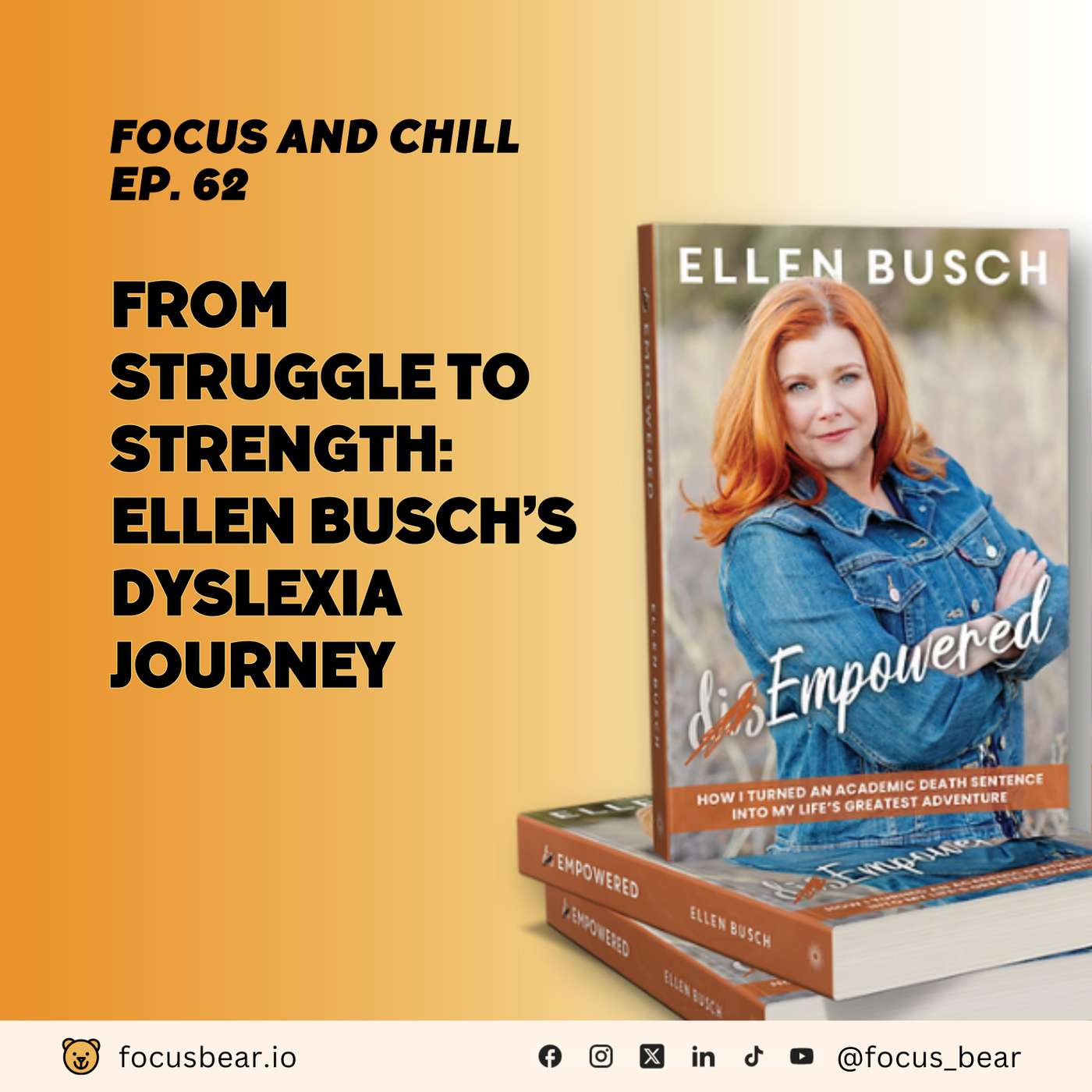
Episode 62: Ellen Busch
Episode 62
Welcome to episode #62 We’re thrilled to be joined by Ellen Busch today. Ellen Busch, diagnosed with dyslexia in childhood, defied expectations. Her parents nurtured her beyond academic confines, teaching her to navigate the ocean, excel in team sports, and embrace adventure. Despite self-esteem struggles, she became a skilled skier and earned bachelor’s and master’s degrees. Battling low self-esteem and trauma, Ellen persevered, escaping abuse and seeking healing. Through coaching, therapy, and training, she reclaimed her power, now thriving and fearlessly pursuing her dreams. Welcome to the show Ellen!
Questions
- Can you tell us about your experience with neurodiversity?
- When did you realise that you weren’t neurotypical?
- Initially diagnosed as ambidextrous.
- What challenges did you face?
- Dyslexia associated with an intellectual disability.
- People had low expectations of her - teacher told her parents that she would only ever be able to be a wife/mother
- Her parents didn’t accept the administrator’s diagnosis. Her dad’s mantra was “Prove em wrong Ellen!”
- Took successes outside of the classroom and brought them into the classroom.
- Physical challenges like abseiling, scuba diving, boating
- Was able to apply the adventures to assignments
- Going to college / uni was better
- Academic staff were supportive
- Probably because she was so open and transparent
- Managed to get through tough subjects
- Academic staff were supportive
- Dyslexia associated with an intellectual disability.
- What is it like now?
- Agrees that the struggle gave her the grit
- She could outwork everyone else
- At an early age
- E.g. Reading nautical charts with her Dad.
- Agrees that the struggle gave her the grit
- What neuroexceptional strengths are you leaning into now?
- Understanding visual learning
- Thinks in pictures
- Using visual aids whenever possible
- E.g. Anatomy colouring book - associating the colour with the name.
- Long-term memory is good
- Good pattern recognition
- Understanding visual learning
- When did you realise that you weren’t neurotypical?
- What projects are you concentrating on?
- Book: disEmpowered
- Shares her story about getting through hostile education system and leaning into her strengths
- Lots of podcast
- Training to become a coach (to help other dyslexic people and parents of dyslexic children)
- Heroes’ journey approach
- Refuse the challenge
- Take on the challenge
- Succeed
- Take the lessons back to your tribe
- Heroes’ journey approach
- Book: disEmpowered
- How about the rest of the time? What do you enjoy doing in your off time?
- Come back to the idea of outworking people. Does she find it difficult to switch off
- When younger, it was rough
- Because don’t have the emotional development on how to cope.
- Would have frustrated outbursts.
- Do athletic, physical things and then would fall asleep.
- Foundational practices
- Meditation
- Journalling
- Breathwork
- Visualisation
- Reboot practice - 45 mins to turn off the brain
- Yoga
- When younger, it was rough
- Come back to the idea of outworking people. Does she find it difficult to switch off
- What do you do to optimise productivity during your working hours? What is some unhelpful productivity advice that doesn’t work for you?
- Optimising productivity
- Take breaks - not a robot!
- “Spot drills”
- Micro-workouts (10 minutes): 50 air squats/burpees/push-presses/WOD
- Does 3 of those per day. Aiming for 4
- “Sitting is the new smoking”
- “Spot drills”
- Break up tasks - write for 15 minutes and then empty the dishwasher
- Setting boundaries: this is what I need to do for myself
- Take breaks - not a robot!
- Unhelpful advice
- Multitasking: doing 3-5 things at a time doesn’t work. Do one thing at a
Published on 1 year, 3 months ago
- Multitasking: doing 3-5 things at a time doesn’t work. Do one thing at a
- Optimising productivity